
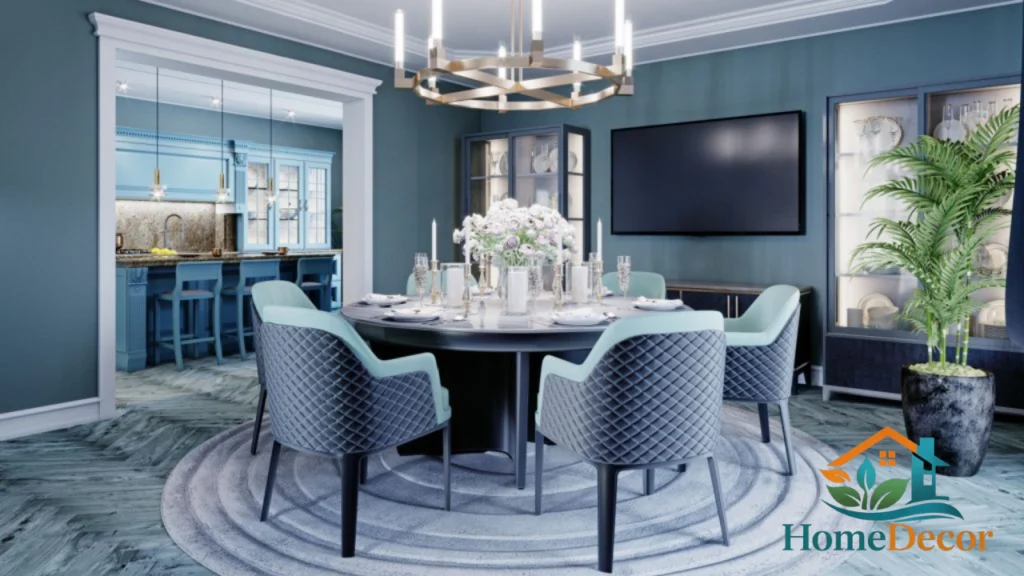
Introduction
A Round Dining Room Table and Chairs set can transform the atmosphere of a home in a way that feels immediate and meaningful. A gentle curve changes how a room feels, opening up talk without effort while making meals seem calmer. Because it bends instead of corners sharply, everyone sits where they can see each other clearly. The form itself adds quiet comfort, shifting stiffness into something fluid. Moving around becomes natural, almost unnoticed.
Round tables stick around because families like them in small apartments, cozy breakfast spots, or big shared living areas. Where space needs to breathe, they fit just right. A square room gains harmony when one sits at its center. Tight spaces feel lighter, avoiding the weight of boxy shapes. Even wide open zones find focus, forming a spot for meals while keeping everything connected.
A lovely dining setup must work beyond just looking nice online. Since real life happens around it, the space should allow easy movement between furniture pieces. Table width matters, especially when chairs need to tuck under without blocking pathways. Comfortable seats make meals last longer, whether planned or not. The legs of each chair demand enough clearance so knees don’t bump after every bite. How the base is shaped changes how many people fit near the edges. Room size guides what feels balanced – too big overwhelms, too small disappears. Round tables shine where corners aren’t an issue; elsewhere, they cause awkward shuffling.
Starting at the beginning, this walkthrough breaks down each choice step by step using everyday words. Picking between circular and straight-edged tables becomes easier when layout and flow are considered first. Room dimensions matter – measuring space ahead of time avoids tight corners later on. Chair height must match the tabletop without feeling awkward while sitting. Materials like wood, metal, or glass bring different needs depending on usage and cleaning habits. Style matters less than how often it fits naturally into daily life. In the end, what counts is finding a setup where the table suits both eyes and routine. Comfort is just as important as appearance when living with furniture long-term.
Why Choose a Round Dining Room Table and Chairs?
A circle pulls people in, unlike longer shapes that stretch them apart. Conversation flows more easily when faces point toward each other instead of down long sides. Seats hold no rank because there is no head spot to claim. Everyone lands on even ground, voice to voice. This kind of layout suits slow breakfasts, unscripted chats, and shared snacks without ceremony. Moments unfold without structure simply because the shape allows it.
Soft shapes catch attention without poking at you. Where right angles shout order, rounded forms whisper calm. Instead of slicing the space, a circular tabletop flows around corners. Hard boundaries from walls or floors find relief in their bend. Rooms packed with boxes and edges relax into their shape. Something about the arc slows how fast your gaze moves. It turns stiffness into something that breathes.
Floating through a room feels easier when furniture doesn’t block the flow. Without sharp edges jutting out, bodies slip past without catching on angles. Tight spaces breathe a little fuller with shapes that curve instead of being cut. Even if it covers the same ground, a circle seems to weigh less on the eyes than a heavy rectangle does. Something about its form keeps the air moving.
Here’s something useful: a round table on a pedestal leaves plenty of space for legs. Because the base stands in the center, chairs fit neatly around it without catching. This works well in small dining spaces, studios, city flats, cozy breakfast corners, or shared kitchen zones – any spot where pieces must look good while making sense in tight spots.
Truth is, circles don’t suit every home by default. When hosting big meals, fitting into stretched-out spaces, or packing in a crowd matters most, straight-edged tables often work better. Yet for plenty of living situations, the curved form hits a sweet spot – easy on the eye, open for conversation, simple to move through.
Round Table or Rectangular Table?
A dining table’s shape matters mostly because of how it fits. Whether round or rectangular works better comes down to your room’s size, open space around it, and one’s daily routine shaping things. How people move through the area shifts what feels natural. Comfort often beats fashion when chairs need to slide out easily.
Most times, a rectangle fits well inside stretched-out spaces. Along the walls it goes, lining up neatly while holding extra chairs down one side. People know this kind first when thinking about dinner with candles and place settings. On the other hand, circles pop in boxy spots – tight eating nooks included – where moving around feels better without sharp edges cutting the air.
When the dining space shares openness with other areas, its outline matters extra. Instead of stretching things out, straight-edged pieces might add too much guidance through the air. Curved surfaces break up the march of lines nicely. That circle on the floor draws eyes but keeps the spot feeling fluid. Shape talks quietly here, avoiding hard borders where none should be.
Here is a simple comparison:
| Feature | Round Dining Table | Rectangular Dining Table |
| Best room shape | Square rooms, small spaces, open layouts | Long, narrow rooms, formal dining rooms |
| Conversation flow | Strong and social | Good, but more directional |
| Traffic flow | Easier around the perimeter | More structured |
| Seating flexibility | Excellent with a pedestal base | Better for long groups |
| Visual style | Softer, lighter, friendlier | More classic and formal |
| Best for | 2–6 people in many homes | 4–10+ people depending on size |
The simplest takeaway is this: choose the shape that supports the room you actually have, not only the room you imagine in a showroom. A round table often wins when the goal is comfort, flow, and a more inviting atmosphere. A rectangular table often wins when the goal is maximum seating in a longer space.
How Many People Can a Round Table Seat?
A good seat count matters more than most realize in picking a dining table. When it comes to round ones, having room for dishes, drinks, and armroom keeps things relaxed. Comfort shifts noticeably based on how wide the tabletop stretches.
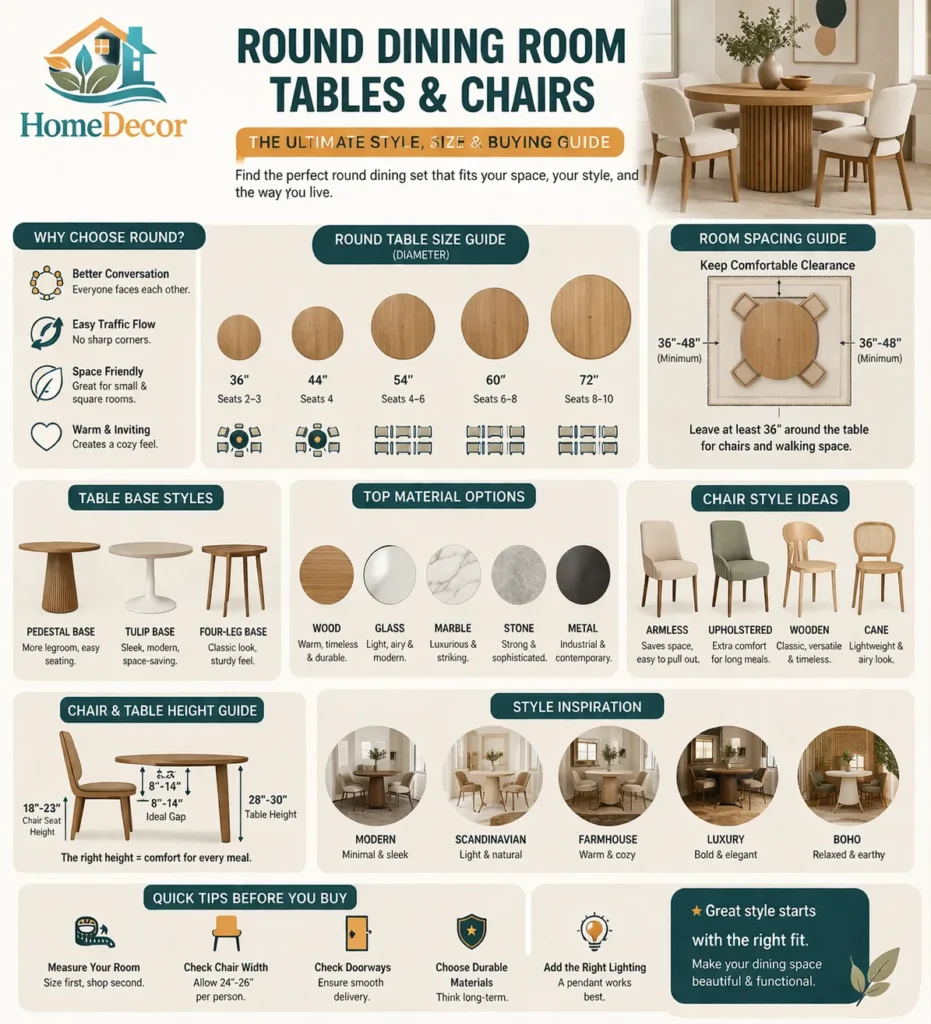
A small round table between thirty and thirty-six inches fits about two or three folks. Four chairs? Then aim for something thirty-six to forty-four inches wide – it tends to handle that crowd just fine. When the diameter hits forty-four to fifty-four inches, you can squeeze in four to six without much trouble. Anything past fifty-four inches opens space for six to eight, though it really needs extra floor area so things don’t feel crowded or awkward.
Picture a round table not by how many it holds, but by elbow room. Tighter chairs make things feel cramped, fast. Meals every day? Homework spreading out? Laptops open late? Then, breathing space becomes key. When people linger longer, nearness turns annoying more quickly. Comfy spacing helps without anyone noticing why.
Round table size guide
| Table Diameter | Comfortable Seating | Best Use |
| 30–36 inches | 2–3 people | Small kitchens, breakfast corners |
| 36–44 inches | 4 people | Everyday family meals |
| 44–54 inches | 4–6 people | Medium dining rooms |
| 54 inches and above | 6–8 people | Larger rooms, entertaining |
This is why many shoppers focus first on the 36–54 inch range. It covers the most common real-world needs without dominating the room. It is a versatile zone for compact family dining, apartment living, and multipurpose eating areas.
When considering seating, do not think only about the number of chairs. Think about how those chairs will actually function. A table may technically fit four chairs, but if the seats are too wide, too bulky, or too deeply upholstered, the setup can feel tight and awkward. Real comfort comes from the full combination of diameter, chair width, and clearance.
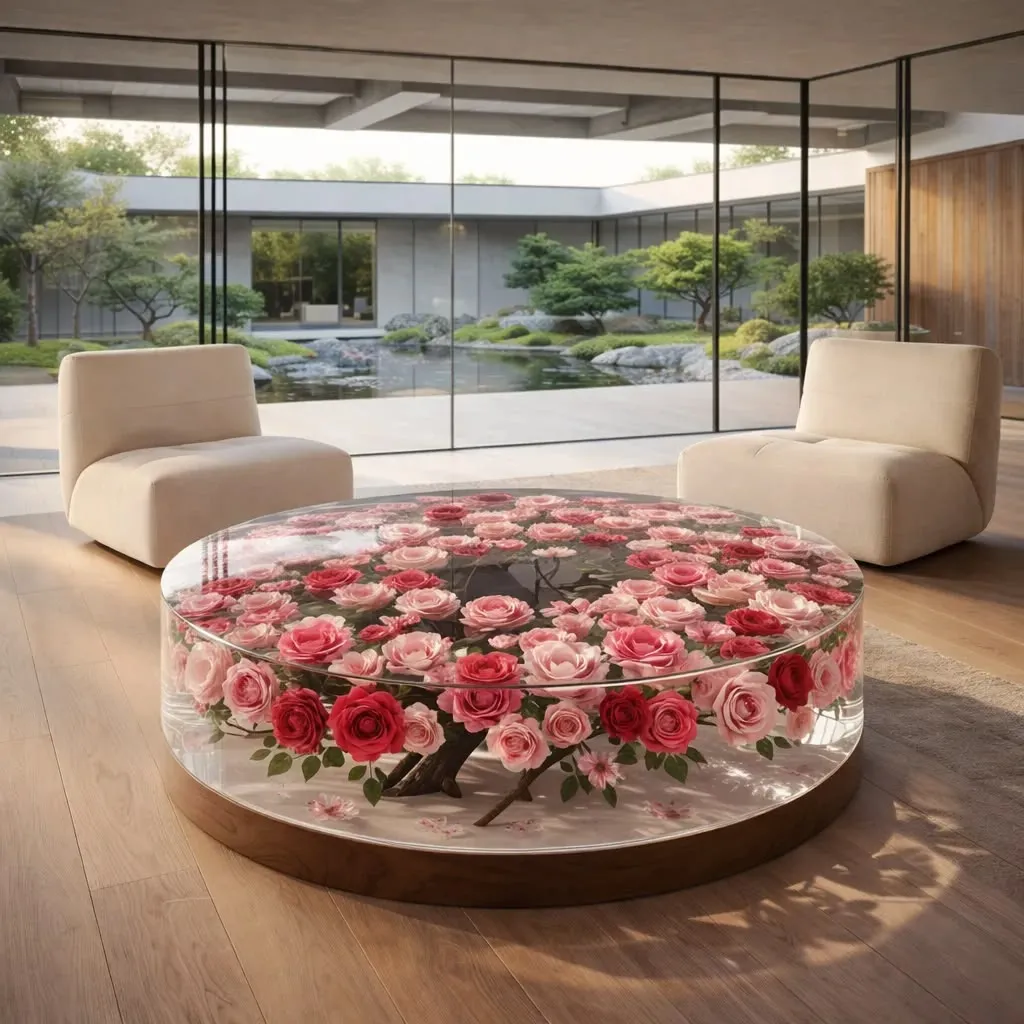
How to Measure Your Room Before You Buy
A dining table should never be selected based on appearance alone. The room must give it enough breathing space. Without proper measurement, even a Beautiful Table can feel overwhelming, impractical, or difficult to use.
One of the most reliable planning rules is to leave at least 36 inches between the table edge and nearby walls or furniture. This gives chairs room to pull back and allows people to move around the dining area without constant adjustment. In busier rooms, especially those near hallways, doors, or circulation paths, even more clearance can be helpful.
Simple room-planning rules
- Leave at least 36 inches between the table edge and walls or furniture.
- Allow more space if the table sits near a doorway or walkway.
- Make sure chairs can pull out without hitting obstacles.
- Measure hallways and doorways before delivery if the table is large or heavy.
A room can look spacious on a screen but feel cramped in real life if the layout is not measured correctly. The best approach is to measure the full dining zone, not just the bare floor area. Include chair pull-out distance, walking space, and any nearby cabinets, buffets, rugs, or open doors.
Also consider the full route into the room. If the tabletop is wide, the base is heavy, or the piece arrives in a large boxed format, delivery access becomes important. You want a table that fits the room and actually makes it into the room.
Chair Spacing Rules That Make Dining Comfortable
Chair spacing is just as important as table diameter. Even a perfectly sized table can feel uncomfortable if the chairs are too wide, too close together, or poorly positioned around the perimeter.
For everyday use, a helpful benchmark is to allow roughly 24 to 26 inches per person. That gives enough room for a seated diner to eat comfortably without constant elbow overlap. If you use chairs with arms, you may need even more space. Armless chairs are often easier to place around a round table because they visually lighten the arrangement and allow more flexibility.
Practical chair spacing tips
- Think about 24–26 inches per person for daily dining.
- Allow more width for armchairs.
- Keep some space between chairs whenever possible.
- Avoid squeezing in an extra seat just to increase capacity.
Chair width matters as much as table diameter. A round table may look spacious in the center, but if the chairs are oversized, the overall layout can feel overloaded. That is why many designers prefer slim, balanced seating around round tables. It preserves the gentle shape while keeping the arrangement breathable.
If your room is small, armless chairs, curved backs, or lightly scaled seats can create a more open feel. If your room is large, you have more freedom to choose upholstered armchairs or sculptural silhouettes. The most comfortable dining spaces are usually those where furniture scale is aligned with room scale.
The Best Chair Height for a Round Dining Table
Height matching is one of the most overlooked parts of dining room planning, yet it has a major impact on comfort. The relationship between table height and chair seat height determines whether people can sit naturally, eat comfortably, and move without strain.
A standard dining table is generally 28 to 30 inches high. Standard dining chair seat heights usually fall around 18 to 23 inches. That creates a workable and comfortable seat-to-table gap. If the chair sits too low, the table may feel tall and awkward. If the chair sits too high, knees may feel cramped, and posture can suffer.
Quick height guide
| Piece | Standard Range |
| Dining table height | 28–30 inches |
| Dining chair seat height | 18–23 inches |
| Ideal seat-to-table gap | 8–14 inches |
| Counter-height table | 34–36 inches |
| Counter-height chair | 24–26 inches |
The basic principle is simple: check the table first, then match the chair. Comfort comes from proportion. A well-matched chair should let diners rest their feet naturally, sit upright without strain, and tuck close enough to the table for easy eating.
If you are choosing a counter-height dining set rather than a standard-height one, the logic is the same, but the numbers change. Higher tables need taller chairs or stools. The relationship between the seat and the top must still feel balanced.
A good chair is not just stylish. It supports proper posture, easy movement, and a pleasant dining experience. That is especially important if the table is used every day for meals, work, homework, or conversation.
Material Guide: Wood, Glass, Stone, and Metal
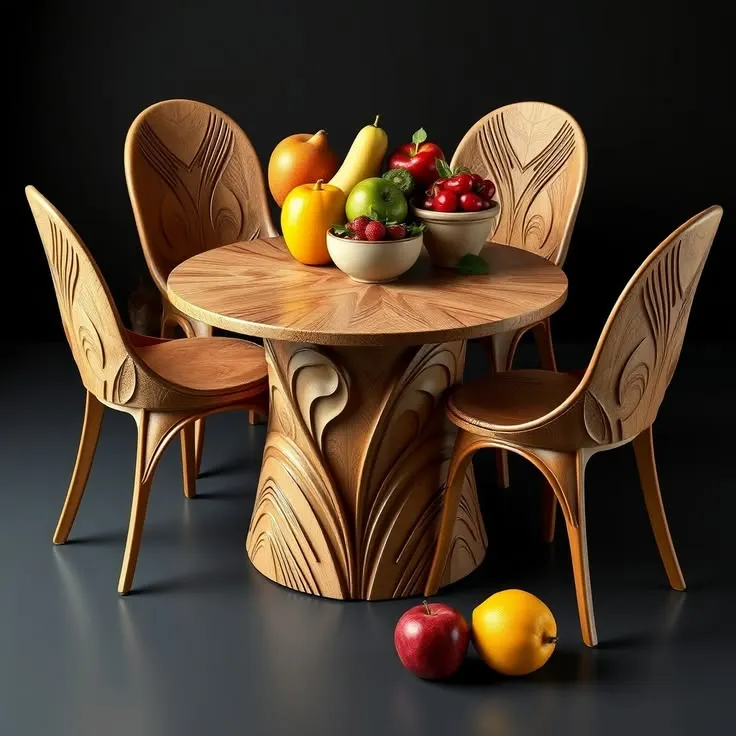
Wood brings warmth into space, yet leaves behind scratches if ignored. A cold slab of stone might last decades, but could make mornings feel stiff. Metal frames stand firm against time, though they sometimes hum under silence. Glass opens up corners, but it still shows every touch too clearly. Each surface sets a different pace for daily life without saying a word.
Wood often sets a warm scene in round dining tables. Glass gives space a lighter feel, almost like it disappears. Surfaces that mimic stone add weight without the heft. Metal touches bring sharp lines into softer shapes. Manufactured wood keeps things steady on budgets. Combinations of materials mix traits in surprising ways. Every choice shifts how a room looks – and lives.
Wood
A table made of wood just fits, somehow. Whether the room leans cozy country or clean contemporary, it holds its place without trying. Warm under light, grain showing through touch, it stays put in more ways than one. Life marks it, sure, yet it still looks at home anywhere. Rooms fanfare needed.
Glass breathes easier when this kind of piece sits at its center. Stability shows up quietly here; no Openness flows more easily through a room with glass tops. In compact dining spots, their slim profile keeps things feeling airy instead of weighed down. Space seems to stretch further when light passes under and around the surface. On darker days, grime stands out fast – streaks, marks, specks demand attention often. Cleaning becomes part of the routine, whether welcome or not.
Stone or Marble
Smooth stone and marble-like finishes look sleek and rich, leaving an impression of quiet elegance. Heavy presence draws eyes, adds depth to a space. A table made from such materials often stands out boldly in a dining area, particularly under thoughtful lighting and surrounded by Tasteful Chairs. Still, the downside shows up in its weight – awkward to move – and demands attention over time with upkeep.
Metal
Starting with metal? That’s common in sleek, current designs. Sharp edges come alive through its clean lines. A wooden surface might sit on top of a steel frame, blending warmth and strength. Sometimes glass rides above iron supports, mixing lightness with stability. For spaces craving bold shapes and clear outlines, it stands out without trying too hard.
Pick how you want the space to feel before picking anything else. If warmth matters most, go for wood. Want airiness? Try glass instead. For something refined but strong, stone fits well. Metal brings sharpness when city-like clarity is what pulls you in. Each finish shapes the mood just as much as light or color does.
The Importance of the Table Base
A circle-shaped tabletop isn’t just about looks – its core shape decides chair count. Comfort while seated ties closely to that center portion. Movement nearby shifts depending on what sits underneath. The size of the middle part changes how folks gather.
A lot of people pick a table by how the top looks, only to find out the legs get in the way when chairs are pulled up. This error happens more than you’d think. When the base fits just right, sitting down feels natural, and meals flow more easily. But if it’s bulky or badly placed, moving around becomes awkward, and space tightens fast.
Pedestal base
A single center stand works well under a circular dinner table with seats around it. Instead of having posts at each edge, there’s just one support in the middle. That opens up space near the edges, so sliding chairs in becomes simpler. The design looks less crowded, too. In tighter areas, that extra bit counts even more.
Four-leg base
Furniture with four legs often seems timeless, solid, something you’ve seen before. Yet those uprights under the edges sometimes get in the way of seating choices. Trouble shows up when extra people arrive, or chairs take more space than planned. Inside smaller spaces, the position of supports might quietly reduce how freely you arrange things.
Sculptural base
A single bold base might shift how the whole space feels. When done right, it brings character without shouting. Yet looks alone won’t help when someone sits down at dinner. Grace catches eyes, though the empty floor under the table holds greater weight each morning.
Double pedestal or architectural bases
Big round tables sometimes have two legs or a bolder frame design instead of a single center pole. Though these add strength and catch the eye, they must leave room for people to sit without bumping into them. Picture how every seat fits when pulled up fully before picking a stand design. How each chair moves matters more than what you see head-on.
When space feels tight, pedestal legs usually work best. A bigger room? That opens doors – style choices grow wider, so long as sitting stays comfortable.
How to Choose the Right Chairs for a Round Table
Chair selection is where style and comfort really come together. The best chairs for a round table are usually those that complement the shape rather than fight it. Since the table already has soft curves, the chairs can either reinforce that softness or provide contrast.
Slim frames, curved backs, and armless profiles often work especially well because they keep the layout visually light. If the room is compact, lighter-looking chairs can make the set feel much less crowded. Upholstered chairs can add comfort and softness, while wood or metal chairs can create a cleaner and more streamlined effect.
Chair pairing checklist
- Match the seat height to the table height.
- Keep the chair width appropriate for the room.
- Use armless chairs in tighter spaces.
- Choose upholstered chairs if comfort is a priority.
- Choose wood or metal frames if you want a lighter visual feel.
- Mix chair styles only when the room can handle the contrast.
Best chair ideas by room type
Small round table:
Choose slim armless chairs, cane chairs, or compact upholstered seats.
modern room:
Use curved backs, leather-look upholstery, or matte metal frames.
luxury setting:
Choose boucle, rich fabric, soft neutral upholstery, or refined wood chairs with elegant lines.
family-friendly dining area:
Look for durable fabric, wipeable surfaces, and sturdy frames that can handle daily use.
soft contemporary room:
Pick chairs with rounded forms, muted colors, and balanced proportions.
A useful design principle here is visual breathing room. If the table is round and compact, the chairs should not feel oversized or heavily squared. The combination should feel calm, deliberate, and cohesive.
Best Round Dining Room Table and Chairs Ideas by Style
A round dining table can adapt to a wide range of interior styles. Because the shape already gives the room softness, the chairs and finish choices can either amplify that feeling or create a subtle counterpoint.
Modern Minimalist
A modern minimalist dining room favors Simplicity, clean lines, and reduced visual clutter. Choose a round table with a smooth wood top, a restrained stone surface, or a slim pedestal base. Pair it with chairs in black, beige, taupe, or soft gray. Keep accessories minimal so the shape of the table remains the focal point.
Scandinavian
Scandinavian style is all about lightness, warmth, and natural texture. A pale wood round table with light upholstered chairs can create a calm, airy setting. This approach works especially well in small spaces because it keeps the room open and peaceful.
Modern Farmhouse
A round wood table with spindle chairs, upholstered seats, or a simple pedestal base can give you a farmhouse look without feeling overly rustic. This style feels homey, approachable, and comfortable. It is especially effective in family spaces where everyday use matters.
Mid-Century Modern
Mid-century style often pairs beautifully with round tables. Think walnut tones, tapered legs, curved chair backs, and simple silhouettes. The result feels stylish, timeless, and well-proportioned. This style is a strong match for apartments and compact homes.
Luxury Statement Dining
For a more glamorous space, choose marble-look surfaces, richly textured upholstery, and a sculptural base. Add a dramatic pendant light above the table to complete the look. This is where the round table becomes a true centerpiece rather than just a dining surface.
Small-Space Apartment Style
Use a pedestal base, two to four chairs, and lighter finishes to keep the room from feeling crowded. A glass top or light-toned wood can be especially helpful if you want the space to feel larger. Every element should support openness and flexibility.
Mixed Chair Look
A mixed chair arrangement can feel stylish and personal when handled well. Pair matching side chairs with one or two accent chairs, or use slightly different chairs around the table if the room has enough visual balance to support it. This works best when the table itself is simple.
Family-Friendly Everyday Set
Choose durable finishes, rounded edges, wipeable surfaces, and strong chair frames. Family dining is about ease as much as style. Comfort, resilience, and cleanability matter more than high-drama design.
Soft Contemporary
Muted neutrals, curved forms, and matte finishes work well in a soft contemporary room. This look feels current without being trendy. A round table helps maintain the gentle, inviting tone.
Natural Organic Style
Combine warm wood, woven textures, linen-like upholstery, and earthy colors for a grounded, relaxed environment. This style pairs well with curved furniture because it values flow, softness, and tactile comfort.
These style directions matter because a dining room should feel like part of the home, not a staged display. The best look is the one that matches how your household actually lives.
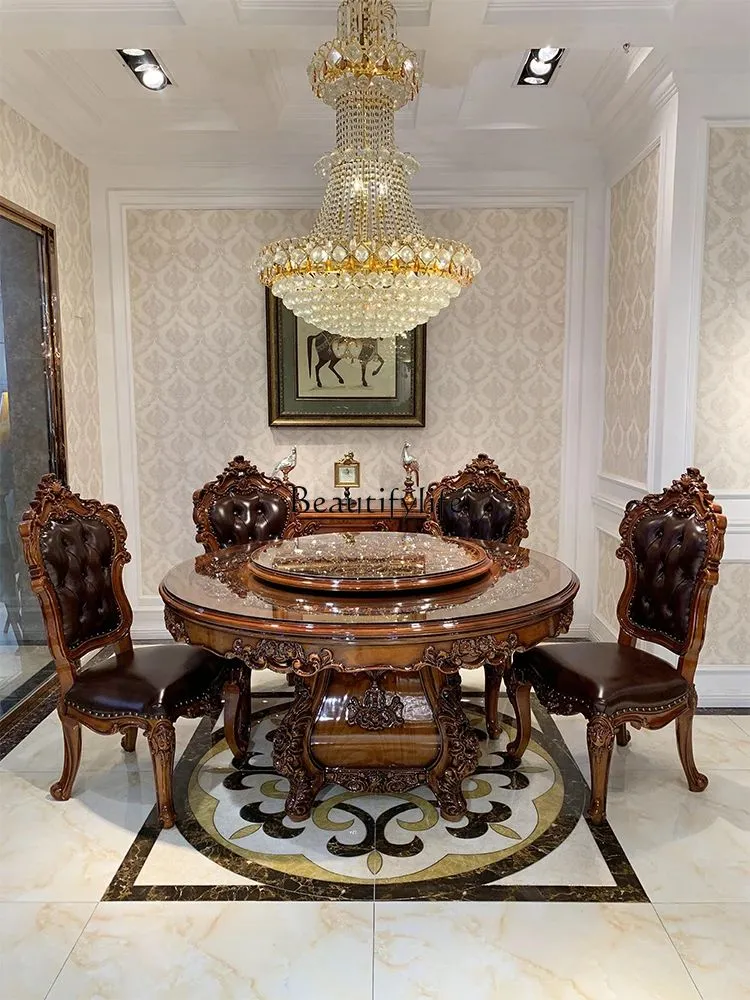
Space Planning and Layout Tips for Better Flow
A round dining table should feel centered, calm, and naturally integrated into the room. It should not look squeezed into a corner or forced into a space that is too tight. Good layout planning makes the table feel intentional.
The most successful dining arrangements preserve both a sitting zone and a circulation zone. That means the space around the table needs to work for people who are seated and people who are passing through.
Practical layout tips
- Place the table under a pendant light when possible.
- Keep the table centered within the dining zone.
- Make sure chairs can pull out fully without obstruction.
- In open-plan rooms, use the round shape to soften straight sightlines.
- In square rooms, a round table often looks more balanced than a rectangular one.
- Avoid overcrowding the area with too many Extra Pieces.
In an open-plan layout, the round table acts almost like a visual anchor. It helps define the dining area without building walls. In a square room, it can prevent the space from feeling boxy or over-structured. In a smaller room, it can create a sense of ease and movement that heavier furniture may not provide.
The layout should feel breathable. That is the goal. When the table, chairs, lighting, and surrounding furniture all support one another, the room feels complete.
Best Round Dining Room Table and Chairs Ideas by Budget
You do not need a luxury budget to create an attractive and effective dining room. What matters most is choosing the right size, the right shape, and the right construction for your space.
A strong dining set suits your room and your lifestyle. A modestly priced table that fits perfectly may outperform a more expensive table that overwhelms the area.
| Budget Level | Best For | Typical Look |
| Budget-friendly | Small homes, first apartments, rentals | Laminate, mixed materials, compact sets |
| Mid-range | Most family homes | Solid wood, better upholstery, pedestal bases |
| Premium | Statement dining rooms | Stone, marble, designer bases, luxury upholstery |
When buying on a budget, prioritize fit first. Then evaluate construction quality, material durability, chair comfort, and finish consistency. A well-sized mid-range round table often delivers more value in daily life than a premium table that is too large, too heavy, or too difficult to live with.
The smartest budget strategy is to spend on the features that affect everyday use: the base, the seat comfort, the material durability, and the overall proportion. Decorative details matter, but function should lead.
Common Mistakes to Avoid
Many dining room problems start with excitement and end with poor planning. It is easy to fall in love with a table online and forget to think through the practical details.
Choosing the wrong size
A table that is too large can dominate the room. A table that is too small can look lost and feel unbalanced. Always measure the area first.
Ignoring clearance
Without enough surrounding space, chairs become difficult to move, and the room feels tight. The 36-inch clearance rule is a reliable starting point.
Picking the wrong base
A base that blocks seating defeats one of the main advantages of a round table. Pedestal designs often solve this problem more effectively than leg-based options.
Buying chairs without measuring them
Chair height, seat width, and depth all matter. Even a small mismatch can affect comfort and movement.
Making everything match too perfectly
A dining room does not need to look overly staged. Slight variation in texture, material, or silhouette can create a richer, more lived-in atmosphere.
The best buying decisions are careful rather than rushed. A few extra minutes with a measuring tape can prevent years of frustration.
Maintenance, Care, and Durability Tips
A dining room should be attractive, but it also needs to be manageable. The most practical choices are those that match your household’s pace and routine.
For wood tables
Use placemats, coasters, and soft cloths. Avoid prolonged direct sunlight where possible, because finishes can fade or change over time.
For glass tables
Clean fingerprints regularly and avoid abrasive products. Glass can look beautiful, but it needs consistent attention to stay polished.
For stone or marble tables
Use protective pads and clean spills quickly. Stone surfaces can be stunning, but they may require more careful treatment to preserve their appearance.
For upholstered chairs
Performance fabric or easy-clean upholstery is often a smart choice for everyday dining. It offers comfort without creating unnecessary maintenance stress.
For metal bases
Dust regularly and check fittings from time to time. Metal can be durable and sleek, but it still benefits from routine care.
The right maintenance habits protect your investment and keep the dining set looking fresh. In busy homes, low-maintenance finishes and durable upholstery can make a major difference in long-term satisfaction.
Smart, Modern, and Future-Ready Ideas
Today’s dining rooms often need to do more than host dinner. They may also serve as homework zones, work-from-home spots, game tables, or casual gathering areas. That makes flexibility especially important.
Here are some smart choices for a future-ready dining space:
- Choose an expandable round table if you host guests.
- Use performance fabric on chairs for easier cleaning.
- Add layered lighting with a pendant and subtle ambient light.
- Place a round rug under the table to echo the shape.
- Pick a pedestal base for better seating flexibility.
- Keep nearby storage simple and hidden to reduce visual clutter.
These choices help the room stay adaptable while still looking polished. They also support the soft, open flow that makes round tables so appealing in modern homes.
A future-ready dining room can handle daily life without becoming visually chaotic. That balance is one of the biggest strengths of the round table format.
How to Choose the Best Set for Your Home
Before buying a round dining room table and chairs set, start with the room, not the style. Measure the available space. Decide how many people need to sit there regularly. Choose the table diameter that fits your routine. Then match the chair height and base style before you focus on finishes.
The order matters. Fit comes first. Comfort comes second. Style comes third.
Think about whether your room needs a warm wood tone, a lighter glass look, a premium stone surface, or a mixed-material design with a more contemporary feel. Once those practical and visual questions are answered, the right choice becomes much easier.
A round table can be one of the most rewarding pieces in a home because it adds warmth, flow, and social comfort. When the size, height, base, and material all work together, the room changes immediately. It feels more open, more welcoming, and more deliberate.
FAQs
Most round dining tables seat 4 to 6 people comfortably, depending on the diameter and chair width. Smaller tables usually seat 2–4, while larger ones can seat 6 or more.
A 36–44 inch round table is usually the best fit for four people in everyday use.
A pedestal base is often the best choice because it gives more legroom and makes chair placement easier.
Leave at least 36 inches around the table, and more if the room has heavy traffic or a doorway nearby.
Standard dining chairs usually have a seat height of 18–23 inches, paired with a table height of 28–30 inches.
Conclusion
Every morning begins here. That Circle of Wood holds meals, talks, and quiet coffee. Movement flows around it, never blocked, always open. People pull close without trying. The space breathes differently because of its shape. First impressions shift before anyone speaks.
One top choice among round dining sets isn’t about size or price tags. What matters? How well it slips into your space, matches how you live, then blends ease with look. Picture a snug corner in a studio flat, a boxy eat-in kitchen, or a wide-open living zone – shape helps glue it together gently, unlike angular pieces that feel stiff.
Start by measuring twice. Pick a base that fits how you live. Chair height? It needs to line up just right with the table. Materials should follow your daily routine, not fight it. Get these things close, and the space slowly becomes easier to be in.
