
Introduction
A Living Room Layout is much more than the simple act of placing a sofa and coffee table in a room. It is the invisible structure that determines how the room behaves, how people move through it, how comfortably they sit, and how balanced the space feels from the moment someone walks in. When a layout is thoughtfully planned, the room feels calm, grounded, spacious, and inviting. When it is poorly arranged, even expensive furniture can appear awkward, disconnected, or out of place.
The smartest interior design advice keeps returning to the same core principles: begin with the room’s purpose, identify a focal point, protect circulation, choose furniture that matches the scale of the room, and build the Arrangement around real daily life rather than around decoration alone. In practical terms, that means the layout should be designed first and styled second. A beautiful room that does not function well will always feel unfinished, no matter how polished it looks.
That is why many living room layout articles fall short. Some focus only on inspirational images and never explain how to apply the ideas. Some list room shapes but never teach readers how to solve them. Some discuss furniture shopping without addressing the actual spatial flow. A strong pillar article needs to do all of those things together. It must explain the logic of layout, solve room-specific problems, and give readers a clear process they can follow with confidence.
This guide does exactly that.
Why Living Room Layout Matters So Much
The living room is one of the hardest-working spaces in any home. It may need to support family time, movie nights, casual hosting, reading, relaxing, working from home, children’s play, and storage all at once. Because it serves so many functions, the layout has a direct effect on how the room feels in everyday use.
A well-designed living room layout does five important things:
It creates a clear focal point.
It makes movement through the room simple and natural.
It keeps seating comfortable for conversation and viewing.
It matches the scale of furniture to the room size.
It supports the way the room is actually used each day.
This is why layout must come before styling. A cushion, lamp, or decorative object can improve the room’s personality, but none of those details can repair a flawed spatial plan. On the other hand, a smart layout can make almost any room feel better immediately.
A good layout also reduces decision fatigue. Once the structure is right, furniture shopping becomes easier because you know what shape, size, and arrangement the room needs. Instead of buying pieces randomly and hoping they work, you can select items with purpose. That saves time, money, and frustration.
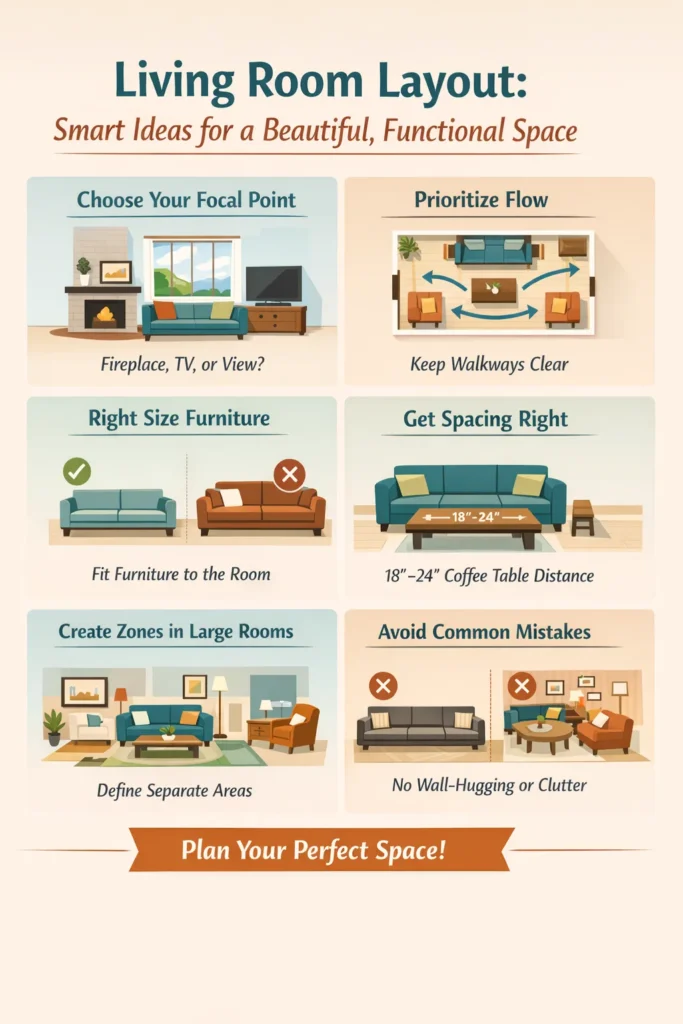
The Core Rules of a Smart Living Room Layout
Start with the room’s purpose
Before placing a single piece of furniture, decide what the room needs to do most often. Is it mainly a TV room? A conversation room? A reading space? A family room? A flexible open-plan zone? Or a blend of several functions?
That answer shapes everything else. A room built for conversation should bring seating closer together so people can interact easily. A room built around television viewing needs a clear screen angle and a comfortable distance. A room designed for hosting should feel open and welcoming, while a reading room may need quieter corners, softer lighting, and more visual calm.
One room should not try to do everything poorly. It is always better to choose the primary function first, then support it with the right furniture and movement paths. That single decision makes the rest of the design easier and more coherent.
A useful way to think about it is this:
Conversation first means a social layout.
TV first means a viewing layout.
Family life first means a durable and adaptable layout.
Open-plan living means a defined but connected layout.
When the purpose is clear, the room stops feeling vague and starts becoming intentional.
Choose the focal point first
Every successful living room needs an anchor. That anchor may be a fireplace, a television wall, a window with a view, a built-in shelving feature, a strong artwork arrangement, or a beautifully styled architectural element. The rest of the room should support that anchor rather than compete with it.
When a room has no focal point, the eye wanders without rest. The result is often a space that feels unsettled or incomplete. When the focal point is clear, the room gains direction. Furniture can then be arranged to reinforce that center of attention.
If the room includes both a fireplace and a TV, one should lead visually, and the other should remain quieter. Trying to give both equal dominance often creates tension. A room becomes much easier to design when the main visual priority is decided early.
A good focal point does not need to be dramatic. It simply needs to be believable and consistent. Even a simple wall arrangement can become the room’s anchor if it is supported with good furniture placement, lighting, and balance.
Respect circulation
A living room should never feel like an obstacle course. People need to move through the room without edging around chairs, squeezing between tables, or turning sideways to reach another part of the home. Smooth circulation is not a luxury. It is part of what makes a room genuinely functional.
Good Circulation means the layout leaves clear walking paths between doors, seating groups, windows, and adjacent spaces. It also means the room avoids dead-end clutter and awkward bottlenecks. A room can be full of furniture and still feel easy if the paths are clear.
In practical terms, circulation should be considered before accessories, before styling, and even before final furniture purchase. The room must allow movement first, then beauty can be added on top.
The best layouts do not fill space quickly. They guide Movement Naturally. That is what makes a room feel comfortable rather than cramped.
Get spacing right
Spacing is one of the biggest reasons living rooms succeed or fail. Furniture that is too far apart feels disconnected. Furniture that is too close feels tight and difficult to use. Tables placed incorrectly can either block movement or become useless.
The most effective layouts usually keep the sofa and coffee table close enough to be useful, but not so close that knees, shins, or walking paths are interrupted. Seating groups also need a relationship to one another that supports conversation, lounging, and viewing.
Spacing is not about rigid rules. It is about a comfortable proportion. The exact distances may change depending on room size, furniture style, and the room’s purpose. A large room may allow more generous spacing, while a small room may need tighter, more efficient placement.
What matters most is that the layout feels practical. The room should invite use rather than forcing awkward movement or uncomfortable reach.
Match the furniture scale to the room
Scale is as important as style. A beautiful sofa can still fail if it is too large for the room. A tiny chair can disappear in a spacious room. A wide table can overwhelm a narrow space, while a delicate piece may look lost in a large family room.
Small rooms usually need lighter visual weight, slimmer lines, and fewer oversized objects. Large rooms need furniture with enough presence to anchor the space. Narrow rooms need arrangements that interrupt the length and create definition. Awkward rooms need furniture that adapts to shape rather than fighting it.
A simple way to remember it:
Small room = lightness.
Large room = weight.
Narrow room = interruption.
Awkward room = clarity.
Scale is what makes a room feel intentionally composed instead of randomly filled.
Best Living Room Layout by Room Type
| Room Type | Best Layout | What It Should Do | Common Mistakes to Avoid |
| Small living room | L-shaped or compact conversational layout | Keep seating close and preserve walking space | Using bulky pieces or too many items |
| Large living room | Zoned layout with one or two seating groups | Fill the room without leaving an empty center | Pushing all furniture to the walls |
| Long narrow room | Zoned layout with a visual break | Interrupt the long sightline and create separate uses | Running everything in one straight line |
| Awkward room | Custom layout based on doors, corners, and angles | Respect the circulation and use the architecture well | Forcing a standard rectangle solution |
| Open-plan room | Soft boundary layout with rugs and sofa placement | Define the living area without closing it off | Letting the room become undefined |
| TV + fireplace room | Dual-focus or priority-focus layout | Make one feature lead and the other support | Creating two competing focal points |
This table reflects the same large idea repeated across the strongest modern layout thinking: the room shape should guide the plan, not the other way around. Each room type has its own spatial logic, and the best design decisions are the ones that respond to that logic instead of ignoring it.
Small Living Room Layout
A small living room layout should feel open, calm, and highly usable. The goal is not to stuff the room with every possible furniture piece. The goal is to choose a small number of smart pieces that support the room’s main function without overwhelming the floor plan.
In a compact space, every item must earn its place. Furniture needs to be proportional, versatile, and visually light enough to keep the room from feeling crowded. A small room often looks best when the arrangement is edited rather than excessive.
What works best in a small room
A compact sofa is usually the best starting point. One or two accent chairs may be enough if more seating is truly needed. A slim coffee table or a round table can help preserve movement. Wall-mounted storage, floating shelves, or vertical solutions often work better than bulky cabinets. The more floor visible, the larger and calmer the room tends to feel.
Keeping the arrangement simple also helps the room breathe. When a small room contains too many separate pieces, it starts to feel visually noisy. Fewer, stronger choices usually produce a better result.
What to avoid
Avoid oversized sectionals unless the room is truly large enough to handle them. Avoid filling every empty corner with decor or extra furniture. Avoid using too many tiny items, because a large number of small pieces can make the room feel busy and fragmented. Avoid blocking the natural path of movement through the room.
A practical example
Imagine a living room that is 12 feet by 14 feet. A compact sofa placed on one wall, one accent chair near the window, and a round coffee table in the center may be enough to create a balanced, comfortable, and functional arrangement. Adding a large sectional and several extra chairs could make the same room feel instantly crowded.
Small rooms usually look best when they feel curated. A few well-chosen pieces create more impact than a cluttered collection of furniture that competes for space.
Large Living Room Layout
A large living room layout has a very different challenge. Instead of feeling cramped, large rooms often feel empty, cold, or disconnected if they are not properly structured. The mistake most people make is thinking that a big room simply needs more furniture. In reality, it needs better organization.
The best strategy for a large living room is zoning. That means dividing the room into functional areas so it feels purposeful rather than vacant. One seating group may support conversation or television viewing, while another area may serve reading, music, quiet time, or occasional guests.
How to make a large room feel warm
Create one dominant seating zone that feels anchored and complete. Add a secondary nook if the room needs extra function. Use a large rug to ground the main grouping. Choose furniture with enough visual substance to hold the room. Avoid lining every piece around the perimeter, because that often makes the center feel abandoned instead of inviting.
A larger room should not feel like one giant furniture island. It should feel like a series of connected, human-scale spaces that work together. Even a generous room becomes easier to live in when it has structure and a clear center of gravity.
What not to do
Do not leave the middle of the room with no purpose. Do not use very small furniture that disappears into the scale of the room. Do not create accidental emptiness by spacing everything too far apart. Large spaces need intention. Without it, they can feel unfinished.
A practical example
A big living room may include a main sofa arrangement facing the fireplace or TV, plus a pair of chairs near a window or built-in bookshelf. That setup fills the room without overcrowding it. It also gives the room multiple zones of use, which makes the space feel richer and more complete.
Large rooms are not about quantity alone. They are about proportion, rhythm, and visual balance.
Long Narrow Living Room Layout
A long, narrow living room can be one of the hardest spaces to arrange because the shape naturally encourages a straight-line look. Left untreated, the room starts to feel like a hallway instead of a living area. The solution is not to fight the shape blindly, but to interrupt it with smart spatial breaks.
The goal is to prevent the eye from traveling in one continuous line from one end to the other. A narrow room needs visual pauses. It needs furniture groupings that create rhythm. It benefits from layouts that make the room feel wider, more layered, and more deliberate.
What works best
A main seating area at one end or near the center often works well. A corner sofa or L-shaped arrangement can help soften the linear shape. A rug and a coffee table can break the length visually. A second use area, such as a reading corner or small desk zone, can give the far end a purpose.
The key is to create a room with more than one moment. Long, narrow spaces become much more successful when they stop behaving like a single corridor.
What to avoid
Do not line all the furniture in a straight row. Do not let the room become one long, empty runway. Do not push everything to the walls and leave no inner shape. These choices make the room feel stretched and awkward instead of livable.
A practical example
A long living room may work well with a primary lounge zone near one end, a square or round coffee table in the middle, and a small reading or storage area at the opposite end. This creates a sequence of uses rather than one continuous lane.
A long room should feel designed with purpose. It should not feel as if the furniture was simply placed wherever it fit.
Awkward Living Room Layout
An awkward living room layout is usually difficult because of the architecture, not because of the furniture itself. Doors, alcoves, corners, odd angles, off-center fireplaces, and irregular wall lengths can all make a room feel confusing at first glance. But awkward does not mean hopeless. In many cases, these rooms become the most interesting spaces in the home once they are handled well.
The best response is to stop forcing the room into a standard rectangle. Instead, treat the room’s shape as information. Where do people naturally walk? Where does the eye naturally stop? Which wall is most useful as an anchor? Which corner wants to stay open?
How to handle awkward rooms
Start by identifying the natural circulation paths. That gives the room its backbone. Then decide where the most logical focal point should be. After that, choose furniture that can adjust to the room’s geometry instead of resisting it. Modular seating, Movable Chairs, round tables, and slim storage pieces can be extremely helpful.
A room with an unusual footprint often benefits from softer symmetry rather than rigid mirror planning. It also responds well to flexible zoning, because Different Parts of the room may have different roles.
What to avoid
Do not force a ready-made furniture plan into a room that clearly needs a custom response. Do not ignore the doors, windows, or fixed features. Do not block the easiest path through the space. And do not assume the room has to look conventional to work well.
A practical example
A room with an awkward corner might be improved by placing a sofa against the strongest wall, a round table in the center to soften angles, and a reading chair or slim cabinet in the odd corner so the space feels used rather than wasted.
Awkward rooms often improve the moment the layout becomes calm, clear, and practical.
Open-Plan Living Room Layout
An open-plan living room layout needs soft boundaries. Because there are no full walls to contain the space, the living area still needs a sense of shape. Without that structure, the room can feel scattered, unfinished, and visually noisy.
The goal is not to divide the room harshly. The goal is to define the living area gently so it feels distinct while still connected to the rest of the home. The best open-plan layouts create balance between openness and order.
What works best
A sofa can mark the edge of the living zone and help frame the room. A rug can anchor the seating area. A console table behind the sofa, a low bookcase, or a well-placed shelf can create a subtle transition without blocking light or movement. The arrangement should feel open, but not vague.
Open-plan living rooms work best when the furniture itself acts as a soft architecture. In other words, the pieces help create boundaries without needing actual walls.
What to avoid
Do not let the room become one giant, undefined zone. Do not place furniture so far apart that the seating arrangement loses coherence. Do not overfill the area with dividers that make the room feel broken up. The purpose is definition, not enclosure.
A practical example
In an open-plan home, the living room may begin with a sofa facing the main focal point, a rug underneath the seating, a pair of chairs across from it, and a console behind the sofa to gently separate the living zone from the dining area or kitchen. That arrangement creates order without reducing openness.
A strong open-plan layout says where the living room begins and ends without closing the room off from the rest of the home.
Living Room with TV and Fireplace
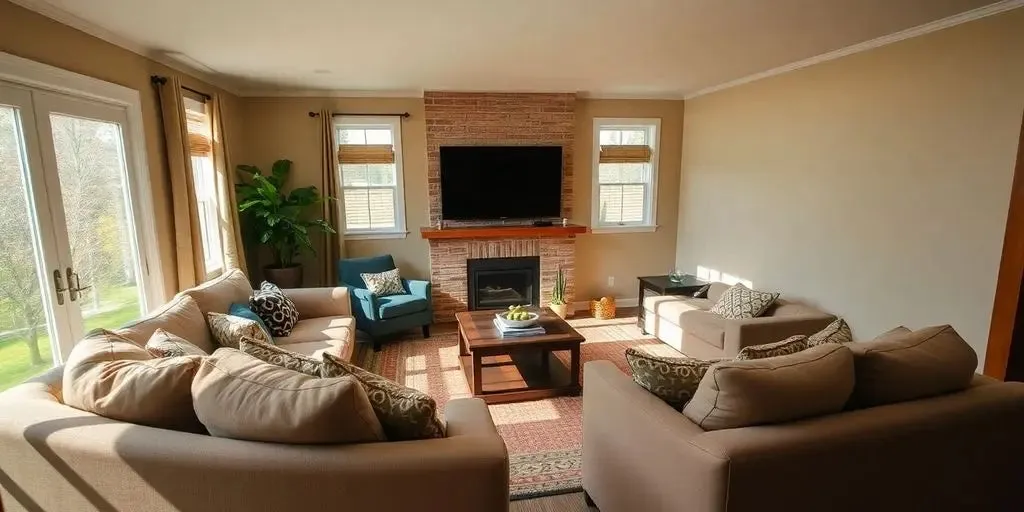
A living room with both a TV and a fireplace needs hierarchy. Both features may matter, but one should lead visually while the other supports the room. When both try to dominate, the layout usually feels conflicted.
The first decision is simple but important: which feature matters more in daily life? If family movie nights are the priority, the TV may lead. If the fireplace is the main architectural feature and is used often, it may lead to. Once that choice is made, the rest of the arrangement becomes more manageable.
How to handle it
Choose the primary focal point first. Arrange the seating around it. Keep the secondary feature quieter if possible. Use art, lighting, shelves, or storage to support the leading wall rather than overload it.
A room with both features can absolutely work. The key is that it needs a clear visual hierarchy, not equal competition.
What to avoid
Do not make both features fight for attention. Do not place the sofa at an awkward angle simply to include everything. Do not crowd the wall with too many elements. Simplicity often improves the result more than trying to force perfect symmetry.
A practical rule
If the fireplace is the room’s strongest visual feature, let it lead. If the TV is the everyday priority, let it lead instead. The room becomes much easier to plan once that decision is honest and clear.
Step-by-Step Process to Plan Your Living Room Layout
Measure the room
Measure wall lengths, window placement, door swings, and fixed features such as radiators, built-ins, fireplaces, and outlets. A layout can only be accurate if the measurements are accurate.
This step matters more than most people realize. Without clear measurements, furniture placement becomes guesswork. With them, decisions become much more precise and practical.
Decide the main use
Ask one simple question: what happens here most often? Conversation, TV, reading, family time, hosting, or mixed use?
That answer should guide everything that follows. It determines seating style, spacing, focal point choice, and furniture scale.
Place the focal point
Start with the Fireplace, TV, window, or main feature. Build the room around that anchor instead of trying to decorate around emptiness.
The focal point gives the room direction. Once it is established, the rest of the layout has a clear reference.
Draw the walking path
Before placing the coffee table or side chairs, think carefully about movement. Where do people enter? Where do they exit? Which routes need to stay open?
A room should never feel like a maze. The clearer the path, the better the room functions.
Add the main seating
In most rooms, the sofa should be chosen first. Then add accent chairs, a loveseat, or a second sofa if needed. The main seating determines the room’s rhythm and scale.
A modular or corner arrangement can be especially useful in flexible spaces, while a straight sofa works well in more traditional layouts. The right choice depends on the room’s purpose and geometry.
Set the table distance
A coffee table should be positioned close enough to use comfortably, but not so close that it blocks movement or makes the room feel tight.
The table should support the seating group, not interrupt it. Its distance from the sofa should feel natural and useful.
Add rug, lighting, and storage
A rug defines the seating area. Lighting shapes mood and usability. Storage keeps the room visually calm. These elements may seem secondary, but they strongly influence how polished the room feels.
A room with good layout, layered lighting, and enough storage usually feels more composed than a room with expensive furniture and poor structure.
Furniture Arrangement Styles That Actually Work
Symmetrical layout
A symmetrical layout is ideal for formal rooms or spaces where calm balance is the goal. Two sofas facing each other, or one sofa paired with matching chairs, creates order and visual rest. This style is especially effective in rooms meant for conversation or elegant entertaining.
Symmetry can make a room feel timeless, grounded, and intentional. It also helps rooms feel structured very quickly.
L-shaped layout
The L-shaped layout is one of the most practical choices for daily living. It works especially well in small rooms, corner spaces, and open-plan homes. It keeps people connected while using the floor plan efficiently.
This layout often feels relaxed, adaptable, and easy to live with. It is Especially useful when the room needs to serve more than one function.
U-shaped layout
A U-shaped arrangement is excellent for conversation and family life. It gathers people into one zone and creates a strong sense of enclosure without making the room feel closed. It is useful in rooms designed for socializing, movie nights, and long conversations.
Asymmetrical layout
Asymmetry is useful in modern spaces and irregular rooms. It allows the room to feel dynamic without forcing perfect mirror balance. This style is especially helpful when the architecture itself is not symmetrical.
Asymmetry can make a room feel stylish, relaxed, and more responsive to real-world conditions.
Zoned open-plan layout
This is the best approach for larger connected homes. Rugs, sofas, shelving, lighting, and furniture orientation define distinct functions while preserving flow and openness. The result is a room that feels planned rather than accidental.
Zoning is one of the most powerful tools in modern interior design because it introduces clarity without adding walls.
Design Ideas for Different Budgets and Room Sizes
Small living room ideas
Use a slim sofa. Add one accent chair if space allows. Use nested tables instead of oversized pieces. Choose wall-mounted storage when possible. Keep decor intentional and restrained.
A small room benefits from editing. Every choice should help the space feel lighter and more composed.
Large living room ideas
Go larger with scale, not clutter. Use a substantial rug. Create two seating clusters if the room supports it. Choose furniture with enough presence to fill the space visually.
The goal in a large room is not abundance for its own sake. The goal is balance, proportion, and warmth.
Budget-friendly living room ideas
Spend first on the sofa, rug, lighting, and storage. These pieces have the greatest impact on both function and visual structure. Keep the layout simple so the room feels intentional, even if the budget is modest.
A strong layout can make affordable furniture look far better than expensive furniture arranged poorly.
Premium and luxury living room ideas
Luxury often comes from proportion, finish, and restraint. Custom storage, well-made upholstery, and a rug that anchors the room properly can dramatically elevate the space. In many cases, less visual noise creates a more refined effect than more decoration.
A luxurious room usually feels calm, balanced, and quietly confident.
Smart and future-ready living room ideas
Modern living rooms benefit from charging points, cable management, modular seating, and flexible arrangements. Rooms today often need to adapt to work, rest, entertainment, and family use without feeling cluttered.
Future-ready design is practical design. It supports change without losing beauty.
Color, Lighting, and Furniture Choices That Support the Layout
Color
Color should support the room rather than compete with its structure. Lighter shades can help a small or narrow room feel larger and airier. Deeper tones can make a larger room feel more intimate, Grounded, and cozy.
Color is not only decorative. It changes perception. It affects how Expansive, warm, or enclosed the room feels.
Lighting
Layered lighting is essential. A living room usually works best when it has overhead lighting, table lamps, and task or accent lighting. Good lighting makes the layout feel usable at different times of day and helps define the mood of the room.
Without layered lighting, even a strong layout can feel flat at night or too harsh in the daytime.
Furniture
Choose furniture for both scale and function. Large rooms can handle heavier visual pieces. Small rooms need slimmer lines and tighter editing. Flexible seating is especially helpful in rooms that change use throughout the week.
Furniture should support the layout, not override it. When shape, scale, and purpose align, the room naturally feels better.
Common Living Room Layout Mistakes to Avoid
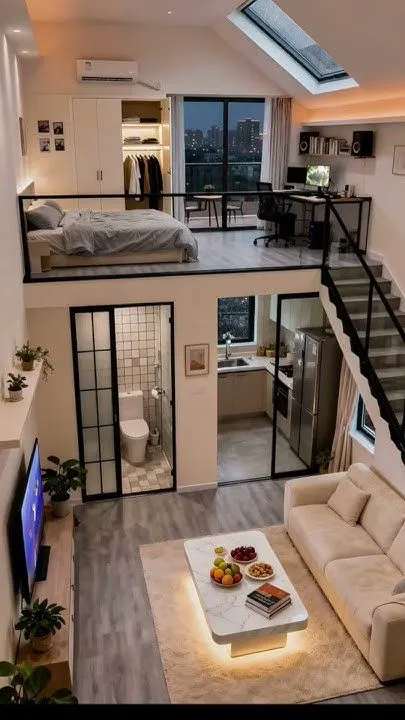
Pushing every piece against the wall
This is one of the most common mistakes. It can make a room feel stiff, disconnected, and oddly empty in the middle. Not every piece should hug the perimeter.
Choosing oversized furniture for a small room
Large furniture in a compact room can block pathways and reduce comfort. The room starts to feel compressed even when it is technically not full.
Using too many small pieces
Too many tiny chairs, tables, and accessories can make the room feel fragmented. The eye has nowhere to rest, and the space loses coherence.
Forgetting the focal point
A room without a focal point feels uncertain. The eye needs a visual anchor to understand where the room begins and how it is organized.
Leaving too much space in large rooms
Big rooms need structure. Space without purpose can feel unfinished rather than elegant.
Making the walkways too tight
If people keep bumping into furniture, the layout is not working. Circulation should always be easy and natural.
Placing the coffee table too close or too far
Too close feels cramped. Too far feels inconvenient. The table should feel comfortably reachable and useful in daily life.
Avoiding these errors can dramatically improve both comfort and visual polish.
Pros and Cons of a Layout-First Approach
Pros
It makes the room more comfortable to live in.
It helps small rooms feel bigger and large rooms feel more balanced.
It makes shopping easier because you know what size and shape you need.
It improves flow, conversation, and everyday usability.
It works across modern, classic, small, large, and open-plan homes.
A layout-first mindset creates fewer mistakes and stronger long-term results.
Cons
It takes more measuring and planning before buying.
It can feel less spontaneous than decorating by instinct.
Awkward rooms may still require compromise.
Some spaces work better with custom or flexible furniture.
Even so, the benefits usually outweigh the drawbacks because the room functions better over time.
Quick Pro Tips for a Better Living Room Layout
Tape the furniture outline on the floor before buying anything.
Start with the focal point, not the sofa.
Use a rug to define the living zone.
Create more than one seating area in large rooms.
Break the length in long rooms with zoning or a square table.
Keep the room easy to walk through before worrying about decor.
These small actions often save the most time, money, and frustration.
Examples of Living Room Layouts
Small apartment living room
A compact sofa, one chair, a round coffee table, and wall-mounted storage. This keeps the room open, efficient, and easy to live in.
Large family room
A large sofa group around the TV, a reading chair near the window, and a second seating cluster by the fireplace. This makes the room feel full without feeling crowded.
Long, narrow room
A central seating zone with a rug, a square table, and a secondary use area at one end. This breaks the length and creates a more balanced room.
Open-plan space
A sofa arranged with its back toward the dining area, a rug under the seating, and a console behind the sofa to gently define the living zone.
TV and fireplace room
One anchor leads, the other supports. The seating follows the main feature, while the secondary feature stays visually calm.
These examples show that layout is not a fixed formula. It is a practical response to the room’s real shape and purpose.
FAQs
The best living room layout is the one that fits how the room is used. For conversation, seating should face each other and stay close enough to feel connected. For large rooms, zoning works better. For narrow rooms, breaking up the length is the smartest move.
A common rule is about 16 to 18 inches between the sofa and coffee table. That distance is close enough to use comfortably but far enough to allow movement.
A useful benchmark is about 30 to 36 inches for walkways when possible, with tighter rooms adjusted carefully. For conversation seating, a comfortable range between opposing seats often works best when the room allows it.
Not always. In many rooms, pulling the sofa slightly away from the wall improves balance and makes the room feel more intentional. The exact distance depends on the room size.
An L-shaped layout is often the strongest choice because it keeps seating close, conversational, and space-efficient while still leaving room to move.
Conclusion
The best living room layout is never a rigid formula. It is a practical balance of purpose, focal point, circulation, scale, and comfort. When those elements work together, the room feels easier to use, more beautiful to look at, and far more Satisfying to live in.
That is why strong layout thinking consistently leads to better results than Decoration alone. A good living room does not happen by accident. It is shaped by clear choices, careful spacing, and furniture arranged with real life in mind.
Start with the room’s purpose. Choose the focal point. Respect the paths people use every day. Match the scale of the furniture to the room. Then refine the space with light, color, and storage. That approach creates a living room that feels complete, comfortable, and quietly confident.
