
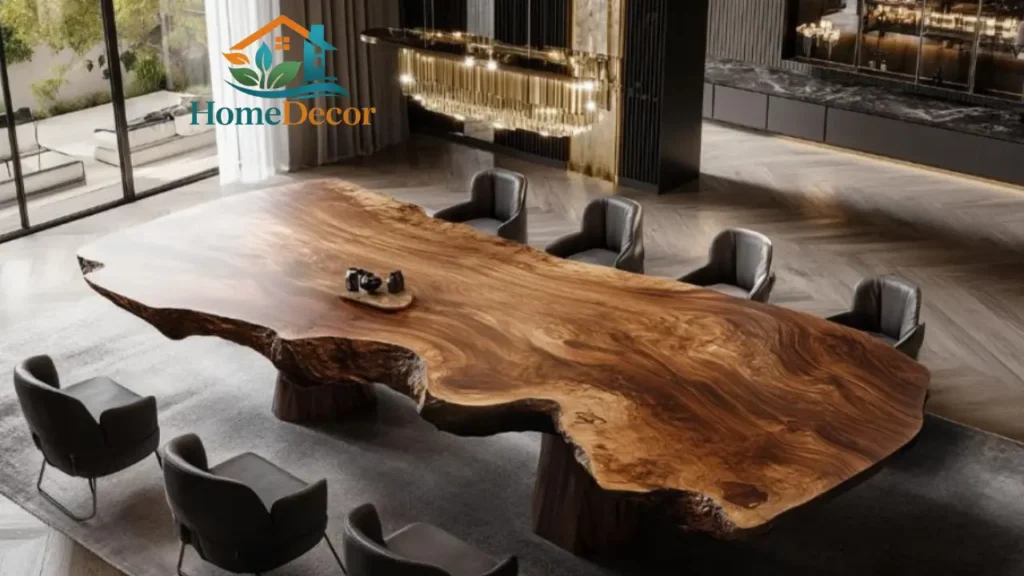
Introduction of Live Edge Dining Room Table
A dining table, as mentioned, is more than a platform for eating. It is the heart of your home, the center, the anchor. It is the gathering place after a day at work, the platform to talk to siblings, the platform for celebrations, the platform for visitors to sit on, and the platform to quietly accumulate memories over the years.
In the year 2026, there is a style that rises above the rest of the trends. This style has managed to attract the attention of, among others, homeowners, designers, architects, and furniture enthusiasts, the world over. This style is the Live Edge Dining Room Table.
A live-edge table is special because it has the story of the tree. A craftsman does not carve perfect lines. The craftsman retains the form of the wood. The craftsman retains the curves, the raw wood, the character knots, and the unique silhouette of the wood. This means that no two Live Edge Dining Room Tables will be the same. Every single Live Edge Dining Room Table is a one-of-a-kind piece.
Whether designing a dining area, updating an old décor, or selecting furniture for clients, or if you’re looking to learn more about the luxury of the Live Edge Dining Room Table, this guide has everything you need to know.
What Is a Live Edge Dining Room Table?
A live-edge dining room table is a table created from real hardwood slabs that maintain the authentic, untouched outer edge of the tree. Instead of a clean-cut, straight-edged board, the outside of the slab showcases the natural wave, the original contour, the organic texture, and the raw character of the wood.
This style highlights:
- Real tree bark lines
- Curves shaped by nature
- Knots that add personality
- Rich grains and patterns
- Natural cracks or splits that become part of the design
In simple terms, it is nature and craftsmanship brought together.
Why Homeowners Love It
A live-edge table continues to be a favorite because it is:
- Natural, organic, and artistic
- Unique and unrepeatable
- Compatible with almost every interior style
- Made from real hardwood, not synthetic or fake veneers
- Warm, grounding, and Full Of Personality
Real-Life Example
If 5 homeowners purchase a plastic table, all 5 will look the same, factory-made, identical, predictable.
But if 5 people buy a live-edge table, none of their tables will look alike. The shape, edges, grain flow, and natural variations make each piece 100% original.
A live-edge table isn’t just furniture.
It is functional art.
Why Choose a Live Edge Dining Room Table?
A live-edge table is often described as a functional sculpture, a centerpiece with both purpose and beauty. It is durable, artistic, eco-friendly, and visually striking.
Top Benefits
Unmatched Natural Beauty
The natural curvature, rich grain lines, and organic textures create a visual focal point in any room, modern, rustic, luxury, or minimalist.
Extreme Durability
Most slabs are 1.5 to 3 inches thick and made of high-quality hardwood, making them incredibly long-lasting. These tables can last 50+ years.
Design Versatility
Live edge works well with:
- Modern minimalist interiors
- Scandinavian designs
- Industrial loft spaces
- Rustic farmhouse homes
- High-end luxury homes
- Vintage and eclectic décor themes
- Mid-century inspired rooms
Eco-Friendly Option
Many live-edge woodworkers use:
- Sustainably harvested lumber
- Salvaged storm-fallen trees
- Reclaimed agricultural wood
- Ethical forestry sources
This makes it a green, environmentally responsible choice.
High Resale Value
Real hardwood furniture increases in value over time.
A well-maintained live-edge table is a lifetime investment.
Live Edge vs Traditional Dining Table
To help beginners understand the difference, here is a side-by-side comparison.
Comparison Table
| Feature | Live Edge Table | Traditional Table |
| Look & Style | Natural, artistic, unique | Uniform, straight, predictable |
| Material | Solid hardwood slab | Veneer, engineered wood, plywood |
| Durability | Very high | Medium–high, depending on the material |
| Design Impact | Statement piece | Functional but simple |
| Pricing | Premium range | Budget to premium |
| Customization | High | Low |
Which is better?
Choose Live Edge if you want character, beauty, uniqueness, and long life.
Choose Traditional if you want a budget-friendly and uniform design.
Types of Live Edge Dining Room Tables (2026)
Live-edge tables come in many variations. Below is an expanded breakdown of styles, materials, construction types, and options.
Solid Hardwood Slab Live Edge Table
The most luxurious, premium, and long-lasting category.
Pros
- Extremely durable
- Stunning natural grain
- High-end, luxury appearance
- Can last several decades
- Natural warmth and charm
Cons
- Heavy
- More expensive
- Requires some maintenance
Best Woods for Solid Slab Tables
Black Walnut
- Rich chocolate-brown color
- Luxury favorite
- Excellent durability
- Perfect for modern interiors
Oak
- Strong, sturdy, textured grain
- Works in rustic, farmhouse, and modern designs
Maple
- Light-colored
- Minimalist feel
- Great for small rooms
Acacia
- Affordable
- Moisture-resistant
- Darker grains with contrast
Teak
- Premium
- Water-resistant
- Perfect for both indoor and outdoor use
Epoxy Resin Live Edge Table
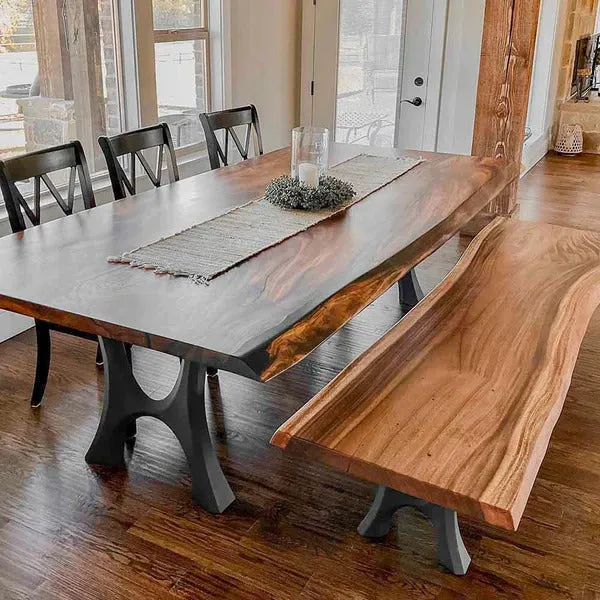
These are extremely popular in high-end modern homes.
Pros
- Stunning “river” effect
- Water-resistant
- Highly customizable
- Available in many colors and tones
Cons
- Needs UV-stable epoxy
- Cheap resin can scratch
- Requires expert craftsmanship
Common Resin River Colors:
- Ocean blue
- Deep black
- Emerald green
- Clear transparent
- Smoky gray
- Gold metallic
Reclaimed Wood Live Edge Table
Made from barns, mills, old beams, or naturally fallen logs.
Pros
- Eco-friendly
- Rustic, vintage charm
- Full of character
- Sustainable choice
Cons
- Rougher surface
- Sometimes uneven
- Requires occasional restoration
Perfect For Farmhouse, cabin, and earthy interiors.
Veneer / Engineered Wood Live Edge Table
Budget-friendly, lightweight, accessible option.
Pros
- Affordable
- Available everywhere
- Light and easy to move
- Many styles available
Cons
- Not real live edge
- Short lifespan
- Cannot be refinished
Good for rental homes, apartments, and budget setups.
How to Choose the Perfect Live Edge Dining Room Table
A great table is chosen with care. Follow these steps:
Measure Your Space
You should leave enough room for chairs and walking space.
Minimum Clearance
- At least 36 inches (91 cm) behind each chair
- 48 inches in high-traffic dining areas
Ideal Table Size Guide
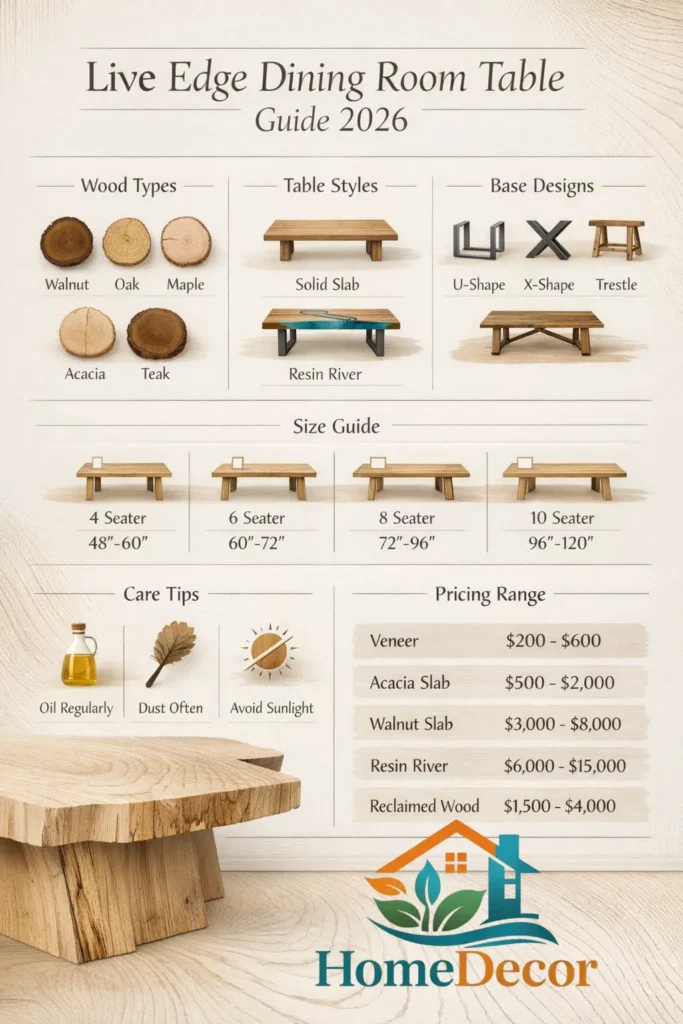
| Seating | Table Length |
| 4 Seater | 48–60 in |
| 6 Seater | 60–72 in |
| 8 Seater | 72–96 in |
| 10 Seater | 96–120 in |
Always measure twice, buy once.
Choose the Right Wood Type
Best Woods (Simple Breakdown)
- Walnut rich, dark, luxurious
- Oak ultra-durable, textured grain
- Maple clean, bright, minimal
- Acacia is budget-friendly, moisture-resistant
- Teak premium, long-lasting, perfect outdoors
Pick the Perfect Base
Your base impacts stability and style.
Metal Base
- Strong, modern, sleek
- Perfect for heavy slabs
- Gives an industrial or contemporary look
Wood Base
- Warm, timeless, traditional
- Great for farmhouse or rustic homes
Base Shapes
- U-Shape
- X-Shape
- Trestle
- V-Shape
- Pedestal
- Cross-Leg
- Geometric Custom Bases
Choose the Finish
Finish determines the final look.
Oil Finish
- Natural feel
- Needs re-oiling yearly
Satin Finish
- Smooth
- Subtle shine
- Modern
Matte Finish
- Soft look
- Minimalist style
Epoxy Finish
- Glossy
- Waterproof
- Modern luxury
Live Edge Dining Room Table Design Ideas
Expanded design inspirations based on 2025–2026 trends.
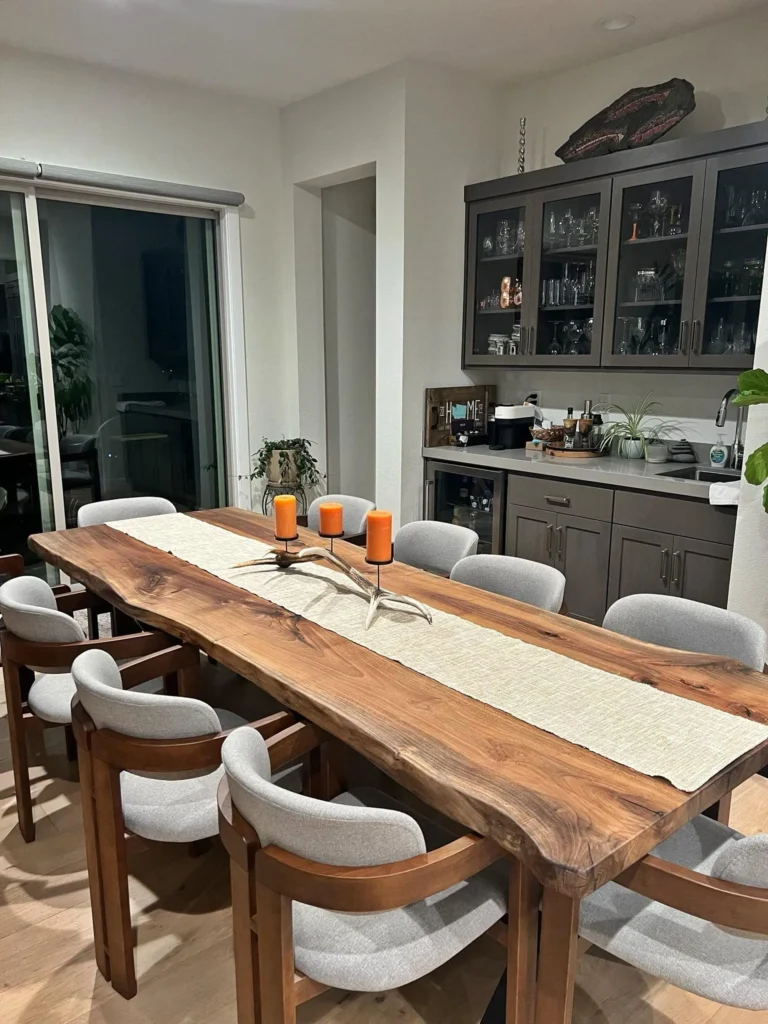
Modern Minimalist Dining Room
Use:
- Walnut slab
- Black steel legs
- Neutral walls
- Slim dining chairs
- Simple pendant lighting
Perfect for Scandinavian and minimal homes.
Rustic Farmhouse Look
Use:
- Reclaimed oak
- Thick wood base
- Warm Lighting
- Woven rugs
- Earthy tones
Creates a cozy, countryside feeling.
Luxury 2026 Trend: Resin River Tables
Use:
- Blue, emerald, or black resin
- Gold, chrome, or black legs
- Statement pendant lights
- Accent décor
Great for high-end designer homes.
Industrial Loft Style
Use:
- Concrete wall finish
- Iron X-base
- Neutral décor
- Matte finishes
Perfect for modern apartments and lofts.
Small Dining Room Ideas
Use:
- Maple or light acacia
- Round live-edge tables
- Low-profile chairs
- Minimal décor
Makes small rooms feel spacious.
Budget-Friendly Live Edge Ideas
- Choose acacia slabs
- Use steel legs
- Pick smaller sizes
- Choose matte oil finish
- Consider veneer for starters
Premium / Luxury Live Edge Ideas
- Black walnut slab
- Dual river epoxy
- Custom metal bases
- High-gloss finish
- LED under-lighting
Common Mistakes to Avoid
Buying without measuring
Believing veneer is real wood
Ignoring the moisture level
Weak or unstable base
Direct sunlight exposure
Using harsh cleaning chemicals
Maintenance & Care Guide
Daily
- Wipe with a soft dry cloth
- Don’t let water sit
Monthly
- Light polish
- Dusting
Yearly
- Re-oil or re-wax
- Check the screws on the base
Avoid
- Direct heat
- Abrasive cleaners
- Damp rooms
Live Edge Dining Table Price Guide 2026
| Table Type | Estimated Cost |
| Veneer Faux | $200–$600 |
| Acacia Slab | $500–$2,000 |
| Walnut Slab | $3,000–$8,000 |
| Custom Epoxy River | $6,000–$15,000 |
| Reclaimed Wood | $1,500–$4,000 |
Pro Tips From a Designer
- Ideal thickness: 1.75–2.5 inches
- Walnut + black steel = modern luxury
- Round tables = best for small rooms
- Avoid glass tops
- Use warm lighting
FAQs
Yes, they are. Live-edge dining tables can last for a very long time. Organic-edge dining tables also look very unique. Live-edge dining tables also increase the value of your home.
Walnut is a good option for live-edge tables since it is very high-quality. If you want to get live-edge tables that can last for a very long time, then get oak and maple wood live-edge tables. If you don’t have much money to spend on live-edge tables, then get acacia wood live-edge tables.
Yes, they can fit in with the rest of the home. Live-edge tables can also look very good in the home if the right type of metal and matte finish is used.
50–100 years with good care.
Metal bases provide the strongest support.
Conclusion
A live-edge dining room table is not only a place to eat but also art, nature, and craftsmanship combined into one product. If you like the style of simple modern, Industrial, or luxurious, there is a live-edge table to match your style. Deciding on the wood, legs, style, and size of your live-edge table is important. This way, your live-edge table will be the focal point of your dining room for many years to come. With this guide, updated for 2026, you will be able to make a choice. You will be adding to the beauty and value of your home with a live-edge table that reflects your style. An alive-edge table will make your dining space very special. A live-edge table is a way to bring the outdoors into your home. Alive-edge table has a style that will make your house stand out from the crowd.
