
Introduction
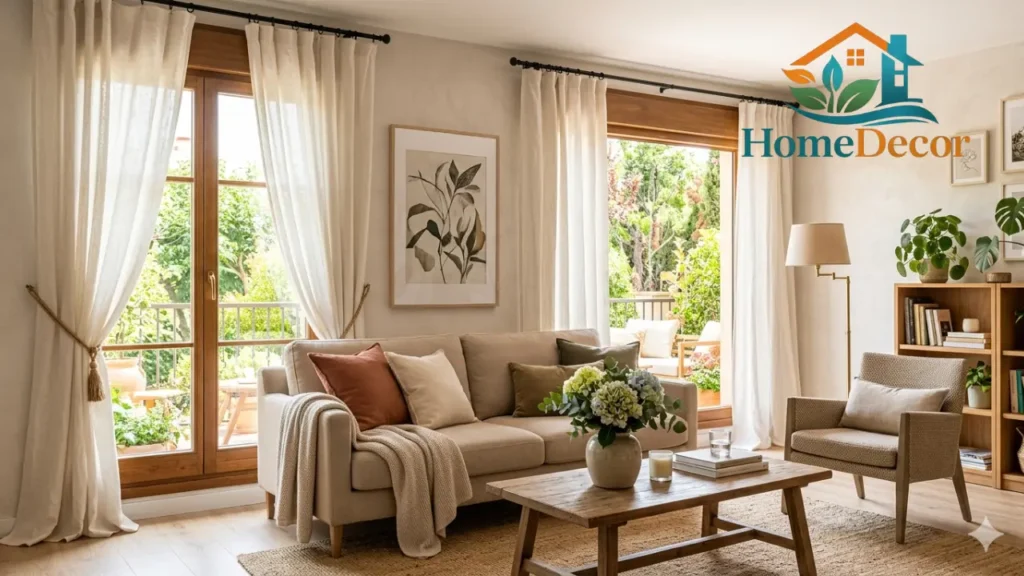
Linen Curtains for Living Room spaces are one of the easiest ways to make a room feel softer, calmer, and more complete without adding visual heaviness. With their soft sway, they add an earthy feel – effortless grace tucked into spaces ranging from sleek contemporary to weathered countryside styles. A quiet rhythm flows through rooms dressed simply or filled with vintage charm.
From the flax plant comes linen, a fabric tough enough to last, open enough to breathe, fast to dry, feeling crisp and cool against skin. Because it stretches less than most textiles, creases form without warning. In window drapes, though, such folds add charm instead of failing. Weight matters. So does what hides behind the cloth. How much material flows into the gathers plays its role. Even though it hangs shifts the look completely – flat droop or sharp elegance rests on these choices.
Light filters matter more these days. Airy layers shape how spaces feel. Soft textures rise in favor, often made from things found in nature. For living areas, linen steps into focus. Daylight slips through sheer fabrics without giving up seclusion. Homeowners pick half-transparent covers; designers do too. These choices add quiet elegance along with coverage. Layered looks bring depth minus heaviness. Natural fibers like linen follow this path naturally.
This guide covers linen – what it means, why it fits nicely in living areas, picking the right thickness along with shade, measuring plus putting it up the proper way, looking after it day to day, common errors worth skipping, and ways to arrange it across various spots. Written plainly, still full of specifics that help people grasp the idea fast, even online tools catch every bit just as clearly.
Why Linen Curtains Work So Well in Living Rooms
Living rooms need curtains that do more than cover a window. They should soften incoming light, improve privacy, frame the room, and make the whole space feel more intentional. Linen curtains for the living room design do all of that while still feeling relaxed and breathable.
One of the biggest advantages of linen is its texture. Its woven surface adds depth to plain walls, wood furniture, stone finishes, neutral upholstery, and simple decor. Even in a room with very few decorative elements, linen makes the space feel layered and styled. It gives a room quiet richness without the need for busy patterns or heavy ornament.
Linen also has a useful balance of beauty and practicality. It is stronger than cotton, dries faster, and tends to hold its shape well over time. At the same time, it creases more readily, which is exactly why many people prefer it in a soft, lived-in room rather than a stiff, formal one. A little natural drape and a little gentle wrinkling are part of the appeal.
Another reason linen works especially well in living rooms is that it supports the design direction many homes are already moving toward: softer, lighter, more layered, and more natural. Linen suits that mood because it never looks overly manufactured. It feels calm, organic, and timeless.
The main reasons people choose linen curtains are
- They soften daylight instead of blocking it harshly.
- They add texture without creating clutter.
- They suit many design styles.
- They feel breathable and comfortable.
- They can be sheer, medium-weight, lined, or layered.
For many homeowners, that combination is hard to beat.
What Linen Really Is: A Quick Fabric Guide
Linen comes from flax, a plant that has been used for textiles for thousands of years. Flax is valued because it produces fibres that are durable, smooth, and well-suited to household fabrics. In curtain use, that means linen can feel elegant and relaxed at the same time.
The material has a very distinctive personality. It absorbs and releases moisture quickly, which helps it feel cool and fresh. It also dries faster than cotton and tends to resist that heavy, sticky feeling some other fabrics can develop in humid conditions. Because linen fibres have relatively low elasticity, the fabric creases more easily. Those wrinkles are not a surprise or a defect; they are one of the reasons linen looks soft and natural.
For living rooms, this gives linen a very appealing identity. It looks soft, but not flimsy. It looks natural, but not unfinished. That middle ground is why it remains such a popular curtain material year after year.
Benefits of Linen Curtains for Living Room Spaces
They soften light beautifully
Many people choose linen curtains for living room windows because they filter light in a gentle, flattering way. Instead of turning a room dark or harshly shaded, linen can diffuse sunlight into a softer glow. This helps the room feel bright while still calm and comfortable.
Sheer and semi-sheer styles are especially valuable here. They allow light to pass through while still giving the window a finished, dressed look. That is useful in living rooms that receive strong daylight but still need visual warmth and privacy.
They add rich natural texture
Texture is one of the most important elements in contemporary interior design. A room can have excellent furniture and paint colors, but still feel incomplete if everything is visually flat. Linen solves that problem instantly. Its woven, slightly irregular surface adds depth without noise.
It pairs beautifully with:
- neutral sofas
- wood coffee tables
- woven baskets
- boucle seating
- rattan accents
- brass details
- stone and ceramic decor
Because linen does so much visually, the rest of the room can stay calm and simple.
They suit many interior styles
Linen has a rare kind of versatility. In a coastal room, it feels breezy and relaxed. In a minimalist room, it adds warmth without disturbing the clean lines.
That flexibility is one reason linen curtains remain such a strong long-term purchase. They do not lock you into one Style Direction.
They work well in a bright home
Living rooms with lots of sun often need curtains that can soften glare without making the room feel closed in. Linen is very good at this. It offers a balance between openness and coverage, especially when you choose the right weight or add lining.
If your space gets strong daylight for many hours a day, linen can still look fresh and graceful while reducing the feeling of harsh brightness.
They support a calmer mood
Sof, the natural fabric curtains often create a more peaceful visual experience than shiny or synthetic ones. Linen has a muted, matte finish that absorbs and diffuses light in a quiet way. That makes the room feel grounded, restful, and more refined.
Warm neutrals such as ivory, oatmeal, beige, greige, taupe, and stone are particularly effective because they keep the room serene and easy to decorate around.
Linen Curtains vs Other Curtain Fabrics
Choosing the right fabric becomes easier when you compare linen to other common options.
| Fabric | Light Control | Breathability | Wrinkle Resistance | Style Feel | Best For |
| Linen | Soft to medium, better when lined | High | Lower | Natural, textured, timeless | Relaxed living rooms, layered looks |
| Cotton | Medium | Medium | Medium | Clean, casual | Everyday rooms |
| Polyester | Medium to strong | Lower | Higher | Practical, uniform | Budget-friendly needs |
| Velvet | Strong | Lower | Medium | Rich, dramatic | Formal or moody rooms |
What this means in real life
Linen curtains for living room spaces are ideal when you want the best mix of beauty and daylight filtering. Cotton works for a simple, casual look. Polyester is easier to manage and often more affordable. Velvet blocks more light and creates a heavier mood.
Linen sits in the middle. It feels more elevated than basic cotton or polyester, but less formal than velvet. When it is cut generously and hung properly, it can make a room look especially polished.
How to Choose the Best Linen Curtains for Your Living Room
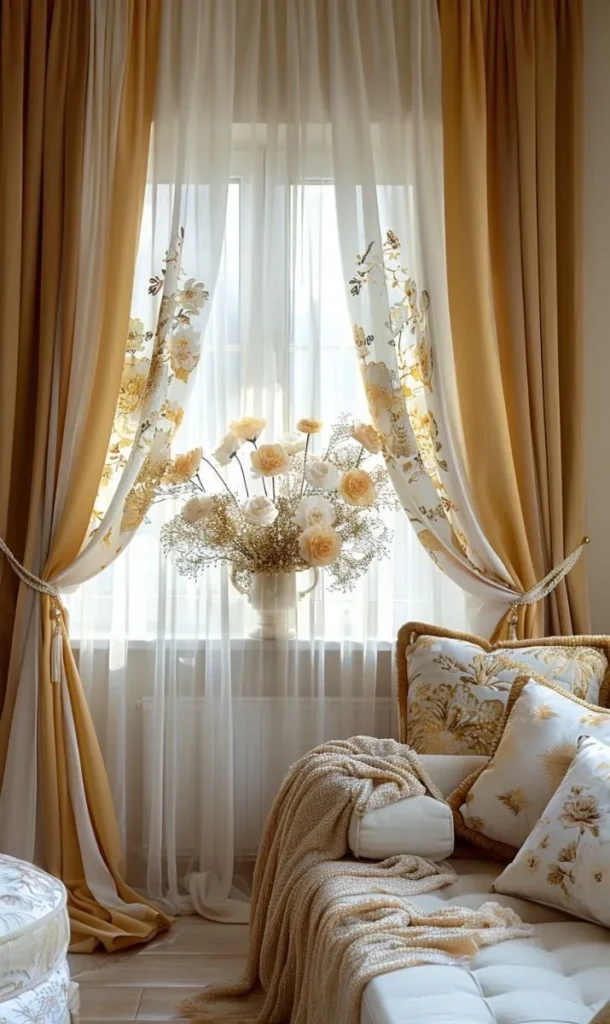
Linen is not one single product. The right choice depends on how much daylight your room receives, how much privacy you need, how large the room is, and how refined you want the final look to be.
Choose the right weight
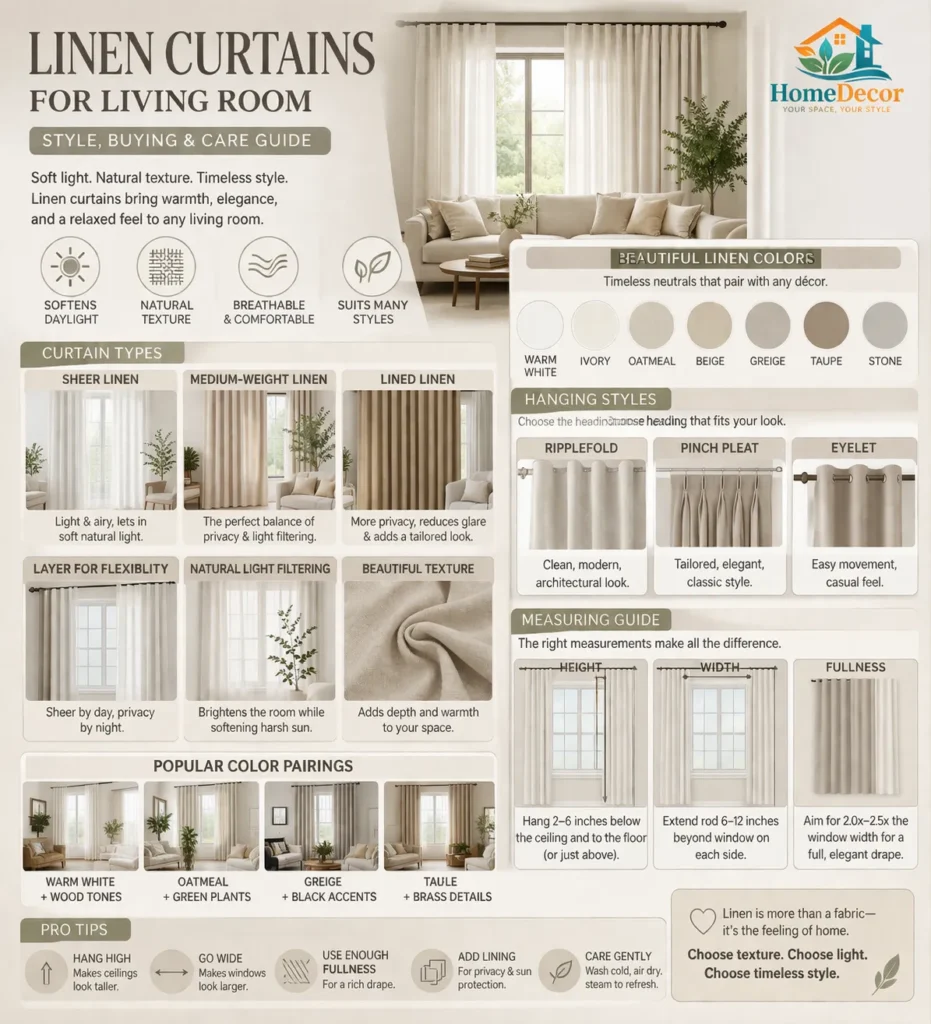
Sheer linen
Best for: bright homes, decorative windows, soft daylight, and layered styling.
Sheer linen creates the lightest, airiest result. It works well when the room already gets enough daylight and only needs a delicate filter. This style is popular in modern curtain styling because it adds softness without closing off the room.
Medium-weight linen
Best for: most living rooms.
This is the most versatile option. Medium-weight linen usually gives enough structure to hang well, enough opacity to feel useful, and enough softness to stay relaxed. For many people, this is the safest first choice.
Heavy linen or linen blend
Best for: large windows, stronger privacy, and more tailored spaces.
Heavier linen creates a more defined silhouette and can feel more polished in spacious rooms. Linen blends can also reduce wrinkling while keeping much of the natural look. They are especially useful when you want the feel of linen with a bit less maintenance.
Decide on opacity
Ask a simple question: do you want atmosphere, privacy, or both?
- Atmosphere first: choose sheer or semi-sheer linen.
- Privacy first: choose lined linen curtains.
- Both: layer a sheer linen panel with another curtain or choose lined panels.
This decision has a huge effect on the final result. A curtain that is too light can feel underdone. A curtain that is too dense can take away the airy feeling that makes linen special.
Pick a color that will last
Color is one of the most important long-term decisions. The best living room curtain colors are usually the ones that can work with different wall paint, Furniture Styles, and seasonal decor changes.
The most reliable choices are:
- warm white
- ivory
- oatmeal
- beige
- greige
- taupe
- soft stone
These shades are popular because they blend easily into almost any room. They create a soft background rather than competing with the rest of the decor. Linen’s natural texture also helps neutral colors feel richer than flat fabric would.
Color tips by room type
- Small living rooms: Use lighter linen shades to keep the room open.
- Large living rooms: deeper neutrals can work without overwhelming the space.
- Sunny rooms: warm whites and oatmeal help soften intense daylight.
- Luxury spaces: taupe, stone, and muted greige often look more tailored.
Choose the right curtain heading
The heading affects the mood of the curtain as much as the fabric does.
- Ripplefold: clean, modern, architectural
- Pinch pleat: tailored and elegant
- Rod pocket: relaxed and traditional
- Eyelet or ring top: easy movement and casual style
The heading should be chosen early because it affects the hardware, measurements, and finished appearance. A linen curtain can look completely different depending on whether it is softly gathered or sharply pleated.
How to Measure Linen Curtains the Right Way
A common mistake is measuring only the width of the window glass. Curtains should be planned for the wall, not just the opening. This makes the room feel larger, and the window feel more intentional.
Simple measuring rules
- Measure the full width you want to cover, not only the glass.
- Add extra rod width on both sides.
- Measure from your chosen mount point down to the floor.
- Decide whether the curtain should just touch the floor, break slightly, or hover just above it.
- Check fullness before ordering so the curtain does not look flat.
Why this matters
Curtains that are too narrow can look cheap or under-designed. Curtains that hang high and wide usually make the ceiling feel taller,r and the window feel more elegant.
A practical fullness guide
| Curtain Type | Good Fullness Ratio | What It Looks Like |
| Sheer linen | 2.0x or more | Soft, airy, floaty |
| Medium-weight linen | 2.2x–2.5x | Full and elegant |
| Heavy linen or lined linen | 2.0x–2.3x | Structured and tailored |
Fullness matters because drape changes the entire visual impression. When curtains have enough fabric, they look softer and more intentional. When they are too flat, they can feel unfinished.

Best Linen Curtain Colors for Living Rooms
Color should be chosen with longevity in mind. The best curtain shades are the ones that keep working even as your furniture or decor changes.
Top color choices
- Warm white for crisp, bright rooms
- Ivory for soft warmth
- Oatmeal for cozy natural interiors
- Beige for classic, safe styling
- Greige for modern spaces
- Taupe for deeper, richer looks
- Stone or sand for earthy rooms
These tones work because they create calm rather than visual competition. Linen’s texture makes even simple neutrals feel layered and expensive.
Best Linen Curtain Ideas for Different Living Room Styles
Modern minimalist living room
Choose plain off-white or greige linen with a clean heading, such as ripplefold or a simple pleat. Keep the panels’ floor length and avoid unnecessary decoration. The goal here is quiet texture rather than strong visual drama.
Warm and cozy living room
Use oatmeal, sand, or soft beige linen. Pair it with wood furniture, woven accents, and a textured rug. This creates a welcoming room that feels lived-in without becoming dark.
Luxury living room
Choose lined medium-weight linen in taupe, stone, or muted olive. Hang it high and wide and use polished hardware. Luxury in curtain design comes from generous proportions, proper fullness, and crisp installation.
Small living room
Use light-colored linen and mount the rod closer to the ceiling. Floor-length panels help the room feel taller. Sheer or semi-sheer linen often works best because it preserves daylight while softening the window.
Budget-friendly living room
Look at linen blends if you want lower cost or less wrinkling. A good linen blend can still give you the natural look without the same level of upkeep as pure linen.
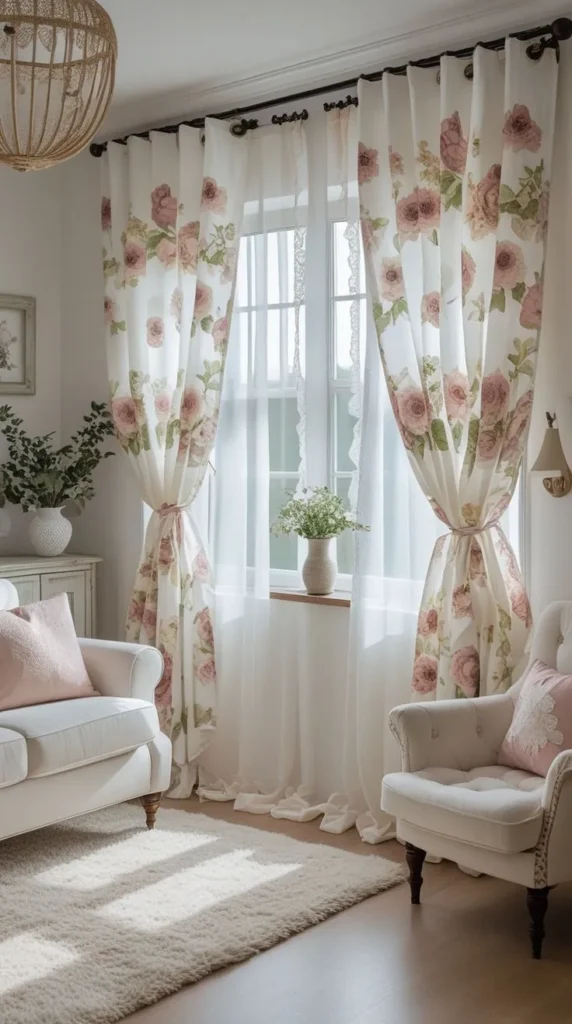
How to Hang Linen Curtains So They Look Expensive
Even beautiful curtains can look wrong if they are hung poorly. The good news is that linen is easy to elevate with the right installation.
Use a high mount
Hanging the rod closer to the ceiling makes the room feel taller. This is one of the simplest ways to improve the proportions of the entire space. When the curtain Begins Higher, the window appears larger, and the room feels more architectural.
Extend the rod beyond the window
The rod should usually be wider than the glass. This allows the curtains to stack outside the window when open and lets in more daylight. It also makes the window opening feel broader and more balanced.
Choose strong hardware
Linen may look relaxed, but it still needs solid support. Good brackets, a level rod, the correct rings, and the right track system all help the fabric hang properly. Hardware is often overlooked, but it changes the final result significantly.
Add lining for stronger sunlight
If your living room gets intense sun, lining is worth considering. Lining improves privacy, helps control glare, and can protect the curtain’s face fabric over time. In bright rooms, it can make a major difference in both appearance and durability.
Living Room Curtain Style Guide: Linen in Real Homes
Layered linen look
This is one of the strongest looks right now. Use sheers or semi-sheers for daytime softness and pair them with a second layer for evening privacy. The layered effect adds flexibility and makes the window feel more designed.
Single-panel simple look
If the rest of the room is already calm and balanced, a single linen layer can be enough. Choose a natural neutral color and let the fabric texture carry the style. This works well in clean, modern rooms.
Floor-to-ceiling statement
In taller rooms or spaces with large openings, full-height linen panels create a stronger visual frame. This approach helps the room feel taller, larger, and more refined.
Soft luxury approach
A soft luxury look does not have to mean shiny fabric or heavy drama. Linen can feel upscale when it is lined, generously full, and hung neatly with polished hardware. The result is quiet, not loud.
Practical Buying Guide: What to Check Before You Order
A curtain purchase should be treated like a design decision, not just a fabric purchase. Before ordering, it helps to check the following details carefully.
| Buying Check | What to Look For | Why It Matters |
| Fabric weight | Sheer, medium, or heavy | Controls light and structure |
| Lining | Unlined, light-lined, blackout-lined | Changes privacy and glare control |
| Fullness | Enough fabric for a rich drape | Prevents flat-looking curtains |
| Length | Floor-length for most living rooms | Makes the room feel taller |
| Color | Warm neutrals for long-term use | Easier to decorate around |
| Mounting | High and wide placement | Improves scale and elegance |
This planning stage is important because the final curtain look depends on several decisions working together. Fabric, lining, mount height, and fullness all shape the room’s atmosphere.
How to Care for Linen Curtains
Linen is durable, but like any natural textile, it benefits from thoughtful care. Regular maintenance keeps it looking fresh and helps the fabric last longer.
Simple care rules
- Shake the curtains regularly to remove dust.
- Wash only when needed.
- Use a gentle cycle if the label allows it.
- Keep the water temperature low.
- Avoid aggressive spinning.
- Dry in open air.
- Keep them away from harsh direct sunlight while drying.
How to reduce wrinkles
Wrinkles are part of the linen look, but they should still appear neat rather than messy. The best way to keep linen looking good is to hang it properly, steam it after washing, and allow it to settle naturally. Over-spinning and over-drying usually make creasing worse.
Can you machine-wash linen curtains?
Often yes, but only if the care label allows it. A low-temperature wash with mild detergent and careful drying is usually the safest choice. Lined or specially finished curtains may need gentler treatment, so the label should always come first.
Extra care tip
If your living room receives strong sunlight, consider rotating or shifting the curtains occasionally so one side is not exposed more than the other. This helps reduce uneven fading over time.
Common Mistakes to Avoid
Buying curtains that are too short
Short curtains often make a room feel unfinished and smaller. For most living rooms, floor-length panels look more polished and more intentional.
Choosing the wrong opacity
Very sheer linen may not provide enough privacy. Very heavy linen may feel too dense in a small room. The best choice depends on how much light and privacy the room needs.
Hanging the rod too low
This is one of the quickest ways to make a ceiling feel lower. A high mount usually gives the room a taller, more graceful look.
Ignoring the lining on sunny windows
If the room receives strong sunlight, lining can be very helpful. It improves privacy and helps protect the textile. Linen handles light well, but fabric exposed daily to intense sun can still fade over time.
Underestimating fullness
Curtains with too little fabric often look thin and unconvincing. Fuller panels create a richer silhouette and usually feel more expensive.
Smart, Future-Ready Linen Curtain Ideas
Modern interiors often need beauty and convenience at the same time. Linen can support both.
Motorized tracks
For large or tall windows, motorized tracks make linen panels easier to open and close. They also keep the look clean and uncluttered, which suits contemporary interiors.
Layered daylight control
A sheer linen layer by day and a more protective layer by night gives the most flexibility. This approach is especially practical in homes where the living room serves multiple functions.
Mixed-material styling
Linen works especially well with wood, metal, stone, cane, and textured upholstery. Because it is a natural-looking fabric, it blends easily into rooms that already use organic materials.
Eco-conscious choices
Linen is often considered a strong choice for people who care about plant-based materials. Since it comes from flax, it can fit well into a more thoughtful and less synthetic interior palette.
Pros and Cons of Linen Curtains for the Living Room
Pros
- Beautiful natural texture
- Softens Daylight Well
- Works in many interior styles
- Breathable and comfortable
- Can look premium with simple styling
- Available in more sustainable plant-based options
Cons
- Wrinkles more than some fabrics
- May need lining for privacy
- Pure linen can cost more than basic synthetic curtains
- Needs careful measuring for the best drape
The advantages are strong, especially for rooms where atmosphere matters as much as function.
Best Linen Curtains for Living Room: Quick Decision Guide
Here is the simplest way to choose:
- Choose sheer linen if you want light, softness, and a layered look.
- Choose medium-weight linen if you want the most balanced all-round option.
- Choose lined linen curtains if privacy and glare control matter most.
- Choose linen blends if you want easier wrinkle control and lower maintenance.
- Choose warm neutrals if you want the safest long-term style choice.
That simple formula can save time and help you avoid the most common buying mistakes.
FAQs
Yes. Linen curtains are worth it if you want a soft, natural look with good daylight filtering and a timeless feel. They are especially useful in living rooms where atmosphere matters as much as function.
Not usually. Unlined or sheer linen diffuses light more than it blocks it. If you need stronger light control, choose lined linen or layer it with another curtain.
Warm white, ivory, oatmeal, beige, greige, and soft taupe are the most versatile. They work with most interior palettes and stay calm over time.
They are not hard to maintain, but they do need gentle care. Linen wrinkles more easily than some fabrics, so steaming, proper hanging, and careful washing help keep it looking neat.
Medium-weight linen is usually the best all-round option. It balances softness, privacy, structure, and daylight control better than very sheer or very heavy linen in most homes.
Conclusion
Soft linen drapes in your main room add quiet elegance while filtering sunlight just right. Because they’re woven loosely, shadows dance gently across walls during mornings. A relaxed warmth fills the space whenever the breeze nudges the Fabric lightly. These textiles shape atmosphere – less sharp, more inviting – as if the air itself slows down. Even bare windows look considered once these hang in place.
Heavy fabric falls better if it suits your space. A shade that won’t fade keeps things looking steady over time. Mounting hardware well above the window pulls the eye up. Spreading poles beyond the frame gives fullness room to breathe. Drape matters – crowded panels look flat. Linings step in when nights get bright, or voices carry through thin cloth. Sheer layers let daylight wander without harsh edges. Woven textures like linen hold their ground daily, neither too stiff nor too slack. Balance often wins where extremes fail.
