
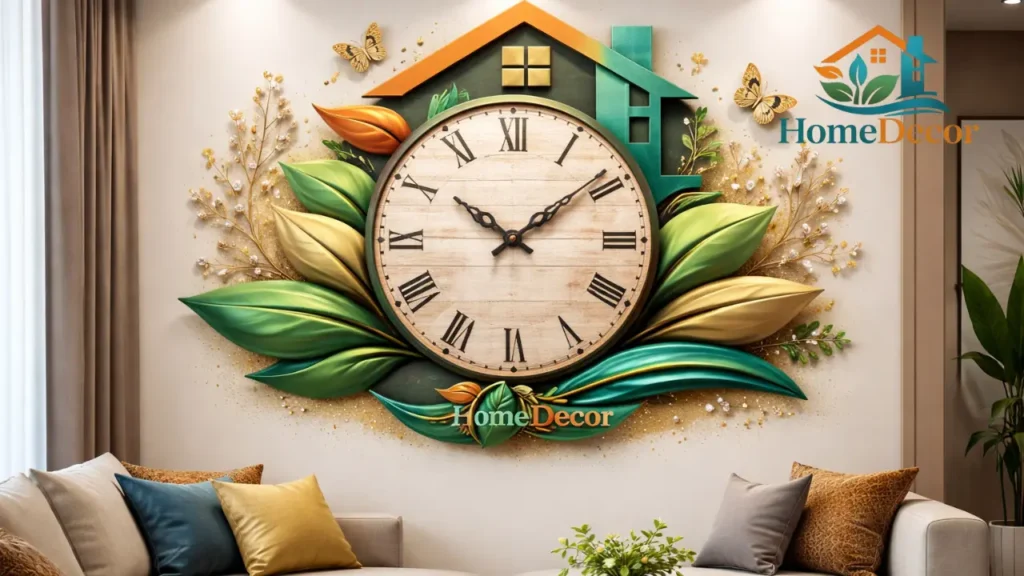
Introduction
A large Wall Clock For Living Room décor is one of the simplest ways to convert a plain wall into a meaningful design statement. A clock isn’t only about telling time. Functioning as art on the wall, it draws the eye, giving a room its center. Instead of blending in, large designs stand out, setting the mood. With clean lines or bold shapes, these pieces act as silent organizers of space, defining areas without walls.
Most people pick clocks just by how they look. Because of the shiny wood, maybe, or fancy numerals – yet wind up with one that drowns out conversation or vanishes on a tall wall. Suddenly, it hangs too far above the furniture, ignored. Picking a big clock for your main room needs more than instinct. Consider height relative to eye level, whether metal clashes with nearby lamps, and if ticking echoes at night. Matching decor matters, yes – but so does legibility across the space. Will it still feel right five years later? Size must fit – not crowd, not disappear. Each detail shifts how it lives in the room.
Step by step, this walkthrough keeps things clear. Why big clocks shine in lounges comes up front. After that, picking the right dimensions shows up alongside placement tips. Different decor types link to certain designs naturally. Materials matter – some last longer, others suit specific rooms better. Movement type slips into conversation without fanfare. Common errors get mentioned quietly along the way. Balance emerges slowly when choices align. A clean look follows if details stay consistent. Daily reliability sits at the core of each suggestion made here.
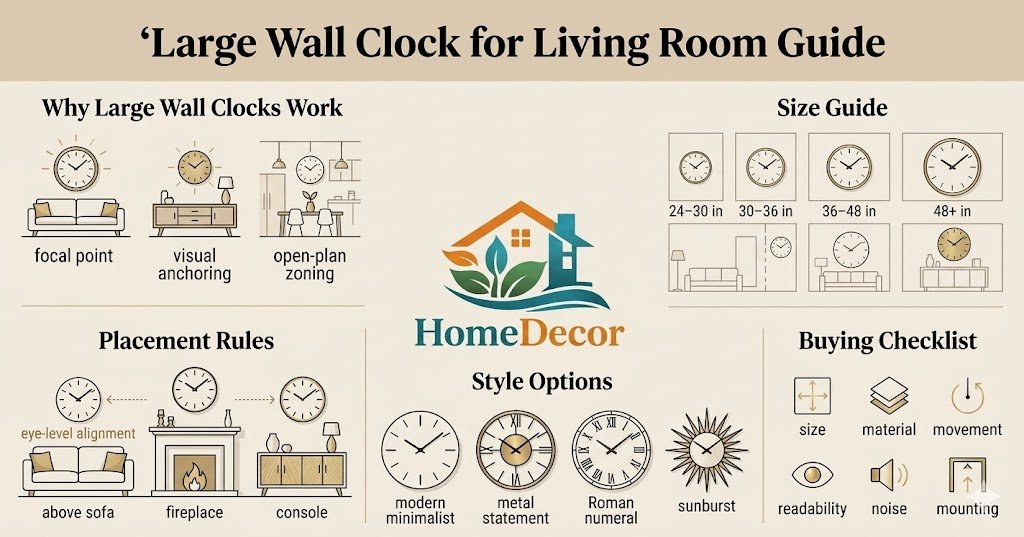
Why a Large Wall Clock for the Living Room Works So Well
A big wall clock works well since it handles many jobs together. Telling time comes naturally, yet it also covers empty walls while bringing character into the space. This mix gives it an edge in living areas, places where each thing usually has to earn its spot. Rather than stacking up small pieces, a single large clock delivers equal effect – just simpler, neater, calmer. Its size does the work without asking for attention.
A big clock works well in open spaces. Where the living area flows into the dining space, it marks off the lounge section – no wall, panel, or added piece needed. Shape does the separating, not structure. Maybe that explains why giant timepieces often stand out so much. Useful, clear to see, also adds look – all wrapped up.
That bare wall? It often leaves a room feeling off. A big clock steps in where decor falls short. Instead of filling every inch, sometimes just one object sets things right. Watch how it draws attention without demanding it. Empty height gets meaning when something like this holds the spot. See the way your gaze settles there now? Stability hides in plain sight, ticking along.
There is also a psychological advantage. A big wall accessory feels intentional. It signals that the room was arranged with thought rather than filled randomly. This sense of order matters in living rooms because they are usually the most visible and most frequently used spaces in the home. When the clock suits the wall properly, the entire room feels more composed.
What Counts as a “Large” Wall Clock?
The phrase “large wall clock” is flexible, but there is still a useful practical range. In current retail collections, oversized or extra-large wall clocks often begin around 24 inches and can extend to 48 inches, 60 inches, or even more, depending on the design and wall size. That means there is no single universal measurement, but there are good interior design benchmarks.
A simple way to think about it is this:
- 24 to 30 inches: large enough for many standard living rooms
- 30 to 36 inches: ideal for a sofa wall or medium feature wall
- 36 to 48 inches: strong choice for wide or open walls
- 48 inches and above: best for dramatic, oversized, or double-height walls
These ranges are not rigid rules. They are practical starting points based on how oversized clocks are typically presented in current collections and how wall décor works in relation to surrounding furniture. The real goal is proportion. A clock should feel appropriately scaled to the wall and the items below it.
A clock that is too small can look accidental, as if it were added just to fill a gap. A clock that is too large can overwhelm the room and crowd the composition. The sweet spot is a piece that feels connected to the furniture below it and large enough to hold its own visually.
A Simple Sizing Rule That Actually Helps
One of the most helpful ways to choose a large wall clock for living room use is to start with the furniture, not the clock. If the clock is going above a sofa, console, or fireplace, the width of that furniture becomes your guide. The décor should feel related to the piece underneath it instead of floating randomly on the wall.
A useful interior design idea is the two-thirds rule. In practical terms, your wall décor should usually relate to the width of the furniture below it. That does not mean exact mathematical precision is required. It means the clock should look proportionate and visually connected.
For example, if the sofa is wide and the wall above it is open, a smaller clock will disappear. In that situation, a large clock becomes a better solution because it balances the horizontal line of the sofa. On the other hand, a narrow console area does not need a massive clock that dominates the entire room. The best choice is the one that matches the scale of the scene.
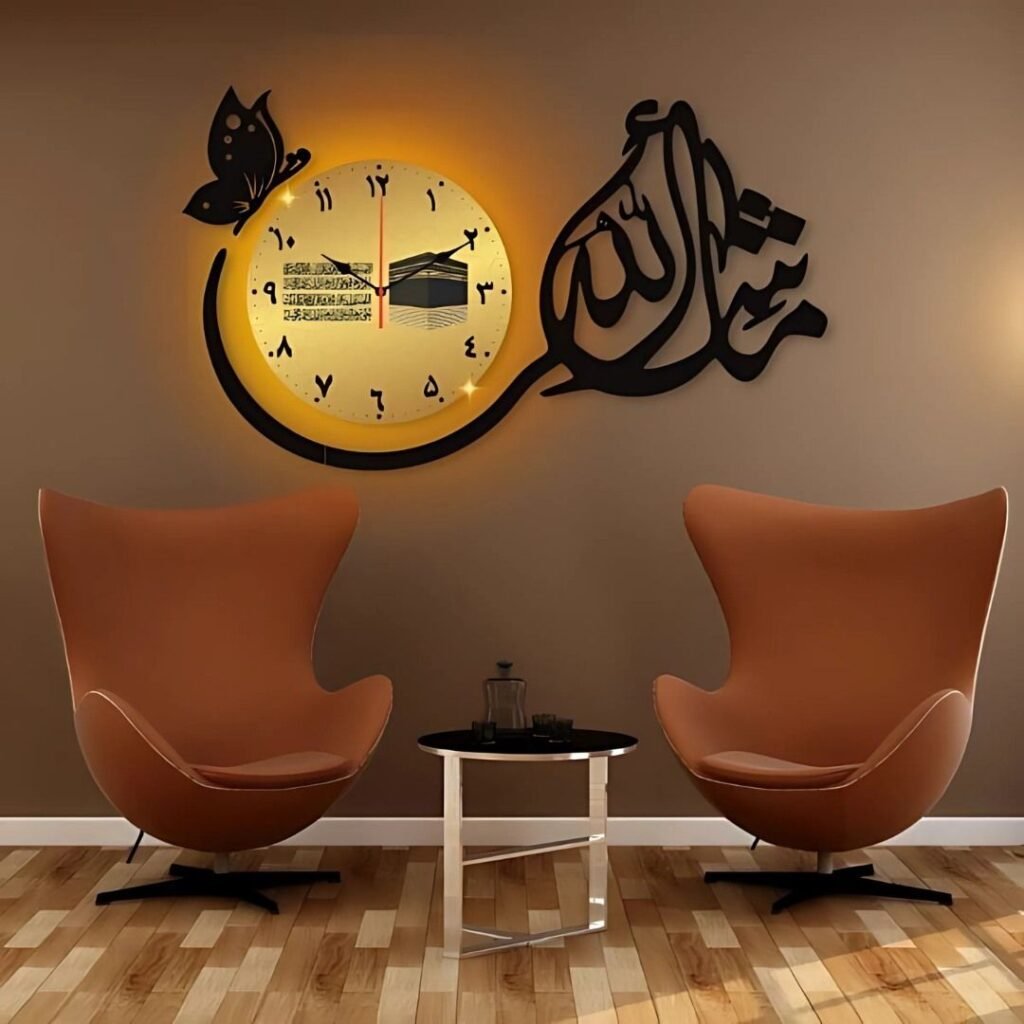
Best Size Guide for a Large Wall Clock for the Living Room
| Wall or furniture situation | Recommended clock size | Best result |
| Small living room feature wall | 24–30 inches | Style without overpowering the room |
| Standard sofa wall | 30–36 inches | Balanced, easy-to-read focal point |
| Large open living room wall | 36–48 inches | Strong statement with visual presence |
| Very wide or double-height wall | 48 inches and above | Bold, dramatic architectural effect |
This guide is meant to help you think in proportion. The objective is not to pick the biggest clock available. The objective is to pick the right-sized clock for the wall you actually have.
How to Choose the Right Large Wall Clock for Living Room Spaces
Begin with the wall, not the style
One of the most common mistakes is choosing a clock based on style first and scale second. That usually leads to disappointment. A clock may look beautiful online, but once it arrives, the wall may prove too narrow, too tall, or too empty for that shape. Start with the wall dimensions. Measure the section you want to decorate, then look at the furniture below it, and then consider the surrounding open space.
You need three measurements before buying:
- the width of the wall area
- the size of the furniture below it
- the available breathing room around the clock
These dimensions give you the real frame for your decision. A large wall clock for living room use should fit into the architecture of the room, not fight against it.
Match the clock to the mood of the room
A clock is not only an object. It is part of the room’s atmosphere. A calm, minimalist living room needs a clock that feels simple and quiet. A rustic or industrial room can handle a stronger visual element. A vintage or transitional space may benefit from Roman numerals, distressed finishes, or antique-inspired detailing.
Think about the emotional tone of the room. Is it relaxed, formal, energetic, cozy, airy, dramatic, or classic? The clock should reinforce that mood. When the style aligns with the room’s personality, the result feels cohesive and intentional.
Choose the right material
Material changes the visual temperature of the clock immediately.
- Wood feels warm, organic, and welcoming.g
- Metal feels structured, bold, and contemporary
- Glass or acrylic feels light, fresh, and clean
- Mixed materials create balance and can bridge multiple styles
Wood works well in cozy, neutral, Scandinavian, farmhouse, and transitional spaces. Metal is strong in industrial, urban, modern, and loft-style homes. Glass and acrylic suit sleek contemporary rooms where you want the piece to remain visually crisp and airy. Mixed-material designs are useful if your living room already blends several textures.
The material does more than affect appearance. It also influences durability, weight, maintenance, and how the clock reflects light in the room.
Decide on movement type
For most living rooms, quartz movement is the most practical option. It is accurate, easy to maintain, and widely used in contemporary clocks. Quartz clocks are usually battery-powered, which keeps them simple and convenient.
Noise matters too. If the living room is a place for reading, watching television, conversation, or quiet relaxation, a low-noise or silent movement is usually the best choice. A ticking sound can be charming in some spaces, but in a restful living room, om it may become distracting over time. Choosing a quiet mechanism is often the safest decision.
Popular Styles of Large Wall Clocks for Living Room Décor
Modern minimalist
A modern minimalist clock is ideal for a living room that already has clean lines, neutral colors, and open space. These clocks often feature thin frames, simple numerals, understated hands, and a calm overall presence. They work especially well when you want the clock to blend smoothly into the room while still making a visible impact.
This style is very effective because it offers clarity without clutter. The clock becomes part of the architecture of the room rather than a separate decorative event. It is a smart choice for people who prefer order, simplicity, and long-term versatility.
Oversized metal statement clocks
If you want the clock to be the hero of the wall, metal is one of the strongest choices. Large metal clocks often feel sculptural, urban, and confident. They work beautifully in industrial, modern farmhouse, contemporary, and loft-inspired interiors. Antique brass, wrought iron, matte black, and brushed metallic finishes all create different moods.
A metal clock can feel architectural, almost like an installed art object. That makes it a powerful option for wide walls that need substance. It is especially useful when you want the living room to feel bold and curated.
Wooden clocks for warm interiors
Wooden Clocks soften the look of a wall. They add warmth, texture, and natural character. A wooden frame or face can pair beautifully with beige walls, cream sofas, soft rugs, linen curtains, and earth-toned accessories. If your living room already leans toward a cozy or organic style, wood often feels like the most natural fit.
This style is especially useful in rooms where you want to avoid harsh contrast. Instead of shouting for attention, a wooden clock brings quiet richness. It creates a welcoming atmosphere and works well in both modern and traditional homes.
Vintage and Roman numeral styles
A ticking presence on many walls, Roman numeral clocks bring a sense of ease through their clear markings. Though centuries old, these timepieces slip into today’s spaces as they belong. Their look nods to history but doesn’t shout it. Freshness hides in their simplicity, even among sleek furniture and sharp lines.
Starting simple sometimes works best. A clean number layout brings order quietly. Some designs stay plain, others lean into flair – it just depends. Rooms that mix styles tend to favor Roman marks. They fit well, look balanced, and never shout.
Gallery-style or gear-based clocks
Out there among everyday objects, certain large clocks lean into artistic expression instead of just telling time. With exposed gears that catch light, stacked metal bands, partial casings, or deep textures, they pull attention through depth. When a blank wall feels too quiet, one of these stands out by design – more noticed than ignored. Their form remembers it has to be seen.
A different kind of timepiece stands out most when walls stay clear, and things are kept to a minimum. Only then does it pull attention naturally, rising above quiet surroundings. Home spaces that favor openness give it room to speak on its own terms. People drawn to unique details often find this choice fits just right.
Sunburst and decorative clocks
Out there, sunburst clocks keep finding fans – those wooden rays shoot outward like light frozen mid-burst. Energy slips into a room just by hanging one up, especially where walls feel too still. Lively might be the word, or maybe it’s the way shapes dance without moving at all. Living spaces with bare spots tend to wake up when these pieces go on display. More than telling time, they catch eyes first, then thoughts. Function hides behind beauty, yet both stay equal here. Decoration wins, even if you were only looking for minutes.
A splash of flair might be what bare walls need – try a sunburst clock if things feel too quiet. When simplicity rules the space, one bold piece often does more than several small ones ever could.
Where to Place a Large Wall Clock in the Living Room
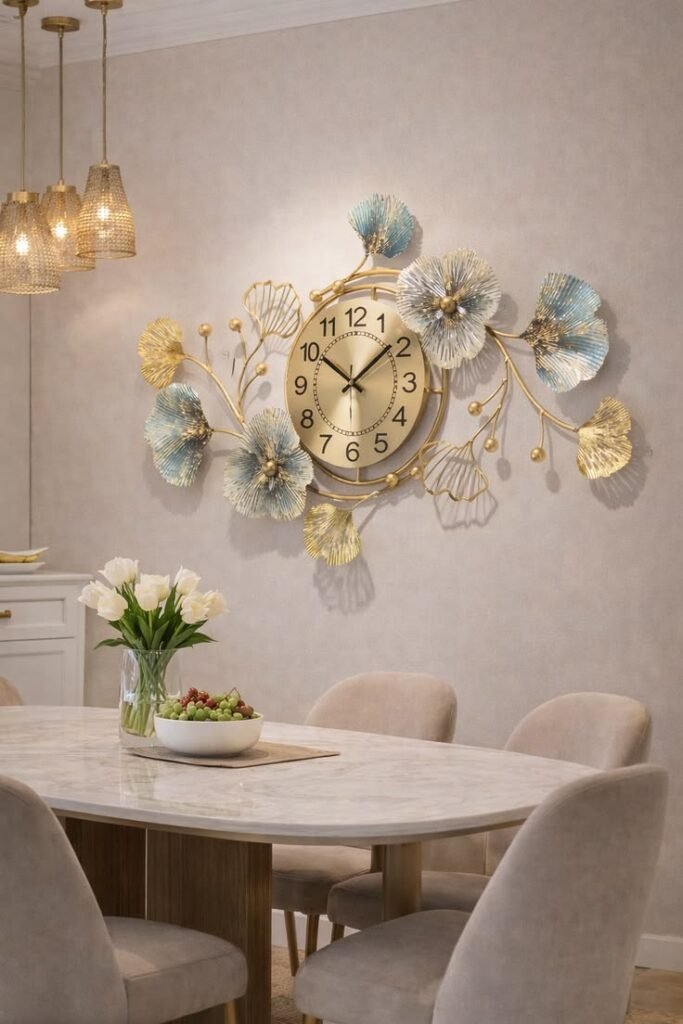
Placement is just as important as size. A beautifully chosen clock can still look wrong if it is hung in the wrong location. The best placement is one that feels natural, centered, and connected to the rest of the room.
Best placement spots
- above the sofa
- above a fireplace
- above a console table
- on a blank feature wall
- in an open-plan living zone
- above a sideboard or media unit if the arrangement fits
Each of these locations works for different reasons. A Sofa Wall is the most common and usually the safest. A fireplace wall can create a strong focal point. A blank feature wall gives the clock room to shine. A console table arrangement adds structure and polish. In open-plan spaces, a large clock can help define the living area without using physical partitions.
Placement rules that improve the look
Keep the clock centered with the furniture below it whenever possible. Avoid hanging it too high. Leave enough negative space around the clock so the wall does not feel crowded. Make sure it can be seen clearly from the main seating area. These simple rules make a huge difference in the final effect.
A large clock should not feel like it is drifting in isolation. It should feel anchored. That is why alignment matters. When the clock relates visually to the sofa, console, or fireplace, the room feels more deliberate and more polished.
Eye-level guidance
A helpful design principle is to keep the clock at a height that feels comfortable to view from the room. In many interior setups, the visual center of wall décor works best around eye level. For a living room, that does not mean the clock must sit at a fixed universal height. It means the piece should be easy to read without forcing the viewer to look uncomfortably up or down.
If the clock is above furniture, it usually looks best when there is enough space between the furniture and the clock to prevent the arrangement from feeling cramped, but not so much space that the connection is lost. The balance should feel natural rather than rigid.
Living Room Layout Tips That Make the Clock Look Better
Let one large clock do the work
Sometimes the cleanest design is the strongest one. A single large wall clock can hold an entire wall on its own, especially if the shape, finish, and size are well chosen. This approach works well in minimal or modern rooms where visual clutter would weaken the effect.
When the clock is strong enough, it does not need much help. The space around it becomes part of the design.
Pair the clock with a simple console
A console table below the clock creates a complete vertical composition. The table gives the wall an anchor point, and the clock gives the arrangement height and presence. Add a lamp, a small vase, or a stack of books, and the space feels intentionally curated.
This arrangement is especially effective in narrow living rooms or entry-adjacent lounge spaces. It adds function while keeping the look refined.
Use the clock as the anchor of a gallery wall
A large clock can also serve as the central anchor in a gallery arrangement. In this case, the frames around it should remain visually simple so the clock still feels like the main feature. The surrounding art should support the clock, not compete with it.
This style works well in creative homes, eclectic interiors, and rooms that benefit from a little more visual rhythm. The clock gives the gallery structure and prevents it from feeling scattered.
Add texture behind the clock
A textured wall can dramatically improve how a clock looks. Wood paneling, plaster finishes, subtle wallpaper, slatted surfaces, and architectural molding can all give the clock a richer backdrop. This is especially useful in neutral living rooms where the clock needs depth rather than more color.
Texture gives the wall dimension, and dimension makes the clock look more integrated into the room. It becomes less like a hanging object and more like part of the room’s design language.
Combine the clock with shelving
Shelving can work with a large clock if the overall composition remains balanced. The clock should still be easy to see and should not disappear behind too many objects. This type of layout is especially helpful in compact living rooms where the wall needs to serve both decorative and storage purposes.
The key is restraint. Keep the shelf styling clean, leave open space, and allow the clock to remain the main visual statement.
Color Ideas That Make a Large Wall Clock for the Living Room Stand Out
The color of the clock should either create contrast or blend smoothly with the room’s palette. Both strategies can work, as long as they are intentional.
Some reliable combinations include:
- Black And White for classic contrast
- Gold and beige for warmth and elegance
- Wood and cream for softness and comfort
- Silver and gray for contemporary clarity
- Black and charcoal for a dramatic modern look
If the living room already contains many colors, textures, and decorative pieces, a simpler clock is often the better choice. A calm face and a controlled finish help the wall feel more balanced. On the other hand, if the room is very neutral, the clock can become the place where color and contrast appear.
The most successful large wall clock for living room use is usually one that fits the room’s palette while still standing out enough to matter.
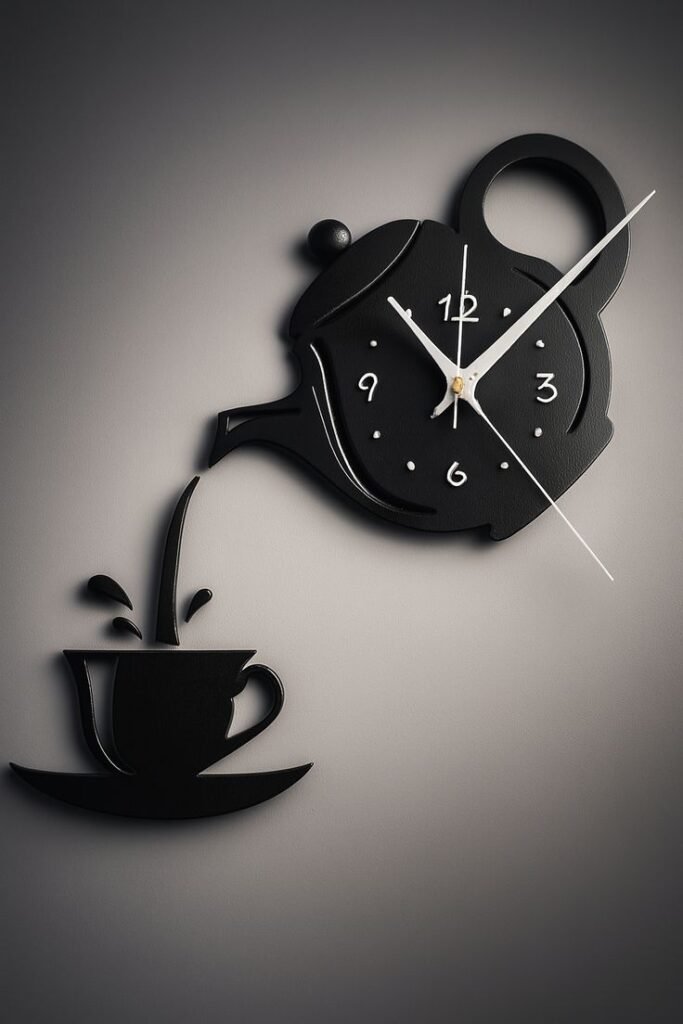
Buying Guide: What to Check Before You Buy
Before purchasing, review the clock carefully against these practical points.
| Checkpoint | What to look for | Why it matters |
| Size | Matches wall width and furniture scale | Prevents the clock from looking tiny or overwhelming |
| Movement | Quartz or silent non-ticking | Improves accuracy and comfort |
| Material | Wood, metal, acrylic, or mixed | Affects style, durability, and maintenance |
| Readability | Clear hands and legible numerals | Makes it easy to see from across the room |
| Mounting | Strong, secure hanging hardware | Helps with safety and alignment |
| Noise level | Quiet mechanism preferred | Better for relaxing living areas |
| Finish | Matches the room palette | Creates a cohesive look |
A clock should not only be beautiful in the listing photo. It should work in your actual room. That means checking proportions, light, sound, and how the finish interacts with your walls and furniture.
Pros and Cons of a Large Wall Clock for the Living Room
Pros
A large clock can create a strong focal point. It can fill a blank wall gracefully. It combines decoration and function in one piece. It works in modern, rustic, vintage, and transitional homes. It can also help define spaces in open-plan layouts. These are major advantages because they make the clock useful as well as attractive.
Cons
A large clock can overwhelm a wall if it is too big for the space. It can look awkward if it is hung too high or too low. It may produce a ticking sound that becomes distracting in quiet rooms. Some decorative models may feel too ornate for minimalist interiors. Lower-quality pieces can also look less refined than expected.
Most problems are not caused by the clock itself. They are caused by poor size selection or weak placement. That is why planning matters more than impulse buying.
Common Mistakes to Avoid
Buying something too small
This is the most common error. A clock that is too small on a Large Wall Looks like an afterthought. It fails to command the wall and does not create the visual weight needed in a living room.
Hanging it too high
When a clock sits too high, it loses connection to the furniture below it. The room can start to feel divided and unbalanced. A good composition should feel linked from floor to wall to eye level.
Mixing too many styles
A heavily ornate clock may feel disconnected in a very simple room. A very plain clock may disappear in a richly decorated space. The style of the clock should echo the mood of the rest of the room.
Ignoring noise
If you spend a lot of time reading, relaxing, or watching television in the living room, sound matters. A low-noise or silent movement is usually a better choice than a loud ticking mechanism.
Forgetting to consider light
A clock placed under strong direct sunlight may fade or look harsh at certain times of day. In some rooms, glare can also make the face harder to read. Lighting should be part of your decision.
Maintenance and Care Tips
A large wall clock should stay attractive for years, so basic care is important.
Dust the frame regularly using a soft cloth. Replace batteries when needed. Check the hanging hardware from time to time to make sure it remains secure. Keep the face and finish clean so the clock continues to look refined. Avoid placing it in a spot with extreme heat, moisture, or direct harsh sunlight if possible.
These small habits help preserve both appearance and function. A well-maintained clock can remain one of the most dependable features in the room.
Smart, Modern, and Future-Ready Ideas
Contemporary interiors increasingly treat clocks as decorative features rather than simple time tools. That is why modern collections often lean toward slim silhouettes, quiet movements, mixed materials, and strong finishes. The design direction is moving toward pieces that feel both practical and expressive.
A few future-friendly choices include:
- selecting a silent or low-noise movement
- choosing a neutral finish that stays versatile over time
- using one strong clock instead of many small decorative objects
- pairing the clock with simple lighting for evening impact
- choosing a classic shape if you want long-term style value
These choices are smart because they reduce the risk of the clock feeling dated too quickly. A good design investment should continue working even if you repaint the room or rearrange the furniture.
Quick Tips
Measure the wall before shopping. Use scale rather than impulse as your first filter. Keep the clock centered with the furniture below it. Choose silent movement if the room is used for rest or conversation. Let the clock support the room instead of competing with it. For very large walls, do not be afraid to go bold.
FAQs About Large Wall Clock for Living Room
A large living room clock usually starts around 24 inches, while 30 to 36 inches is often a stronger choice for a standard sofa wall. Very large or open walls may need 40 inches or more. That range matches current oversized-clock collections and retailer guidance.
The most common and effective spots are above a sofa, above a console table, above a fireplace, or on a blank feature wall. The clock should feel connected to the furniture below it and placed at a comfortable viewing height.
A silent or non-ticking clock is usually the best choice for a living room, especially if the room is used for relaxing, reading, or watching television. Quartz movement is a practical and common option in current oversized collections.
Modern minimalist, industrial metal, wooden, and Roman numeral styles are all popular. The best choice depends on whether you want the clock to blend in or become the room’s focal point.
Yes, but the size must be controlled carefully. In a smaller room, a large clock should still feel proportional to the wall and furniture. A 24- to 30-inch design is often safer than an extremely oversized one.
Conclusion
Out here, a big clock on the wall does way more than just Look Nice in your main room. Not merely decoration – it works hard, adds presence, yet fits smoothly into any setup. Get the scale right, hang it with care, align it with how the space already looks. That quiet shift happens: empty walls start feeling complete, like they were meant that way. Simple move, strong effect – suddenly the whole area seems planned, not thrown together.
A small clock often beats a large one. Not every space needs something bold – it depends on where it sits, how it lines up with nearby pieces, because balance matters more than size. Watch how it settles into the corner, whether it hums along without drawing attention, since peace counts when picking fixtures. Harmony shows in subtle ways – through color links, shape echoes, moments of calm. Done right, timekeeping becomes part of the background rhythm, stitching things together quietly.
