
Introduction
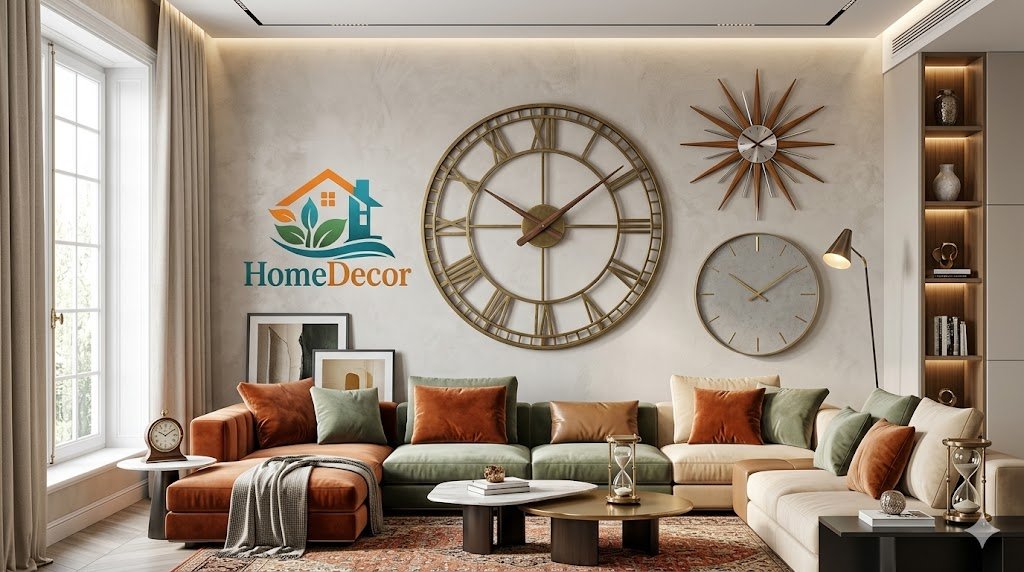
A striking Extra Large Wall Clocks for Living Room piece can do more than just tell the time; it can redefine your living room ambiance. In the right interior, it acts as a commanding centerpiece that unites your décor, balances large furniture, and creates a sense of cohesion. By 2026, the oversized wall clock is not merely functional; it functions as practical wall art, giving personality and sophistication to a room while still serving its primary purpose of timekeeping.
Google says good content puts people before keywords. For folks hunting big wall clocks, this one digs into what actually counts as large. Size clues come next – how to measure right, where things go wrong. Think about the height of the walls and the nearby furniture crowding the space. Styles shift fast; wood feels warm, metal adds edge. Some picks drain savings, others sit light on budgets. Watch out for glare under lights and a ticking noise at night. Cleaning methods matter – dust loves grooves. New shapes twist expectations: circles break rules, numbers stretch thin. Function stays key even when looks shout louder.
Why Extra Large Wall Clocks Work So Well in Living Rooms
Big wall clocks solve more than just one problem at home. When space feels too open, their size steps in – closing gaps without crowding them. A room with a long couch or tall ceilings often needs something bold to hold attention. That is where these timepieces show up differently – not only telling hours but anchoring the whole look. Blank stretches of wall lose emptiness once eyes land on the clock’s face. Even console units under windows pair better when balance matters. Height, stretch, stillness – all shift slightly because of it.
A clock too big might overwhelm a space unless its shape matches the room’s rhythm. Howard Miller, known widely for insight on timekeeping devices, suggests large models can shift blank walls into focal points – when they follow the flow of their surroundings instead of clashing against them.
A clock might sit quietly on the wall, yet still pull every eye toward it. What makes it stand out often has little to do with actual dimensions. Think about thick borders or numbers that jump forward – these give heft without adding pounds. Dark tones or sharp color splits also stretch how big something feels. On the flip side, airy shapes with thin lines seem lighter, even when they cover just as much space. So bulkiness doesn’t always decide impact.
Out of nowhere, wall clocks now shape the look of modern rooms. Not just timekeepers, those from Howard Miller or Crate & Barrel arrive dressed as decorative highlights. Smooth surfaces, careful edges, and thoughtful textures give weight to their presence. Suddenly, luxury shows up – no fortune needed.
Defining an Extra Large Wall Clock
A clock often steps into the oversized category, around thirty inches wide, though there’s no strict rule. Seen from across a room, its size should make sense beside the sofa or console below.
Most times, a clock fits best when it stretches across about two out of every three inches of the shelf or wall below. That size holds attention but doesn’t dominate. Seen from different spots in the room, it ought to feel balanced against the wall – Howard Miller puts it plainly. Its numbers need to show clearly, wherever you’re standing.
Practical Size Guide for Living Rooms
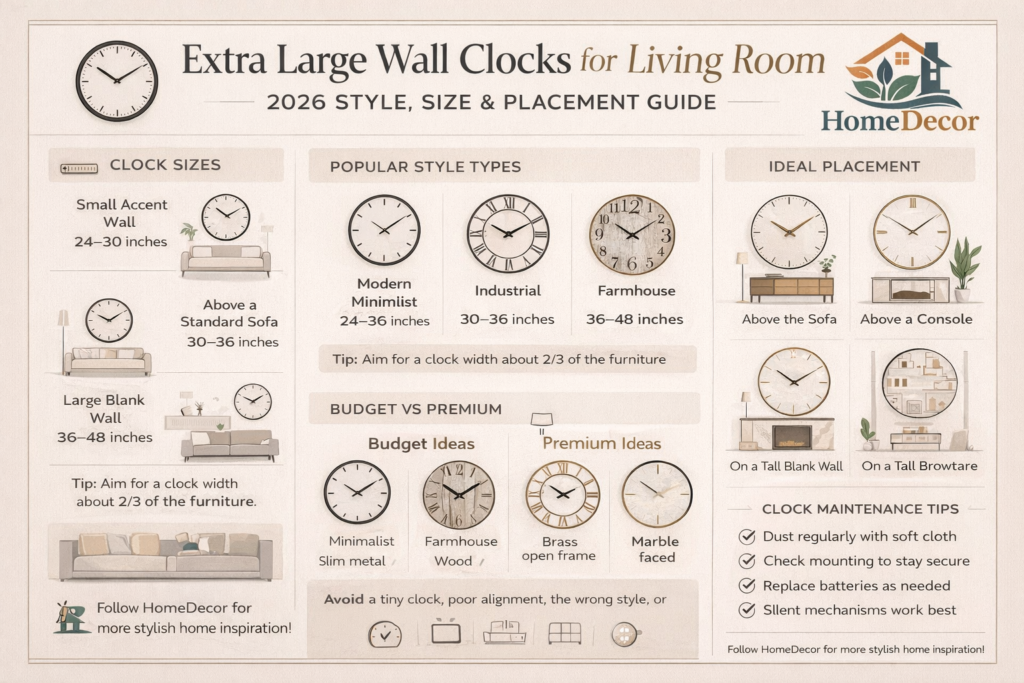
| Wall or Furniture Scenario | Recommended Clock Size | Effect Achieved |
| Small accent wall | 24–30 inches | Noticeable yet subtle |
| Above a standard sofa | 30–36 inches | Balanced statement |
| Large open wall | 36–48 inches | Strong focal point |
| Double-height or extra-wide wall | 48 inches+ | Bold, dramatic impact |
This table serves as a starting framework, not a strict rule. Factors such as material density, frame thickness, and numeral prominence can alter perceived size. For instance, a solid wood clock may seem heavier than an airy metal design, and farmhouse styles with oversized numbers often appear larger than minimalist clocks of the same diameter.
Quick Proportion Test
Before purchasing, ask these three questions:
- Does the clock align visually with the furniture beneath it?
- Does it feel appropriately weighted, not too heavy or too empty for the wall?
- Is it readable from primary seating areas?
If you can answer “yes” to all three, your clock’s size is likely appropriate.
How to Select the Perfect Extra Large Wall Clock
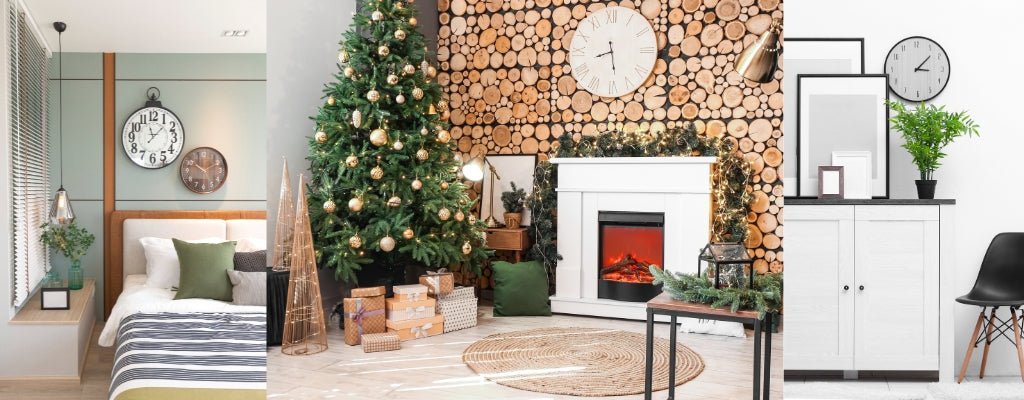
Choosing the ideal oversized wall clock becomes manageable when broken into four essential components: size, style, material, and mechanism. This structured approach aligns with Google’s guidance for helpful, user-first content.
1. Prioritize Size First
Measure the wall, the furniture below, and consider the room’s scale before shopping. A 36-inch clock may look perfect in one setting but entirely Disproportionate in another. Size is the foundation for visual harmony.
2. Match Style to the Room
The clock’s style should integrate naturally with existing décor:
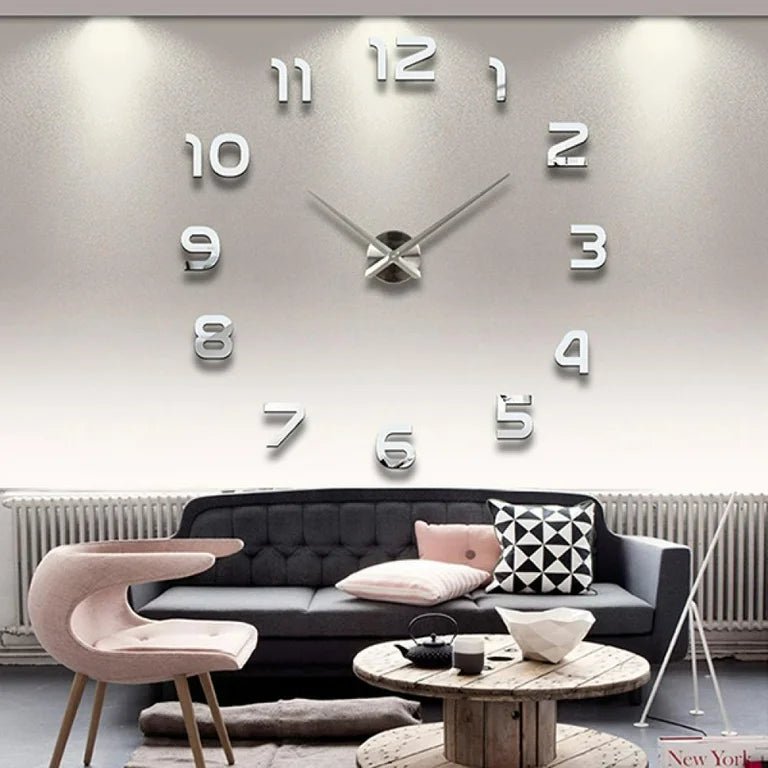
- Modern interiors: prefer clean lines, minimal faces, and uncluttered aesthetics.
- Industrial rooms: benefit from black metal, visible gears, and raw finishes.
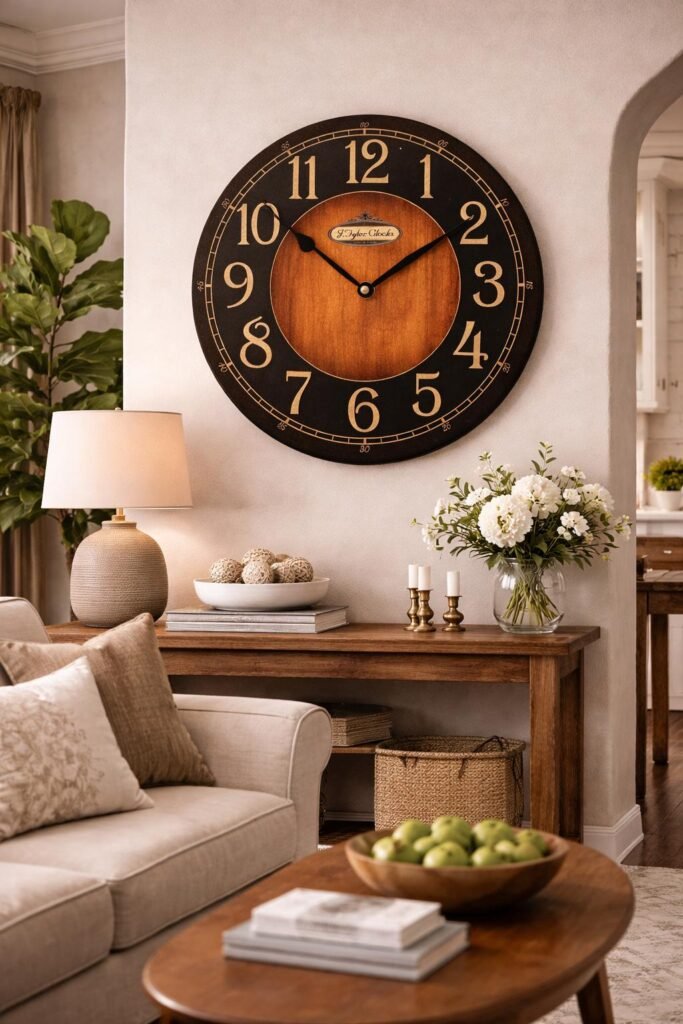
- Farmhouse spaces are complemented by warm wood, distressed textures, and large numerals.
- Luxury settings: require symmetrical, polished, and visually confident designs.
Howard Miller confirms that matching the style to the room architecture ensures cohesion and prevents the clock from looking out of place.
3. Mechanism Choice
For living rooms, a silent sweep movement is optimal, avoiding ticking sounds that can be distracting near TVs, reading areas, or communal seating spaces. This is a practical comfort decision, enhancing the overall room experience.
4. Material Considerations
Material dramatically influences the clock’s visual impact:
- Metal: evokes modernity, industrial vibes, or urban sophistication.
- Wood: adds warmth, traditional elegance, and timeless appeal.
- Brass/Metallics: convey refinement and luxury.
- Mixed materials: suit transitional or eclectic interiors.
A high-quality finish transforms the wall clock into a design statement. Crate & Barrel’s Shinola clock exemplifies this: polished chrome casing, luminous hands, and quality materials make even a simple design appear premium.
Popular Extra Large Wall Clock Styles
Many guides stop at recommending styles, but understanding why each style works is crucial for making an informed selection.
| Style | Best For | Visual Impact | Optimal Material | Notes |
| Modern minimalist | Contemporary apartments | Clean, subtle, calm | Matte metal, simple finishes | Can feel too plain on massive walls |
| Industrial | Lofts, masculine spaces | Bold, structural | Black iron, metal | Can overpower small rooms |
| Farmhouse | Family-focused living rooms | Cozy, inviting | Distressed wood | May clash with sleek interiors |
| Vintage / European | Classic or eclectic homes | Full of personality | Mixed wood & metal | Avoid cluttered walls |
| Scandinavian-inspired | Bright, airy spaces | Soft, light | Pale wood, minimal | Can blend into white walls |
| Sculptural / Luxury | Premium interiors | Elegant, statement | Brass, stone, layered materials | Requires adequate wall height |
| Backlit / Ambient | Feature walls | Dramatic, mood-enhancing | Mixed materials + lighting | Trendy if overused |
Style Highlights
- Modern Minimalist: Slim hands, Unobtrusive Face, ideal for rooms where furniture already asserts character.
- Industrial: Strong, architectural design with raw finishes, ideal for lofts or open-plan spaces.
- Farmhouse: Wood textures and large numerals add warmth, especially in neutral or earthy color palettes.
- Vintage / European: Works with layered textures and classic furnishings but can overwhelm busy walls.
- Backlit / Ambient: Modern, attention-grabbing, suitable as feature décor on dark or highlighted walls.
Placement Strategies
Even the most beautiful clock can feel awkward if placed incorrectly. Howard Miller recommends positioning at eye level, with clear sightlines from various angles.
Common Placement Options
- Above the sofa: Most effective; center above seating, leaving space above for breathing room.
- Above a console table: Creates a curated, intentional display.
- Above a fireplace: Works well when the mantel dominates; ensure the clock does not compete visually.
- Tall blank walls: Allow bold, large designs to make a dramatic statement.
- Open-plan spaces: Defines zones without physical barriers, above a sideboard or seating area.
Placement Checklist
- Center with furniture below.
- Avoid high placements that disconnect from the room.
- Ensure readability from seating.
- Allow surrounding space to prevent visual clutter.
Color, Lighting, and Furniture Pairing
A wall clock should harmonize with the room’s palette, illumination, and furnishings.
Color Pairing Ideas
- Black clocks on light walls = striking modern contrast
- Wood clocks on warm neutrals = soft and balanced
- White or pale clocks on dark walls = airy, elegant
- Brass or gold = classic, premium interiors
Lighting Considerations
- Avoid glare from direct sunlight or harsh lamps.
- Soft, ambient light enhances visibility and aesthetic.
Furniture Pairing Ideas
- Large sectional or deep media units support oversized clocks.
- Small furniture pairs better with lighter, open designs.
Best Style-Furniture Combinations
- Modern sofa + slim metal clock
- Wood console + farmhouse clock
- Velvet seating + sculptural brass clock
- Minimal interiors + open-frame clocks
Budget-Friendly Wall Clock Strategies
A luxurious look does not require a luxury budget. Focus on proportion, finish, and placement.
Smart Budget Tips
- Choose simple faces, avoiding over-decoration
- Emphasize one strong material
- Make the clock the focal point
- Align precisely during installation
- Select the correct size relative to the wall
Affordable Styles That Impress
- Minimalist black frame clocks
- Basic farmhouse wood clocks
- Large open-frame designs
- Simple Roman numeral clocks
Common Budget Pitfalls
- Thin, flimsy frames
- Busy, hard-to-read faces
- Reflective cheap finishes
- Inadequate size for the wall scale
Premium and Luxury Clock Inspiration
Luxury clocks excel through calm, balanced, and refined execution, not flashiness. Shinola clocks demonstrate this with polished metals, luminous hands, and meticulous craftsmanship.
Features That Convey Luxury
- Proportional design
- Confident visual presence
- High-quality materials
- Clean, precise finishing
Premium Styling Directions
- Brass-metal combos for elegance
- Stone or wood finishes for grounded sophistication
- Large sculptural faces for artistic appeal
- Oversized antique designs for classical interiors
Premium Placement Tips
- Minimal surrounding décor
- Size matching the wall height
- Only one or two supporting accents
Common Mistakes to Avoid
Incorrect size, style, or placement often undermines a clock’s potential.
Major Mistakes
- Buying too small
- Ignoring furniture width
- Hanging too high
- Selecting an incompatible style
- Over-decorating the wall
- Using noisy mechanisms
Simple Rule: The clock should feel naturally connected to the furniture or mantel below.
Maintenance and Durability
A high-quality clock should endure for years with proper care.
Basic Maintenance
- Dust regularly
- Inspect mounting hardware
- Replace batteries before slowing
- Keep wood away from moisture
- Use soft cloths
Durability Guidelines
- Secure Wall Fixings for heavy clocks
- Ensure wall strength
- Lighter designs for rentals
- Choose finishes resilient to wear
Mechanism Care
- Silent sweep movements are ideal for comfort and longevity
Smart and Future-Ready Ideas
Oversized clocks remain modern by 2026, especially as statement pieces in smart-home interiors.
Modern Approaches
- Silent sweep clocks
- Backlit or ambient feature clocks
- Minimal hybrid designs
- Time-sync mechanisms
- Eco-conscious materials
Future-Proofing
- Neutral tones
- Simple geometric shapes
- High-quality finishes over trendiness
Quick Comparison: Best Clock Style by Room Type
| Living Room Type | Recommended Clock Style | Reason |
| Small modern apartment | Minimalist/slim metal | Light, readable, unobtrusive |
| Cozy family room | Farmhouse wood | Warm, approachable |
| Loft / industrial | Black metal/gears | Bold, architectural |
| Bright Scandinavian | Pale wood / simple | Soft, airy |
| Luxury | Brass / sculptural / metal | Refined, polished |
| Open-plan | Large statement | Defines zones |
FAQs
Anything 30 inches and above; larger sizes suit big rooms as statement pieces.
Above sofas, consoles, fireplaces, or blank walls—always visually linked to furniture.
Yes, a silent sweep mechanism avoids distraction and enhances comfort.
Modern minimalist, industrial, and sculptural clocks work best with metal, wood, or stone finishes.
Absolutely. A large clock can act as a central focal point and decorative element.
Conclusion
Big Wall Clocks do more than tell time – they shape how a living room feels. Pick one thoughtfully, matching its size and look to your space, so it fits naturally instead of standing out awkwardly. Choose metal, wood, or mixed materials depending on whether clean lines, cozy textures, or bold forms speak to you most. A well-chosen large clock balances usefulness with quiet beauty, fitting seamlessly into daily life while still drawing eyes now and then.
A single detail often stands out when you step back – how things line up makes all the difference. Size matters less than how it sits beside what is already there. Instead of chasing newness, pick something that fits naturally alongside your existing pieces. It settles the eye, filling empty areas without shouting for attention. Over time, dust gathers, yet a quick wipe keeps it looking sharp. Position changes everything; shift it slightly until the room feels settled. What was once just a blank surface now holds weight, quietly drawing glances. Lasting appeal comes not from being flashy but from fitting right where it belongs.
A statement clock works best when looks meet purpose. Placed with care, it blends creativity into everyday use – so by 2026, big wall clocks aren’t fads but lasting pieces in your living space.
