
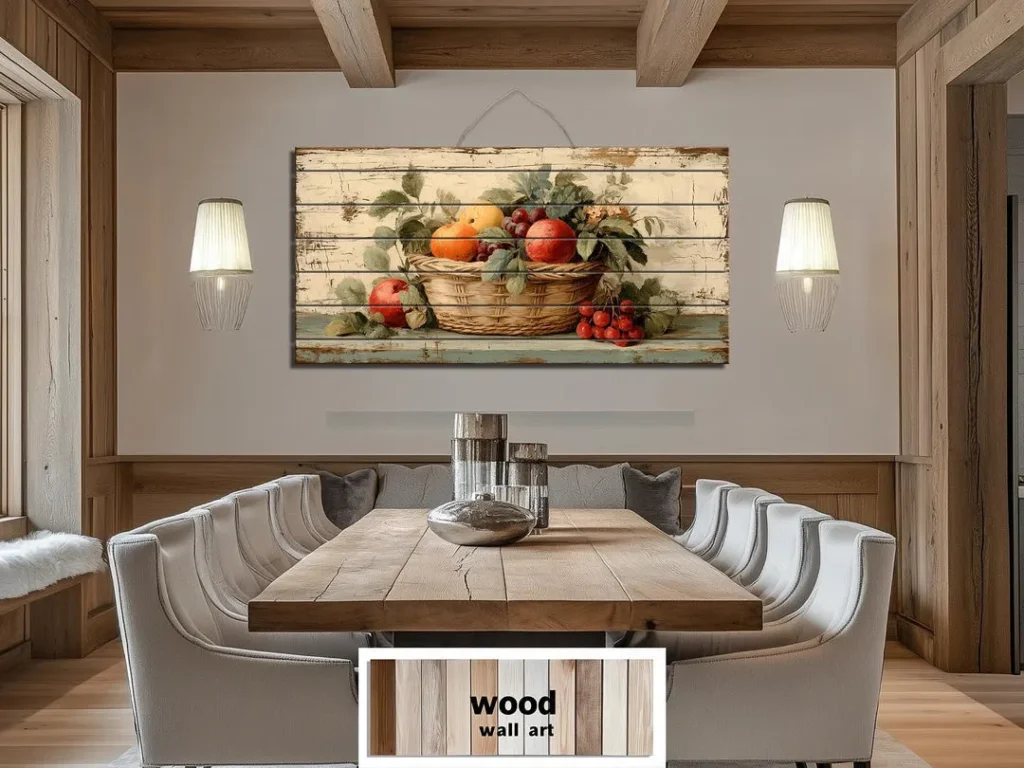
introduction
Decorating a Dining Room With Wall Art is far more than a simple, charming choice; it’s a way to animate your walls, define the quality, and express personal taste in a space where people congregate, share meals, and create memories. The artistry displayed in a dining room can enliven the atmosphere, enhance conversational energy, and foster a sense of cohesion within your interior design. In 2026, the weight on wall décor has shifted toward aesthetic resonance, technological absorption, and spatial intelligence, making the selection and placement of art more nuanced and impactful than ever before.
This guide is meticulously crafted to help you choose, arrange, style, illuminate, and preserve dining room wall art that complements your home, regardless of whether your focus is on budget-friendly charm or high-end sophistication.
While dining rooms are commonly perceived as functional eating zones, their walls serve as visual anchors, showing character and mood in the space. Wall art transforms sterile surfaces into expressive canvases that reflect personality, narrative, and style. Without carefully chosen artwork, dining areas can feel incomplete, stark, or uninspired.
By introducing artistic statements from modern abstracts to classic landscapes, you can:
- Cultivate the ambiance for meals
- Enhance interpersonal engagement during gatherings
- Create visual focal points that frame the dining experience
- Echo your home’s overarching style and color palette
Even compact apartments, lofts, or chatty dining halls benefit from the strategic placement of wall art, which elevates the overall perception of space and infuses a curated, intentional design ethos.
Dining Room Wall Art Fundamentals: What Sets It Apart
Wall art in dining spaces differs from décor in living rooms or bedrooms. The focus isn’t just on aesthetics but on harmonizing with functional dynamics and enhancing dining experiences.
Key distinctions of dining room art:
- Encourages dialogue rather than distraction
- Sets the tonal environment for meals
- Integrates with furniture, lighting, and table arrangements
- Avoids visual overwhelm or excessive busyness
Three Core Principles
| Design Principle | Importance | Benefit in Dining Rooms |
| Scale & Proportion | Ensures spatial balance | Prevents artwork from appearing too small/oversized |
| Mood | Influences ambiance | Fosters calm, energy, or warmth depending on meals |
| Style Harmony | Aligns with décor | Creates cohesive and fluid visual narrative |
Understanding these principles ensures artwork enhances rather than competes with the dining room’s functionality.
Types & Styles of Dining Room Wall Art
Dining room wall art encompasses a wide array of expressive formats and thematic styles. Selecting the right type depends on room size, architectural features, and overall décor concept.
Abstract & Modern Art
Ideal for: Contemporary, minimalist, industrial interiors
Why it works: Abstract pieces add dynamic energy and visual intrigue, fostering lively interactions without overwhelming the space.
Variants include:
- Geometric patterns
- Fluid color fields
- Bold linework and textured canvases
Botanical & Nature Prints
Ideal for: Traditional, farm, and naturalistic interiors
Why it works: Organic motifs instill serenity, warmth, and connection to nature. Greenery or floral imagery subtly adds wooden or natural materials.
Formats include:
- Watercolor plants
- Monochrome leaf studies
- Large botanical murals
Gallery Walls
Ideal for: Eclectic, unique, and mixed-style homes
Why it works: A curated collection of prints, photographs, and smaller pieces tells a story and induces visual movement across the wall.
Tips for arranging:
- Stick to a common color or theme
- Mix frame materials for depth
- Maintain consistent spacing between pieces
Mirrors
Ideal for: Small, dim, or narrow dining rooms
Why it works: Mirrors reflect natural light, create the illusion of space, and double as functional décor.
Styles include:
- Round or induce shapes
- Ornate vintage frames
- Minimalist frameless designs
Sculptural & Textile Wall Pieces
Ideal for: Modern, bohemian, or artsy interiors
Why it works: Adds tactile depth and dimensional contrast compared to flat artwork.
Examples include:
- Metal wall sculptures
- Macramé hangings
- Woven or mixed-media pieces
Placement & Scaling Techniques That Work
Even the most exquisite artwork can lose impact if poorly placed. Proper sizing and positioning ensure visual balance and spatial cohesion.
Proportion & Coverage
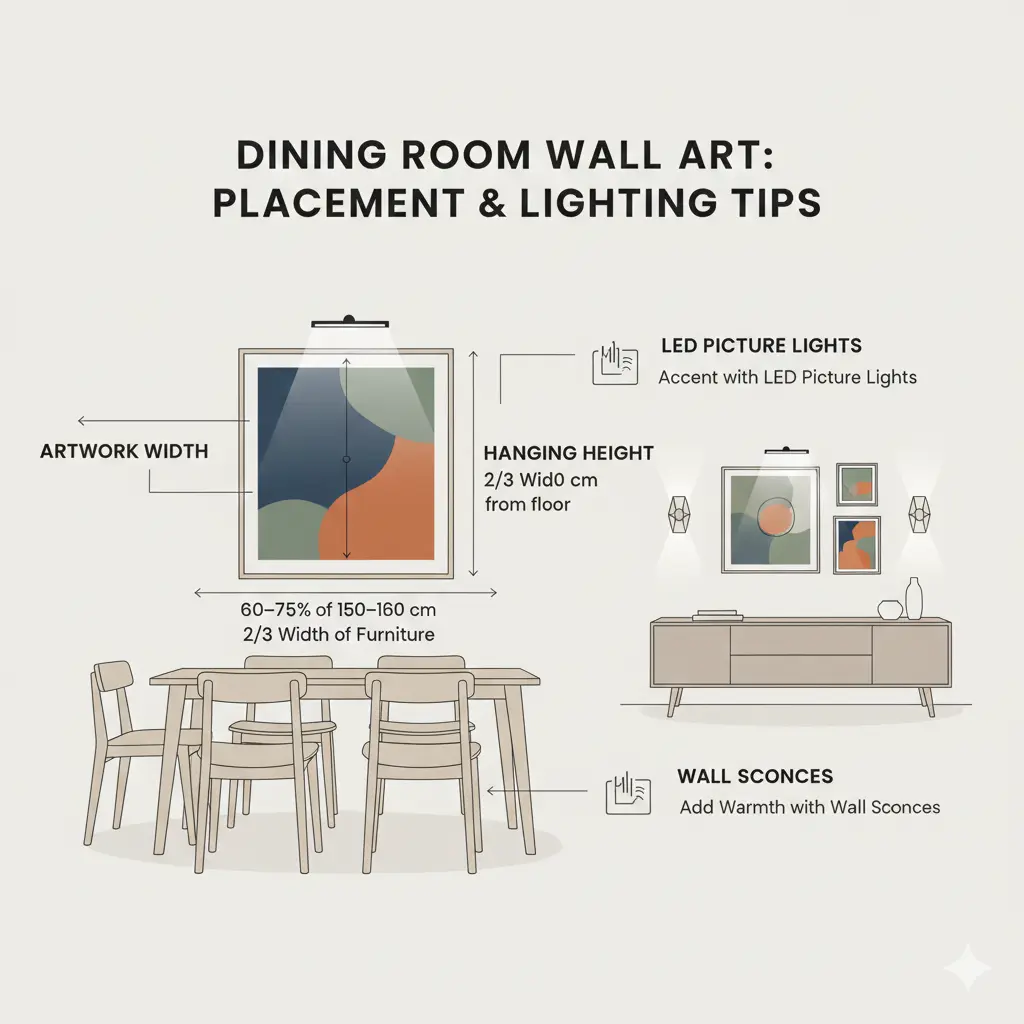
Artwork or collections should ideally cover 60–75% of the wall space above furniture.
Example: If your dining table is 200 cm wide, your artwork should be 120–150 cm wide. This proportional harmony prevents the art from appearing dwarfed or oversized.
Eye-Level Hanging
Since diners are seated, the visual center of the artwork should be 150–160 cm from the floor, lower than typical living room arrangements.
Width Rule
For art above sideboards or consoles, aim for artwork width ~2/3 of the furniture below, achieving balance without visual overload.
Placement Matrix
| Placement Idea | Suitable For |
| Above the dining table | Main focal wall |
| Above buffet/sideboard | Formal settings |
| Large gallery wall | Open, expansive walls |
| Flanking pairs | Symmetry-focused designs |
Lighting Strategies That Amplify Artwork
Art thrives under purposeful lighting, which accentuates textures, highlights colors, and sets the mood.
Recommended Options:
- LED Picture Lights: True-to-color illumination
- Dimmable fixtures: Flexibility from bright meals to intimate dinners
- Wall sconces: Soft, ambient framing
What to avoid:
- Direct sunlight: causes fading
Overhead harsh lighting: produces glare
Lighting functions as art’s supporting actor, elevating presentation without overshadowing it.
Style-Specific Art Ideas for Dining Rooms
Modern & Minimalist
- Single large abstract or geometric piece
- Monochrome palette or restrained hues
- Thin, streamlined frames
Traditional & Classic
- Landscapes, still-life paintings, or classical portraits
- Rich, ornate frames
- Layering with antique accents
Rustic & Farmhouse
- Botanical illustrations or pastoral scenes
- Natural wood frames
- Earth tones complementing wooden furniture
Eclectic & Maximalist
- Multi-piece gallery walls
- Vibrant, contrasting colors
Mix of textures (prints, mirrors, textiles)
Harmonizing Colors, Furniture & Space
Artwork should dialogue with the room’s palette rather than dominate it.
- Neutral walls + bold artwork: creates visual focal points
- Bold walls + simple artwork: avoids overstimulation
Furniture Integration:
- Match wood or fabric tones to artwork for cohesion
- Use accent colors from art in tableware, cushions, or décor objects
Budget-Friendly Dining Room Wall Art Ideas
Cost-effective strategies can still deliver stunning visual impact:
Sources:
- Online marketplaces with downloadable art
- DIY framed photos or prints
- Thrift or flea-market finds
Tips:
- Repurpose old frames with fresh prints
- Create gallery walls from multiple affordable pieces
- Focus on presentation and framing quality over price
Even simple, inexpensive prints can look sophisticated when framed thoughtfully.
Premium Wall Art Solutions
High-end artwork can elevate a dining space into a curated, gallery-like experience.
Options:
- Original paintings or sculptures
- Limited edition prints
- Custom commissions matching wall dimensions and color schemes
Invest in:
- Museum-grade glass and framing
- Professional installation
- Artwork preservation treatments
Luxury choices are timeless, durable, and visually impactful, providing long-term design satisfaction.
Common Mistakes to Avoid
- Hanging art too high or too low
- Choosing pieces too small for the wall
- Clashing colors with furniture or walls
- Poor lighting that fails to highlight the artwork
- Walls left cluttered or overly bare
Avoiding these pitfalls ensures a balanced, intentional, and visually pleasing environment.
Care, Maintenance & Durability Tips
- Dust weekly using a soft microfiber cloth
- Avoid direct sunlight to prevent fading
- Inspect hanging hardware periodically
- Consider UV-protective glass for valuable pieces
- Rotate pieces seasonally to refresh the look
Smart & Modern Wall Art Ideas
Integrate technology and convenience for a future-ready dining room:
- Digital Frames with rotating art collections
- App-controlled lighting for ambiance changes
- Seasonal art swaps without extra hardware
These ideas maintain visual freshness and modern adaptability.
Quick Pro Tips
- Measure walls before buying art
Use painter’s tape to mock placement - Balance artwork with lighting, furniture, and colors
- Rotate and refresh pieces for seasonal variety
FAQs
A: Aim for 2/3–3/4 width of the table or cover ~60–75% of wall space to maintain balance.
A: Classic paintings, elegant framed prints, or curated gallery walls usually excel.
A: Center the art 150–160 cm from the floor for optimal seated viewing.
A: Yes, as long as the palette harmonizes with existing décor.
A: Use LED picture lights, dimmable wall sconces, or accent lighting.
Conclusion
Dining room wall art is more than a decorative element; it’s a utility aesthetic, and an emotional centerpiece. By considering Style, Scale, position, lighting, color harmony, and maintenance, even the simplest space can be transformed into a warm, inviting, and visually satisfyingenvironment.
Whether pursuing budget-friendly solutions or premium, lavish pieces, this guide equips you with strategies to select, install confidently, and curate wall art that enhances both the visual appeal and objective quality of your dining room.
