
Introduction of Dining Room Tables for Small Spaces
Creating a dining space in a small living area can be a challenging puzzle. You want to achieve elegance, comfort, and functionality without making the space look cluttered or limited. Whether you live in a studio apartment, a compact kitchen, or a small open-plan layout, selecting the right Dining Room Tables for Small Spaces is essential to making the area both functional and beautiful.
- Most guides are just pictures of furniture or examples of different types of tables without really addressing the issues of small spaces. They don’t answer questions such as “How much space do you need around the table?” “What is the best shape for a table in a small kitchen?” They also don’t address issues of arranging seating and storage without creating a mess.
- This guide will address all of these issues and more, offering solutions, designs, and product recommendations. By the end of this guide, you will be able to select, place, and decorate your dining table in your small living space, whether you are looking for something modern, multi*. Let’s take a look at the ways and means of dining in small spaces.
- Regardless of whether your dwelling is a studio apartment, a galley kitchen, or a small open-plan living space, choosing the right dining table is the key to maximizing functionality and maintaining a sense of airy elegance and proportion in the space.
- Questions such as “How much space should be left around the dining table?” “Which type of dining table is best suited to a small kitchen?” is left unanswered. Furthermore, issues related to dining table seating and storage solutions that do not contribute to clutter are rarely raised.
- This 2026 ultimate guide covers all these issues and more, providing practical advice and solutions to ensure that your small dining space feels large, beautiful, and functional.
- By the end of this guide, you will know how to spot, place, and decorate the dining table, no matter how small your space is, whether it is contemporary, multi-functional, or on a budget. i-functional, or affordable.
How to Choose the Optimal Dining Table for a Compact Area
Where to begin in finding the ideal table begins with a good understanding of your surroundings and lifestyle. An ill-chosen table can make even the smallest dining area seem cramped and claustrophobic, while an intelligently chosen table can create a harmonious and comfortable space.
Precise Measurements
Meticulous measurement is critical in small spaces:
- To make your dining area nice, you have to know how long and wide it is. This means that you have to measure the space, Including The Walls and windows, and anything that sticks out.
- You also have to make sure that people can walk around easily. So you have to leave 36 inches of space all around the dining area for people to move around.
- When it comes to the dining area, each person needs 24 inches of space on the table to be comfortable. This is the dining space requirement for each diner in the dining area.
Pro Tip:
You can also use digital room planners or augmented reality apps to see how your furniture will look. You can also draw a floor plan. This will help you determine how things will fit together before you buy anything. It is a good idea to think about how you will move around in the room. This way, you can avoid making mistakes that will cost you money. It also helps your room work better for you. Using digital room planners or augmented reality apps to see how your furniture will look is very helpful.
Table Shape Considerations: Round, Square, Rectangular, Oval
The contour of your table plays a decisive role in functionality and aesthetics:
| Shape | Advantages in Compact Spaces | Disadvantages | Ideal Use Case |
| Round | Encourages social interaction, no sharp edges | Can occupy more floor space | Corner kitchens, circular nooks |
| Square | Space-efficient, pairs well with benches | Limited seating beyond 4 | Small open kitchens or tight corners |
| Rectangular | Suits long, narrow layouts | Requires clearance on sides | Hallways, open-plan apartments |
| Oval | Soft, elegant appearance, flexible seating | Larger versions may dominate visually | Living-dining combos |
Tip: Align the table shape with both the spatial layout and lifestyle needs. A small round table may be ideal for cozy corners, while a narrow rectangular table is perfect for elongated kitchen zones.
Evaluate Your Layout
- Kitchen Nooks: Drop-leaf or round tables make excellent use of corner areas.
- Open Living Spaces: Rectangular or extendable tables subtly define dining zones without obstructing pathways.
- Corner Seating: Integrate banquette seating and wall-mounted tables to maximize circulation and reduce crowding.
Best Types of Dining Tables for Small Spaces
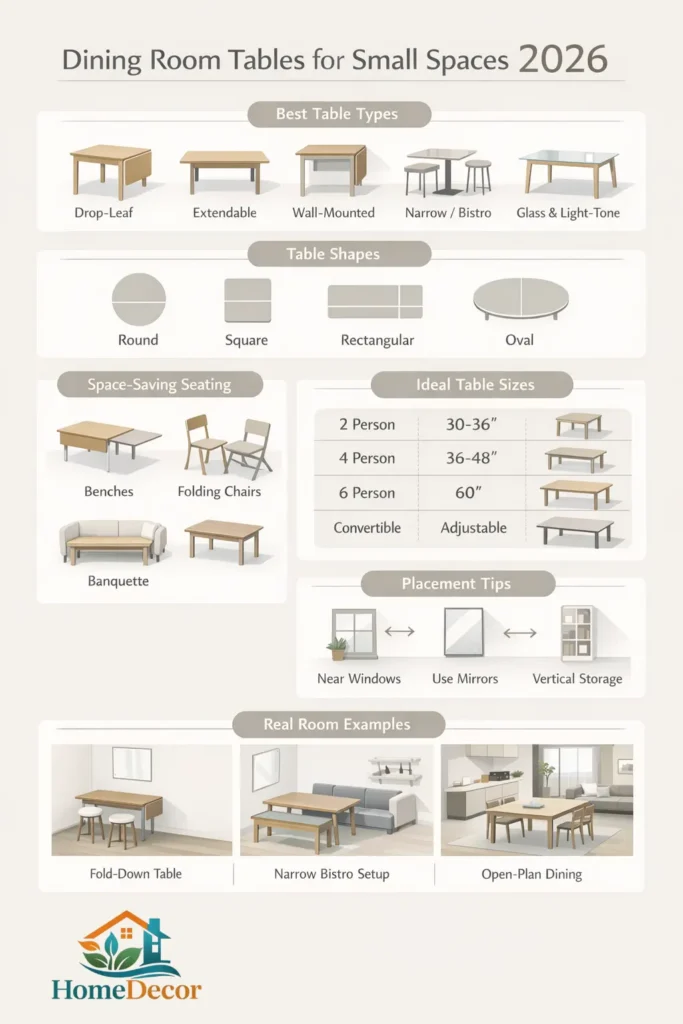
Choosing the most appropriate table variant is fundamental in confined areas. The following types are particularly advantageous for small-scale interiors in 2026:
Drop‑Leaf & Gateleg Tables
- Compact when closed, expandable when necessary.
- Perfect for renters or those with occasional visitors.
- Materials: Solid wood, engineered wood, or veneer finishes.
- Bonus Feature: Lightweight and easy to reposition.
Extendable Tables Daily Compact, Occasional Expansion
- Excellent for hosting gatherings without permanently consuming floor space.
- Often equipped with hidden leaves for seamless expansion.
- Ideal for open-plan apartments emphasizing flexibility and space efficiency.
Wall‑Mounted & Fold‑Down Tables
- Foldable against walls when not in use, saving precious floor area.
- Perfect for studio apartments, narrow passageways, or kitchen alcoves.
- Some models double as home office desks or craft stations.
Narrow & Bistro Tables
- Designed for elongated kitchens, balconies, or tight spaces.
- Can function as auxiliary work surfaces or breakfast bars.
- Popular materials include metal, wood, or glass for a lightweight, minimalistic feel.
Glass & Light-Tone Tables
- Transparent or translucent tops create a sense of openness.
- Light wood or pastel-painted finishes reduce visual weight.
- Ideal for modern or Scandinavian-inspired interiors, enhancing airiness.
Materials, Styles & Finishes That Maximize Perceived Space
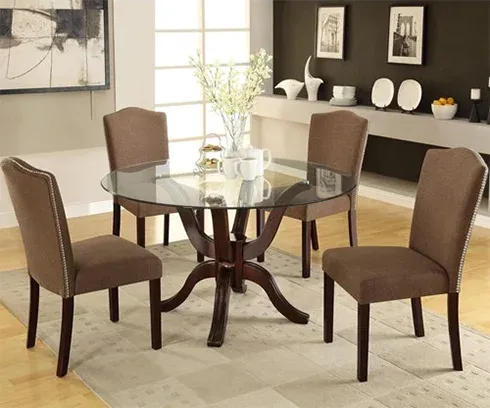
Selecting appropriate materials and finishes significantly affects the perception of space:
- Light Woods: Maple, ash, oak, and birch brighten compact rooms and create a natural feel.
- Glass & Acrylic: Offer a visual sense of spaciousness while providing contemporary styling.
- Multifunctional Designs: Tables with integrated drawers, shelves, or storage compartments add practicality.
- Finishes: Matte or semi-gloss finishes in neutral or light hues amplify the feeling of openness.
Pro Tip:
Avoid bulky, dark-colored furniture that visually contracts the space.
Space-Saving Seating Solutions
Efficient seating arrangements can dramatically improve usability:
- Bench Seating: Slides neatly under the table, freeing up floor area.
- Stackable / Folding Chairs: Provide flexibility and easy storage when not in use.
- Banquette Seating: Optimizes wall space and suits corner arrangements.
- Mix & Match: Combining compact chairs with benches creates versatile and adjustable seating solutions.
Placement & Layout Strategies
- Position tables near windows to capitalize on natural light and openness.
- Use mirrors strategically to amplify the perceived room size.
- Incorporate vertical shelving to maintain clutter-free zones.
- Delineate dining areas in open-plan layouts using rugs, lighting variations, or subtle furniture transitions.
Ideal Dining Table Dimensions for Small Spaces
| Seats | Table Dimensions | Notes |
| 2-person | 30-36″ square/round | Perfect for studios or micro-apartments |
| 4-person | 36-48″ square/rectangular | Bench seating optimizes space |
| 6-person | 60″ rectangular | Extendable recommended for occasional guests |
| Convertible | Variable | Adapts to flexible and multipurpose layouts |
Tip: Always verify measurements before purchase; even a visually attractive table may disrupt the spatial flow if too large.
Real-World Room Layout Examples
- Studio Apartment: A fold-down wall-mounted table with 2 stools maximizes compactness.
- Narrow Kitchen: Rectangular bistro table combined with a wall bench optimizes circulation.
- Open-Plan Living-Dining: Extendable table subtly separates zones without imposing on the floor plan.
Pro Tip: Annotated visual diagrams help in comprehending real-world spatial arrangements.
Common Mistakes to Avoid
- Purchasing oversized tables that block movement.
- Ignoring minimum clearance requirements.
- Opting for dark, heavy materials that visually shrink the space.
- Overlooking multifunctional seating and storage options.
Maintenance, Longevity & Durability Tips
- Wood: Wipe spills immediately; employ coasters to prevent marks.
- Glass: Regular cleaning is essential; Tempered Glass ensures safety.
- Metal: Inspect for scratches or rust; powder-coated finishes are resilient.
Smart, Modern & Future-Ready Options
- Foldable and extendable models for dynamic living arrangements.
- Smart tables with integrated charging ports or wireless technology.
- Modular tables that adapt to evolving layouts and household expansions.
Budget-Friendly Strategies
- Explore modular options from IKEA or local vendors.
- Pair a compact wood table with stackable or folding chairs.
- DIY refurbishment of existing tables saves money while achieving a refreshed look.
Premium / Luxury Options
- Solid Wood extendable tables featuring concealed leaves.
- Designer glass or acrylic tables with sculptural bases.
- Integrated storage, lighting, or technology features: LED accents, charging stations, modular configurations.
FAQs
Compact, extendable, drop-leaf, or wall-mounted tables are ideal. Consider circulation space, multifunctional seating, and clearance requirements.
A2: Yes, a 36-48” square or rectangular table with bench seating accommodates four comfortably.
At least 36” (90 cm) for circulation and 24” (60 cm) per diner.
Rectangular or narrow bistro tables optimize elongated layouts. Round tables suit corner nooks.
Glass, acrylic, and light-hued woods minimize visual bulk and create an airy, open atmosphere.
Conclusion
It is not only about the look when choosing A Dining Table For A Room. It is about planning and measuring everything perfectly. You also have to scan how to use the space in different ways. There are many dining tables that you can choose from, such as ones with leaves that drop down or ones that you can expand. Some have glass on top. Are designed to look light. These types of tables can help you make the most out of your space and still look good.
If you choose the chairs and design the room in a smart way, you can also add some modern items to make it look really good. Even if your dining area is small, you can make it a nice place to eat and hang out. So begin planning your room and thinking about how you can make it better. Begin planning your dining area today and make it a great place to be.
