

Introduction
Picking a dining table that fits well feels simple until you notice the walls closing in, legs catching on baseboards, or the tabletop looking lost in the middle of the floor. Dining Room Table Sizes matter more than most people realize, because size isn’t only about who sits down. Movement matters. So does ease. How things line up changes everything. Space breathes differently when proportions click.
A dining table that fits right lets everyone settle in smoothly, get up without hitting chairs, walk around freely instead of sliding sideways, yet still share meals comfortably. Planning it well means focusing on three things: space for each person to sit, clear areas around the edges, and a shape that follows the room’s layout.
This walkthrough makes things clear without extra steps. Picture each detail explained like a friend would – no jargon, just sense. Start by checking the standard table dimensions to see what fits where. Instead of guessing, get out a tape measure and map your floor plan carefully. Think about a walk-around room; bodies move through space differently than ideas do on paper. For long rooms, rectangles often flow better, while squares suit cozy corners. Imagine meals unfolding before choosing one shape over another. Size matters, yet balance matters more – a huge slab overwhelms tight spots, but tiny pieces vanish in wide halls. Each choice shifts how the room feels when full of talk and plates clinking. Clear thought beats rushing into picks based on trends or photos online. Confidence builds slowly, piece by piece, not in flashes. Less guesswork means fewer regrets later.
Why Dining Room Table Size Matters
Every meal starts here, yet it’s not just about food. How folks gather around depends heavily on the size and shape of the space. Too big, the space tightens up, corners vanish, movement gets sticky. On the flip side, when tiny, the walls seem to stretch, leaving emptiness where comfort should be. Balance shifts moods without anyone noticing. The right fit brings ease; the wrong one pulls tension through every dinner.
Comfort comes first when you’re choosing a table. After all, people must slide chairs out without hitting walls. Moving behind others should feel natural, not tight or awkward. Passing food across the surface needs space, too. Sitting through long dinners demands ease, not constant shifting. When movement feels blocked, annoyance grows fast.
A single smart move? Plan on twenty-four inches wide for every seat. This way, everyone gets space to stretch their arms out, plus set down food and drinks without crowding. Instead of squeezing things in, keep clear areas all around so chairs can slide back freely. Just these two shifts – width per guest and breathing room nearby – fix countless setup headaches right at the start.
What about form? Long chambers pair naturally with rectangles, especially when crowds gather. Circles soften tight corners, inviting voices to flow without strain. Squares settle neatly where walls meet at right angles, holding space without dominating. Ovals glide between lengths and curves, slipping into irregular zones like they were made for them.
Standard Dining Room Table Sizes at a Glance
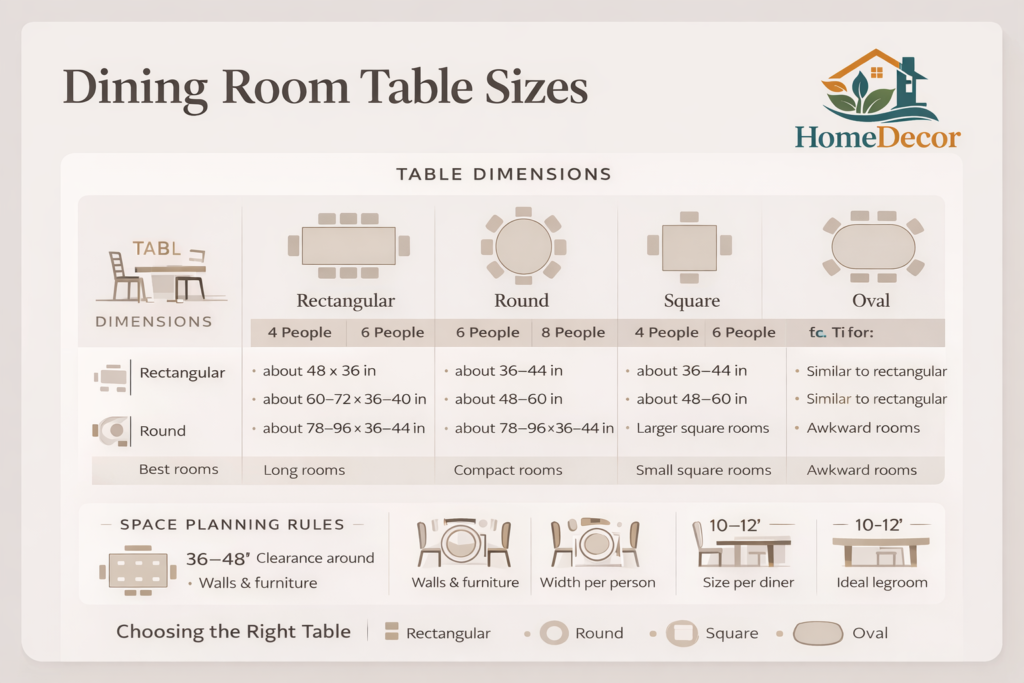
The chart below gives a practical starting point for common dining table sizes. These measurements are general guides, not strict rules, because chair width, table base design, and room shape can all affect what feels comfortable.
| Table Shape | 4 People | 6 People | 8 People | Best For |
| Rectangular | about 48 x 36 in | about 60–72 x 36–40 in | about 78–96 x 36–44 in | Long rooms, family dining, frequent hosting |
| Round | about 36–44 in diameter | about 48–60 in diameter | about 60–72 in diameter | Compact rooms, conversation, easy movement |
| Square | about 36–44 in | about 48–60 in | Larger square tables exist | Small square rooms, intimate dining |
| Oval | Similar to rectangular | Similar to rectangular | Similar to rectangular | Awkward rooms, open-plan spaces, family gatherings |
A few common patterns appear across furniture planning guides. Rectangular tables typically begin around 36 x 48 inches for four people, then increase to about 36 x 60 inches for four to six, and roughly 36 x 78 inches for six to eight. Round tables often range from 36 to 44 inches for four people, 44 to 54 inches for four to six, and 54 to 72 inches for six to eight. Square tables are usually offered in 36, 42, or 48-inch sizes, while oval tables tend to follow rectangular length patterns but with softer, rounded ends.
The most important thing to remember is that seating count alone does not guarantee comfort. Two tables with the same seat number can feel very different depending on leg placement, base style, apron depth, and chair size.
How to Measure Your Dining Room for the Right Table Size
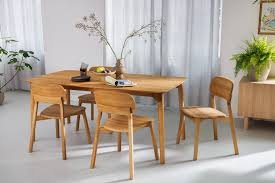
Start by measuring the space, which changes everything. Most pick seats first – then realize too late the room won’t fit what they picked.
Measure the full usable room.
Start by figuring out how long and wide the eating space really is. Not just from one wall to the opposite – go further than that. Think about where people actually move around. Doors matter, especially when they swing open into the room. Built-in shelves take up room too, even if they’re fixed. Windows might block chair placement. Pathways through the space need breathing room. Fireplaces stick out, limiting Layout Choices. Sideboards stay put, so work around them. Nearby pieces like consoles or stools affect what fits. Accessibility shapes everything.
When the dining spot flows into another part of the house – say, the kitchen or lounge – focus on measuring just the portion meant for eating. Open layouts make this trickier since the whole floor seems usable, yet only some fit chairs and movement around the table.
Subtract clearance space
Picture the room’s dimensions clearly in your mind, then take away areas meant for walking. Around the dining table, thirty-six inches stands as the bare minimum open space. Most go by that number every single time. Forty-two to forty-eight inches feels easier on the body, particularly when someone must move behind those already sitting. Through-traffic gets less awkward at that span.
A chair might slide under just fine, yet still seem off. What matters isn’t just space, but how the piece settles into the room.
Use chalk to trace the outline where it stands
Picture the space first. Tape off the edges with painter’s tape – masking works too – to map where the table will sit. A quick layout like this shows exactly how much room it takes up. See it for yourself before buying a thing.
Start by stepping along the outlined area. Slide pretend chairs into place, just to see how they fit. Open closet doors in your mind – do they hit anything? Notice if the space moves easily or begins to feel shut in. Few tricks work better than this to avoid getting sizes wrong.
Test chair pull-back space
A table’s size isn’t only about the top. Getting chairs to fit matters just as much. When someone sits, there must be room for chairs to move away from the edge. Bulky designs take up more floor area than you might expect. Too deep or too wide, and they change how the whole setup feels.
Picture yourself sitting down. There should be plenty of clearance under the tabletop above your legs. When it’s too tight, even if measurements say it fits, using it becomes annoying fast. Comfort matters just as much as size.
Dining Table Clearance Space Rules You Should Not Ignore
Clearance is the hidden factor that makes a dining room feel comfortable instead of congested. Many buyers focus on the tabletop size and forget the movement around it. That is where problems begin.
Here is a practical clearance guide:
| Clearance Item | Minimum | Better | Why It Matters |
| Space behind a pulled-out chair | 36 in / 91 cm | 42–48 in / 107–122 cm | Allows people to sit, stand, and pass easily |
| Space per diner at the table edge | 24 in / 61 cm | 26–30 in / 66–76 cm | Prevents elbow crowding |
| Table to wall or furniture | 36 in / 91 cm | 42–48 in / 107–122 cm | Keeps circulation open |
| Underside of the table to the chair seat | about 10–12 in | around 25 cm is ideal | Improves legroom and comfort |
The most important clearance number to remember is 36 inches. That is the minimum that allows reasonable movement around a table. If the dining room doubles as a walkway, a homework zone, or a passage between two parts of the home, the room benefits from even more space.
Clearance is not a luxury. It is the difference between a dining room that functions naturally and one that causes constant minor frustration.
Which Dining Table Shape Is Best for Your Space?
There is no single perfect shape for every home. The best shape depends on the dimensions of the room, the number of people you seat, and the way the room is used every day.
Rectangular dining tables
Rectangular tables are the most common dining table shape. They work especially well in long or narrow rooms because they echo the shape of the space instead of fighting it. They are also efficient for seating, which makes them a dependable choice for families and frequent hosts.
A rectangular table usually offers the most familiar layout. It keeps people aligned in a way that feels orderly and easy to serve. If your home regularly hosts larger meals, Holidays, or group dinners, the rectangular shape is often the most practical option.
Round dining tables
Round tables are excellent for smaller rooms, square rooms, and homes that value conversation. Because there are no corners, a round table tends to feel softer and more open. It also makes movement easier, especially in tighter spaces where every inch counts.
Round tables often create a more social atmosphere because everyone is facing inward. They can make conversation feel more natural and inclusive, especially for everyday family meals or intimate gatherings.
Square dining tables
Square tables are ideal for compact, balanced spaces. They work well when the room itself is square or nearly square, and they are especially comfortable for small households. Their symmetry creates a neat, orderly look.
Square tables are less common for large groups because they become less efficient as seating needs increase. Still, for 2 to 4 diners, they can feel elegant and well-proportioned.
Oval dining tables
Oval tables are one of the most underrated choices. They give you the length and seating capacity of a rectangular table, but the rounded edges soften the look and improve movement around the table.
If you want a table that feels graceful, less boxy, and slightly more forgiving in tight layouts, an oval shape can be a very smart solution. It is especially useful in spaces where a rectangle feels too harsh but a round table feels too small.
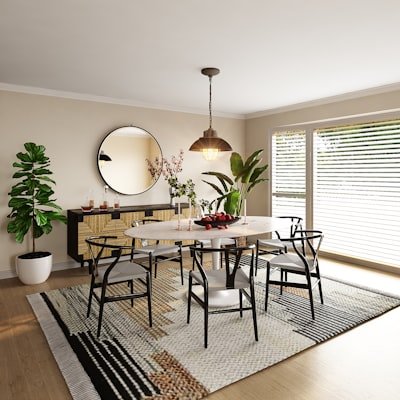
Dining Table Shape Guide by Room Type
Small dining room
A small dining room usually works best with a round, square, or narrow rectangular table. The goal is to preserve movement and reduce visual heaviness. In compact rooms, a table with corners can sometimes make the room feel more crowded, while a round table can open the space visually.
A small room should prioritize flexibility. Choose a table that gives enough comfort without dominating the entire floor plan. If the room is especially tight, a pedestal base may also help because it reduces the number of legs at the corners.
Medium dining room
A medium dining room often handles a six-seater rectangular table very well. This is one of the most practical and balanced choices for many households. It provides enough space for daily meals while still leaving the room comfortable enough for walking and serving.
Medium rooms can also work with a generous round table if the space is more square in shape. The key is to keep the proportion balanced so the table neither feels too tiny nor overly bulky.
Large dining room or open-plan space
Large dining rooms can support longer rectangular or oval tables, especially if the table is used for hosting. These rooms benefit from a more generous footprint because the furniture needs to visually anchor the area.
In open-plan spaces, the table becomes part of the room architecture. A table that is too small can look lost. A table that is too large can disrupt the flow. The best solution is usually a table that feels substantial but still leaves enough breathing space on all sides.
Dining Table Height Standards
Table height affects posture, legroom, and the overall comfort of the seating experience. The most common standard dining table height is about 28 to 30 inches, or 71 to 76 cm. This range works with most dining chairs and feels natural for everyday meals.
| Table Type | Typical Height | Best Use |
| Standard dining height | 28–30 in / 71–76 cm | Most dining rooms and everyday family meals |
| Counter height | 34–36 in / 86–91 cm | Casual kitchens and open-plan spaces |
| Bar height | 40–42 in / 102–107 cm | Pub-style seating and entertainment spaces |
Standard dining height is the safest and most versatile choice for most homes. It works with most chairs and creates a familiar seating posture. Counter-height and bar-height tables are more specialized. They can look stylish in the right setting, but they are not the best default choice for a classic dining room.
Best Dining Room Table Size for Small, Medium, and Large Rooms
Small dining room
For a small room, the best option is usually a round 2–4 seater, a square table, or a narrow rectangular table. The main objective is to keep the room easy to move through. If the space is especially limited, a compact round table can be the most forgiving because it has no corners.
A small room should feel light, not overloaded. The right table gives you a function without visual clutter.
Medium dining room
A medium room usually works beautifully with a six-seater rectangular table. This is a balanced everyday choice for many households because it provides enough seating without overwhelming the room. It supports family dinners, casual meals, and occasional guests without making the area feel stuffed.
If the room is nearly square, a larger round table may also work well. The most important factor is keeping the walking paths clear.
Large dining room
A large dining room can support a longer rectangular or oval table, especially if the table will be used often for guests or special occasions. Larger spaces need more visual presence, so the table can be more substantial.
That said, even in a large room, bigger is not always better. The table should still relate to the size of the room in a controlled, Proportionate way. Oversizing can make a room feel stiff, while the right size makes the layout feel intentional.
Space Planning Tips That Make a Dining Room Feel Bigger
A dining room feels bigger when the furniture works together instead of competing for space. The table, chairs, sideboard, lighting, and traffic paths should all feel coordinated. That is how the room starts to breathe.
Use a pedestal base when possible.
A pedestal base can make a room feel more open because it reduces the visual and physical clutter created by corner legs. It also gives diners a little more freedom with chair placement. This can be especially useful in smaller rooms where every inch matters.
Choose slimmer chairs for a small room.s
Chair size matters as much as table size. If the room is tight, slimmer chairs can preserve valuable space. Bulky armchairs can quickly eat into clearance and make a table feel bigger than it really is.
Match the shape to the room
A round table often works best in square rooms. A rectangular table usually works best in long rooms. An oval table is a strong middle-ground option when you want softness without losing seating capacity.
Keep sideboards out of the pull-back zone
A sideboard, buffet, or cabinet can be a useful addition, but it should not interfere with chair movement. If the furniture is too close to the table, the room will feel crowded even if the tabletop size itself is correct.
Use tape before buying
This is one of the simplest and smartest planning tools. Tape out the table footprint on the floor and live with it for a moment. That low-tech trick can save you from one of the most common decorating mistakes: buying a table that looks perfect online but does not suit the actual room.
Premium Dining Room Table Ideas
Premium tables do not have to be oversized. In fact, the most elegant dining tables are often the ones with the best proportions. Luxury comes from balance, material quality, and the feeling that every part of the setup belongs where it is.
A premium dining table might feature a sculptural base, a refined wood grain, smooth rounded edges, a stone-inspired surface, or a graceful oval profile. The visual tone should feel calm and deliberate rather than crowded.
Common Mistakes to Avoid
Dining table sizing mistakes happen more often than people expect. The most common errors are usually simple, but they have a big impact on comfort.
One mistake is choosing a table only because it seats the right number of people. Seat count alone is not enough. Another mistake is forgetting the room needed for the chair pull-back. Even a well-sized table can feel wrong if people cannot move comfortably around it.
Pros and Cons of the Main Dining Table Shapes
Rectangular tables
Pros
Rectangular tables are the most versatile choice for most dining rooms. They seat more people efficiently, fit long or narrow spaces well, and are available in many styles and sizes.
Cons
They can feel bulky in smaller rooms, and the corners may make circulation tighter. They also need thoughtful leg placement so the seating stays comfortable.
Round tables
Pros
Round tables are excellent for conversation, easier to move around in compact rooms, and visually softer than angular shapes. They also remove corners that can interrupt traffic flow.
Cons
Large round tables require a lot of space, and they can be less efficient for very large groups. They may also be harder to position neatly against a wall.
Square tables
Pros
Square tables feel balanced in square rooms, work well for small households, and create a tidy, symmetrical look.
Cons
They can waste space in long rooms and become less practical as seating needs increase.
Oval tables
Pros
Oval tables soften the look of a rectangular table, allow smoother movement around the ends, and strike a pleasing balance between style and functionality.
Cons
They are less common than rectangular tables, and not every retailer offers the same range of sizes. It can also be harder to judge the footprint online.
Quick Rules for Choosing the Right Dining Room Table Size
A few simple rules can make the entire buying process easier.
First, think about how the room is used every day. If the dining area also functions as a homework zone, laptop station, craft space, or occasional work surface, you may need a more flexible table size than a formal dining room would require.
Second, always check the base design and the underside clearance. A beautiful tabletop can still be uncomfortable if the base interferes with legroom.
Third, measure the open size of any extendable table as carefully as the closed size. Many people only think about the compact version and then discover the Expanded Version does not fit their room.
Here are the fastest rules to remember:
24 inches per person is a strong seating baseline.
36 inches of clearance is the minimum.
42–48 inches of clearance feels better in real life.
Use tape on the floor before ordering.
Match the shape to the room, not just your taste.
FAQs
The most common standard dining table height is 28–30 inches, or about 71–76 cm. That range works well with standard dining chairs and is the safest choice for most homes. It gives a comfortable, familiar seating position for daily meals and works in most room layouts.
A minimum of 36 inches around the table is the usual baseline, but 42–48 inches is more comfortable for regular use. That extra breathing room makes it easier to pull out chairs, walk behind seated diners, and move through the room without feeling crowded.
A 6-seater rectangular table is usually around 60–72 inches long and 36–40 inches wide. A 6-seater round table is commonly 48–60 inches in diameter. Those are the most practical everyday sizes for a family of six, though chair width and table base style can still affect comfort.
Round tables often work better in very small or square rooms because they soften the layout and make movement easier. Rectangular tables are better when the room is long and narrow. The best shape depends on the room’s geometry, the chair sizes, and how often people need to walk around the table.
Measure the usable room length and width, subtract clearance space, and then test the footprint with painter’s tape on the floor. The safest habit is to leave at least 36 inches around the table and more if the room is also a walkway or a passage to another area.
Conclusion
A well-fitting Dining Table slips neatly into the available floor area, handles everyday meals without hassle, yet still keeps walkways open for easy passing. Most households find it clearer to begin by checking wall-to-wall distance, reserving elbow room around edges, after which picking a tabletop form makes more sense once space limits are known.
A long table fits many needs. For tight spots, a circle-shaped one opens up space. Four-sided designs sit neatly where corners match. A rounded oval brings gentle lines without losing seats. Know your area, how much open floor surrounds it, and the outline you prefer – then picking gets simpler.
A dining table does more than hold dishes. Where people gather shapes how they connect each day. With enough room, movement flows without effort.
