
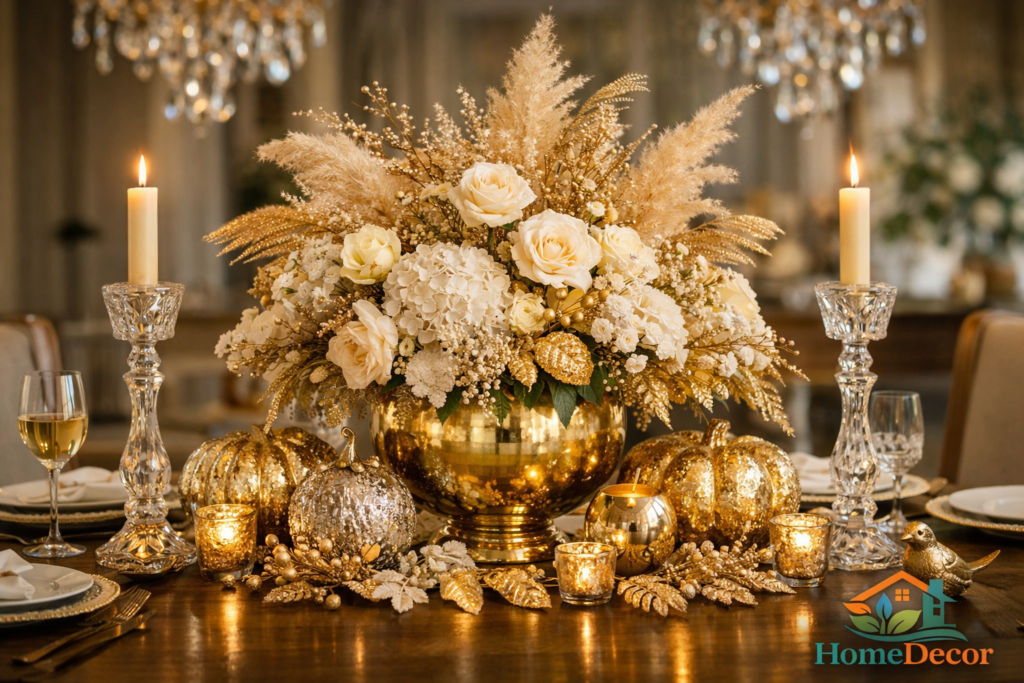
Introduction
Dining Room Table Center pieces are more than just decorative objects placed at the heart of a table; they are the visual anchor, the style storyteller, and the mood-setter of your dining area. A single change might turn a basic table into something warm, full of character, yet balanced. Right now, many choose interiors with soft hues, raw surfaces, shapes that flow – places meant to be used, felt, real rather than stiff or cold.
Here’s the problem, though – what dazzles in a picture often flops when placed on your table. Some tower up too high, others sprawl out awkwardly, while some clash with the furniture or just feel off. What works blends practicality with looks without trying too hard. It lines up with the tabletop’s form, fits how the room already feels, leaves space for talk to flow easily, and quietly pulls everything together at a glance.
A fresh look at how to pick, arrange, and measure your table’s focal point just right. Real-life samples appear early, followed by touches that match each season, choices that save money, others that feel luxurious, ways to keep things looking sharp, plus what works now. All phrased plainly, using common words – smart SEO phrases slip in without breaking flow.
What Are Dining Room Table Center Pieces?
Dining room table centerpieces are the decorative items placed at the middle of a dining table to create a visual focus and set the tone for the space. These objects can be as simple as:
- A single vase
- A sculptural bowl
- A trio of candles
- A decorative tray
- A compact arrangement of greenery
Or as layered as:
- A styled tray with candles, books, and botanicals
- A curated collection of objects that reflect your home’s personality
- A tasteful tablescape for special events
Modern décor sources consistently show that the best centerpieces are simple, clean, intentional, and often rely on texture and shape more than complicated detail.
Why They Matter
A strong dining room centerpiece serves three essential roles:
1. It creates a focal point.
A beautifully chosen object draws the eyes toward the center, giving the room structure.
2. It adds personality.
It reflects your taste, style, and mood, whether modern, rustic, minimalistic, glamorous, or cozy.
3. It makes the table look finished even when unused.
A styled table looks inviting and curated, regardless of whether a meal is being served.
That’s why decorators and interior stylists emphasize thoughtful centerpieces instead of random décor. A single bold object or a compact grouping often achieves more visual harmony than an overcrowded arrangement.
Why Dining Room Table Center Pieces Matter More in 2026
Dining rooms have shifted away from being underused formal spaces. In 2026, homeowners and designers prefer comfort-first styling, personal expression, and cozy yet elevated aesthetics. Warm lighting, natural materials, sculptural decorative pieces, and organic shapes dominate the trend.
This modern direction makes choosing a centerpiece easier because you don’t have to over-decorate. A low, sculptural vase, an earthy bowl, a minimal candle cluster, or a well-curated tray often looks more refined than an oversized bouquet.
Current Design Direction Highlights:
- Warmer, moodier color palettes
- Raw, organic textures
- Curved, artistic objects
- Multi-purpose, flexible décor
- Comfortable, relaxed elegance
These trends appear in published designer homes across all major décor platforms.
How to Choose Dining Room Table Center Pieces by Table Shape and Room Size
The Biggest Mistake people make is picking a centerpiece without considering the table shape. Different table shapes require different visual rhythms.
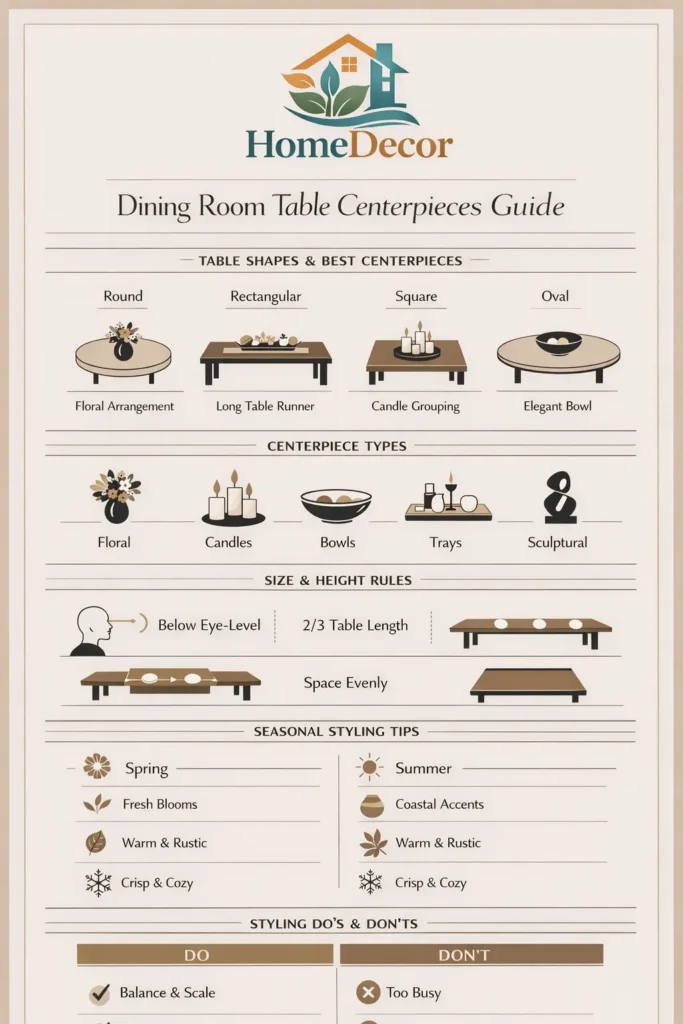
Table Shape Guide
| Table Shape | Best Centerpiece Style | What Works Best | What to Avoid |
| Rectangular | Elongated runner, tray grouping, multiple low pieces | Repeated vases, long floral line, candle row | One tiny object in the middle |
| Round | One central arrangement, symmetrical grouping | Bowl, vase, candle cluster | Long or stretched pieces |
| Square | Balanced, all-sided design | Vase, tray, sculptural décor | Narrow arrangements |
| Oval | Soft, elongated styling | Low garland, linear candle grouping | Tall or heavy items that block sight |
These combinations work because each table shape creates a different visual conversation. Round tables require symmetry from all angles, while rectangular tables demand length and flow.
Room Size Matters Too
If your dining area is small, choose a compact, unobtrusive centerpiece that adds charm without overwhelming the table. If your room is spacious, feel free to go for a broader bowl, a longer tray setup, or a wider arrangement.
Good spacing ensures your centerpiece looks connected to the table, not stuffed into a cramped room. Proper clearance around the table (around 36 inches or more) helps maintain balance and usability.
The Best Dining Room Table Center Pieces by Style
Below is a comparison of the most effective and versatile centerpiece types.
| Type | Best For | Style Effect | Maintenance | Main Advantage |
| Floral Arrangements | Classic, romantic, seasonal vibes | Soft, fresh, welcoming | Medium | Adds instant liveliness |
| Candle Clusters | Cozy, moody, evening dining | Warm, intimate | Low | Easy to update |
| Decorative Bowls | Minimal, functional looks | Clean, calm | Very low | Timeless and practical |
| Tray Arrangements | Long tables, organized décor | Curated, polished | Low–medium | Keeps items tidy |
| Sculptural Objects | Modern, artistic, luxury rooms | Bold, editorial | Very low | Strong statement piece |
These designs are popular because they are flexible, simple, and visually effective without clutter.
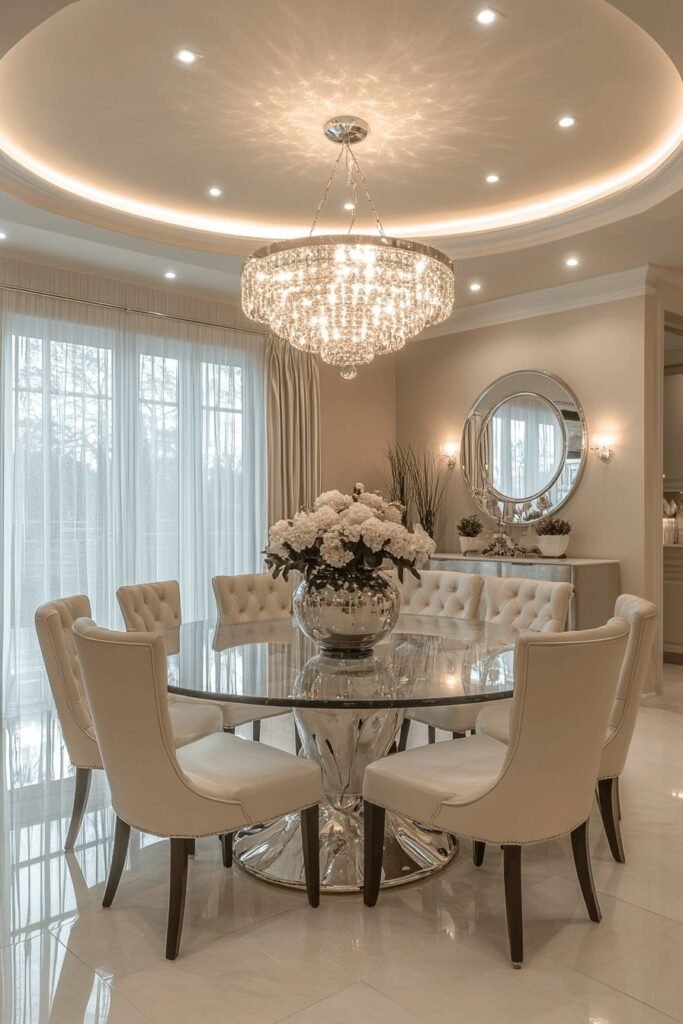
Floral and Greenery Center Pieces
Fresh flowers always feel warm, uplifting, and elegant. You can choose roses, tulips, hydrangeas, eucalyptus, olive stems, or seasonal blooms. A single bouquet in a tasteful vase is enough to energize the table.
Best Use Cases:
- Everyday beauty
- Spring & summer themes
- Romantic or classic interiors
- Holiday dining
Just remember: keep flowers low to avoid blocking faces while dining.
Candle and Lantern Center Pieces
Candles instantly bring warmth and serenity. You can style:
- Taper Candles
- Pillar candles
- Mixed candle heights
- Lantern-style candles
Use ceramic, stone, glass, or metal holders based on your décor style.
Best Use Cases:
- Evening meals
- Winter styling
- Romantic ambiance
- Minimalist tables
Candles are versatile, elegant, and visually soothing.
Decorative Bowl Center Pieces
Decorative bowls are one of the easiest everyday options. Fill them with:
- Citrus
- Fruit
- Wooden beads
- Spheres
- Potpourri
- Seasonal accents
Bowls look polished but never overpower the table.
Best For:
- Busy families
- Minimalist homes
- Daily dining
- Budget styling
They are practical, aesthetically pleasing, and timeless.
Tray Center Pieces
A tray keeps everything neat and intentional. Combine elements like:
- Candles
- A mini vase
- A plant
- Small books
- Sculptural décor
Trays work especially well on rectangular tables because they create structure without clutter.
Best For:
- Long tables
- Open-plan homes
- Mixed décor tastes
- Spaces needing order
A tray unifies multiple objects into one attractive arrangement.
Sculptural and Artistic Center Pieces
Sculptural décor is perfect for modern interiors. Think:
- Ceramic statement pieces
- Matte black vases
- Stone sculptures
- Organic-shaped bowls
- Artisan-made objects
These add luxury, character, and architectural interest.
Best For:
- Modern Dining Rooms
- Neutral interiors
- Artistic spaces
- Year-round use
They create a strong visual identity with minimal effort.
How to Style Dining Room Table Center Pieces the Right Way
A good centerpiece is not just pretty; it follows proportion, balance, and functionality.
Use the Rule of Balance
Focus on:
- Height
- Width
- Color
- Texture
- Visual weight
For long tables, aim for a centerpiece that covers about two-thirds of the table length, giving enough space at both ends.
Keep It Low Enough for Conversation
The tallest element should stay below eye level when guests are seated. This ensures your table remains functional, friendly, and visually relaxed.
Match the Room’s Color Story
Your centerpiece should connect with the room’s palette. Try combinations like:
- Warm wood + cream + greenery
- Black vase + white stems + gold accents
- Neutral bowl + fresh fruit + linen runner
- Ceramic pieces + soft candles + natural foliage
Matching materials and tones makes the table feel cohesive.
Use Texture to Enrich the Look
Texture adds depth and richness. Mix:
- Wood
- Stone
- Linen
- Ceramic
- Glass
- Metal
- Greenery
Layering these textures creates a warm, editorial-style tablescape.
Seasonal Dining Room Table Center Pieces
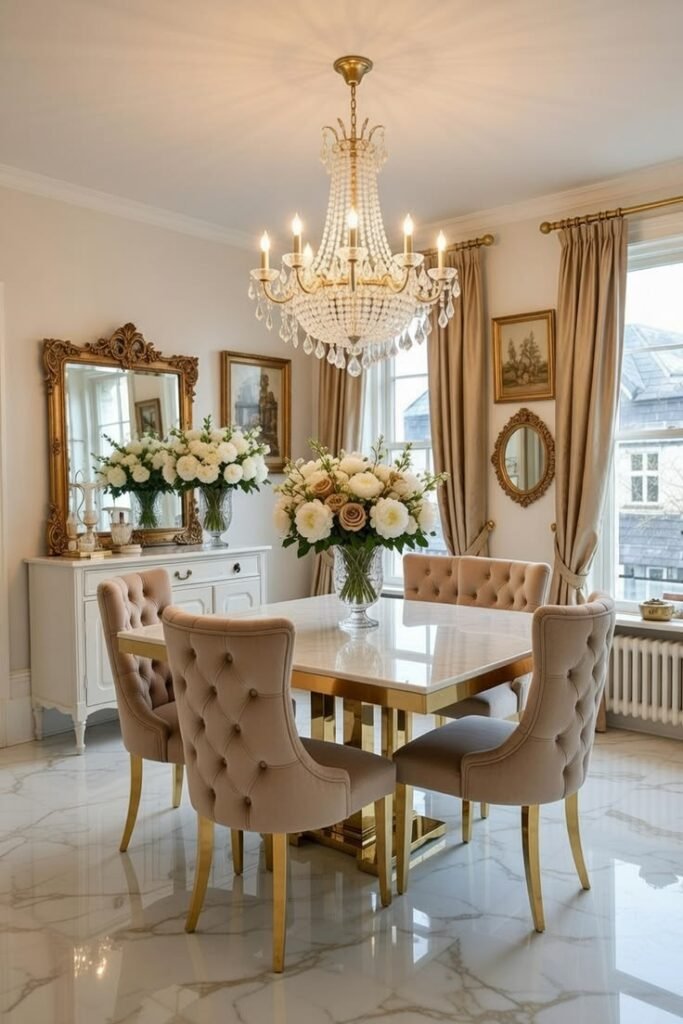
Refresh your table throughout the year with seasonal styling.
Spring
Fresh, airy, and uplifting.
Try:
- Tulips
- White blooms
- Pastel accents
- Light linen runners
Summer
Bright, breezy, and simple.
Try:
- Citrus bowls
- Olive branches
- Wildflowers
- Clear glass vases
Autumn
Warm, earthy, and textured.
Try:
- Mini pumpkins
- Dried florals
- Amber candles
- Wooden trays
- Deep green accents
Winter
Elegant, cozy, and festive.
Try:
- Evergreens
- Pinecones
- White candles
- Gold accents
- Deep red or green hues
Special Occasions
Use expressive but functional arrangements that don’t crowd the table. Low, wide visuals work best.
Budget-Friendly Dining Room Table Center Pieces That Still Look Stylish
You don’t need expensive décor for a beautiful table. Many gorgeous centerpieces are affordable, simple, and creative.
Budget Ideas
- One grocery-store bouquet
- A bowl of lemons
- A thrifted tray with candles
- Faux greenery in a ceramic pot
- A stack of books with a decorative item
How to Make Cheap Décor Look Expensive
- Stick to two colors
- Use negative space
- Mix textures
- Use matte finishes
- Keep it tidy and intentional
A simple, edited centerpiece often looks more luxurious than an over-complicated one.
Premium and Luxury Dining Room Table Center Pieces
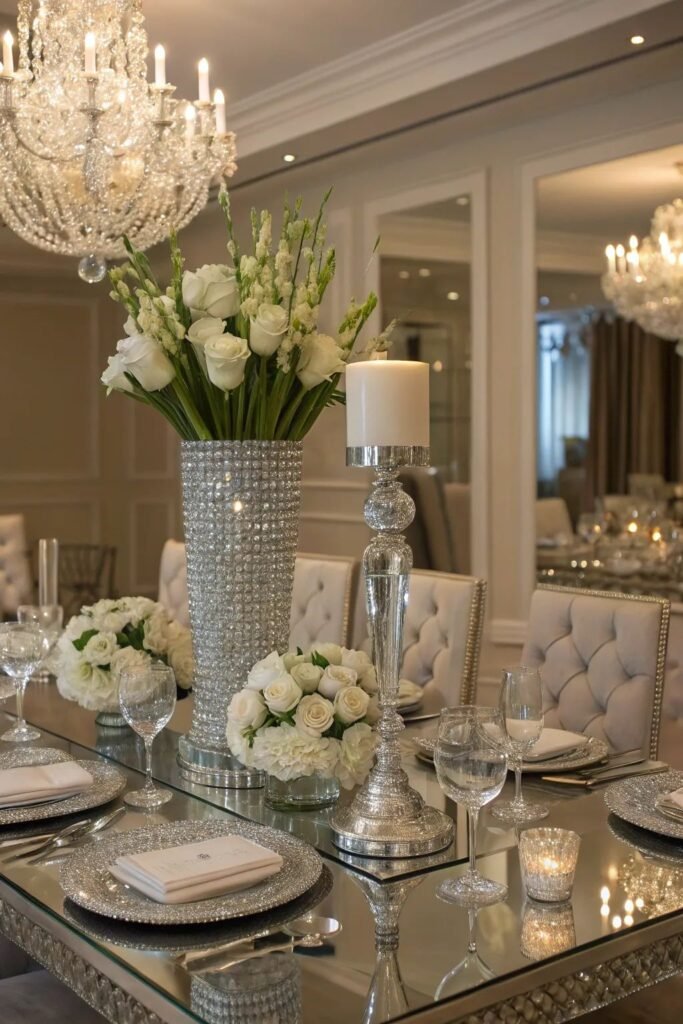
Luxury doesn’t mean flash, but it means quality, simplicity, and perfect scale.
Premium Ideas
- Handcrafted ceramics
- Marble Bowls
- Stone vases
- Designer candleholders
- Sculptural objets d’art
What Makes Them Look Luxurious
- High-quality materials
- Fewer but better pieces
- Neutral palette
- Considered placement
- Impeccable scale
Luxury décor is often understated yet visually powerful.
Common Mistakes to Avoid
- Making it too tall
- Using too many small objects
- Ignoring the table shape
- Choosing the wrong scale
- Forgetting the table’s function
Avoiding these mistakes keeps your table balanced and beautiful.
Maintenance & Care Tips
Fresh Flowers:
- Replace water
- Trim stems
- Remove wilted leaves
Faux Florals:
- Dust regularly
- Store properly
Candles:
- Use trays
- Clean wax drips
Bowls & Sculptures:
- Wipe occasionally
- Prevent water marks
Small habits keep your centerpiece looking polished year-round.
Smart, Modern & Future-Ready Dining Room Table Center Pieces
Modern homes appreciate décor that is practical, modular, and easy to refresh.
Future-Friendly Ideas
- Modular trays
- Rechargeable LED candles
- Faux greenery
- Multi-use objects
- Everyday-friendly low arrangements
These styles blend beauty with usability.
Pros & Cons
Pros
- Makes the room feel complete
- Easy to customize
- Fits all budgets
- Seasonal flexibility
- Defines a focal point
Cons
- Can block conversation if too tall
- Cluttered look if overdone
- Needs occasional refreshing
- The wrong scale disrupts the balance
Quick Pro Tips
- Keep arrangements low
- Use one strong idea, not many small ones
- Match the centerpiece to the table shape
- Repeat room colors or textures
- Use trays for cleaner styling
- Change with the seasons
- When unsure, choose a bowl, vase, or candle cluster
FAQs
Below seated eye level for easy conversation.
Elongated arrangements, runners, repeated décor pieces.
A single central piece or a symmetrical cluster.
Yes, it should reflect or complement the room’s palette and textures.
Yes—bowls, candles, trays, and greenery are both beautiful and practical.
Conclusion
Dining room table centerpieces may look like a small detail, but they have a powerful impact on how your entire dining space feels. A well-chosen centerpiece can transform a Plain Table into a warm, balanced, and beautifully styled focal point. A flower here, a candle there – maybe even a bowl someone left behind – the right choice slips neatly onto your table without fuss. Shape matters most, how it mirrors the edges and corners where people sit. Colors bounce off walls, mix with curtains, chairs, and anything nearby. Conversation flows more easily when sightlines stay clear, nothing blocking faces or hands. Some like art pieces pretending to be centerpieces, others want only what feels familiar. Whatever sits in the middle earns its place by staying out of the way.
Warmth sneaks into 2026’s design vibe through soft textures, raw wood, stone, and clean shapes – no fuss needed for a sharp dining space. Trays arranged with care, short-profile centerpieces, colors that talk to each other, seasonal tweaks here and there – all of it lifts the table without effort. Cheap finds start feeling luxurious once balanced right, placed with purpose, shaped by eye rather than rules.
Truth be told, a warm dining area comes down to comfort, usefulness, and your own touch. Go with a short centerpiece so faces stay visible across the table. Pick pieces that match the size of your space – too big crowds it, too small gets lost. Leave open spots between items; tight clusters feel messy. Switch things up when spring hits, again in fall, maybe even winter if the mood strikes. A handful of thoughtful picks makes beauty happen daily, no fuss, no cost hikes, no constant redoing.
