
Introduction
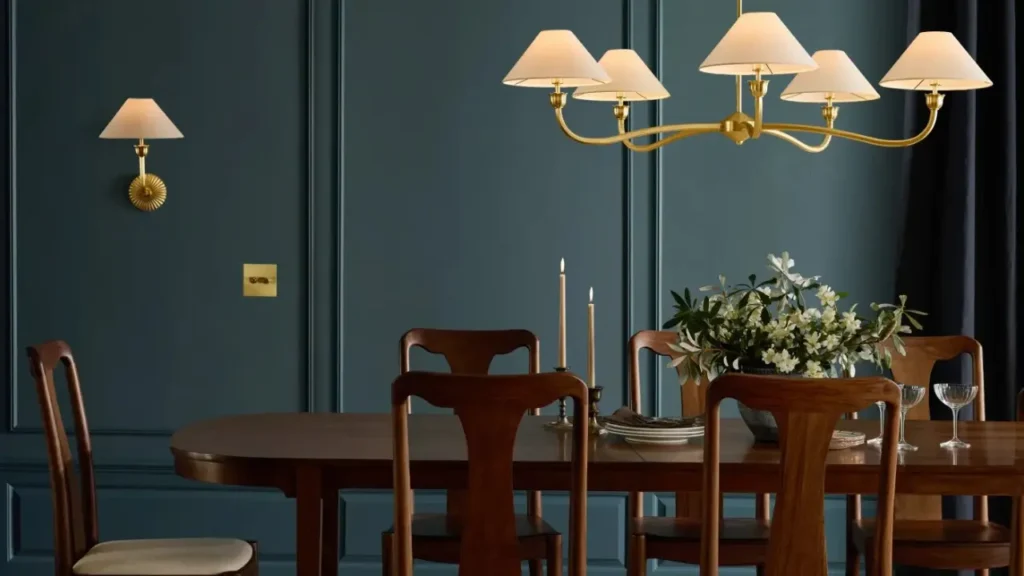
Lighting is far more than a functional necessity; it’s an essential design element that shapes ambiance, enhances décor, and transforms the experience of your dining room. In 2026, Dining Room Light Fixtures are evolving beyond basic illumination into sophisticated reflections of style and personality. Choosing the right lighting doesn’t just brighten your meals; it enriches your interior, complements your possessions, and elevates every gathering from casual dinners to festive celebrations.
When selecting a dining room light fixture, it’s vital to think beyond simply hanging a light from the ceiling. Factors such as aesthetic appeal, dimensions, operational purpose, energy efficiency, and harmony with furniture must all be observed. The proper fixture establishes a cozy atmosphere for everyday meals and introduces dramatic elegance for special occasions.
This complete guide explores every aspect of dining room lighting in 2026. It provides insights on fixture types, styles, placement strategies, size recommendations, contemporary trends, smart and energy-efficient lighting solutions, expert shopping tips, and common mistakes to avoid. By the end of this article, you’ll have a clear understanding of how to select the perfect lighting fixture that corresponds with your home environment.
Understanding Dining Room Light Fixtures
A dining room lighting fixture performs two fundamental roles:
- It illuminates the space, ensuring meals are comfortably visible.
- It enhances style, becoming a central decorative element.
Many homeowners underestimate the impact of lighting, thinking it is purely practical. However, lighting can be one of the most influential design features in a dining space. With the correct fixture, your lighting can become a captivating centerpiece, often admired by guests and family alike.
Common Fixture Types
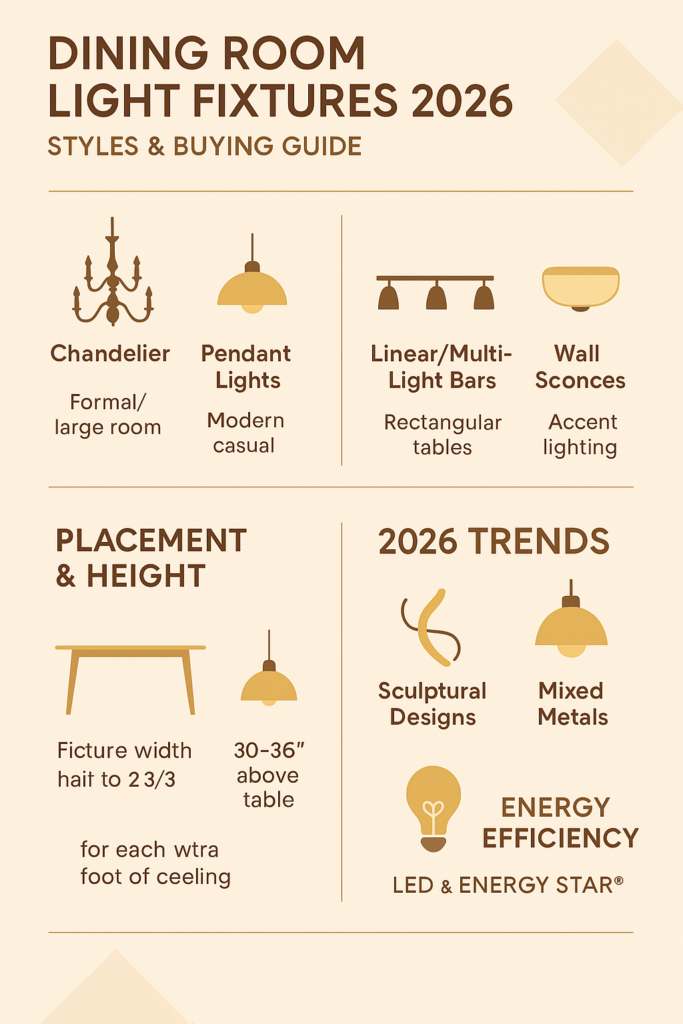
| Fixture Type | Appearance | Ideal For |
| Chandeliers | Large, decorative, ornate | Formal or spacious dining areas |
| Pendant Lights | Hanging single or grouped lights | Contemporary and casual interiors |
| Linear/Multi-Light Bars | Elongated, horizontal fixtures | Rectangular tables and open layouts |
| Flush/Semi-Flush Mounts | Close to the ceiling | Rooms with low ceiling height |
| Wall Sconces | Wall-mounted accents | Complementing main lighting and accentuating décor |
Each fixture type brings distinct aesthetics and functionality. Some provide full-room illumination, while others serve as accent lighting to add depth and dimension.
Best Types of Dining Room Light Fixtures
Chandeliers
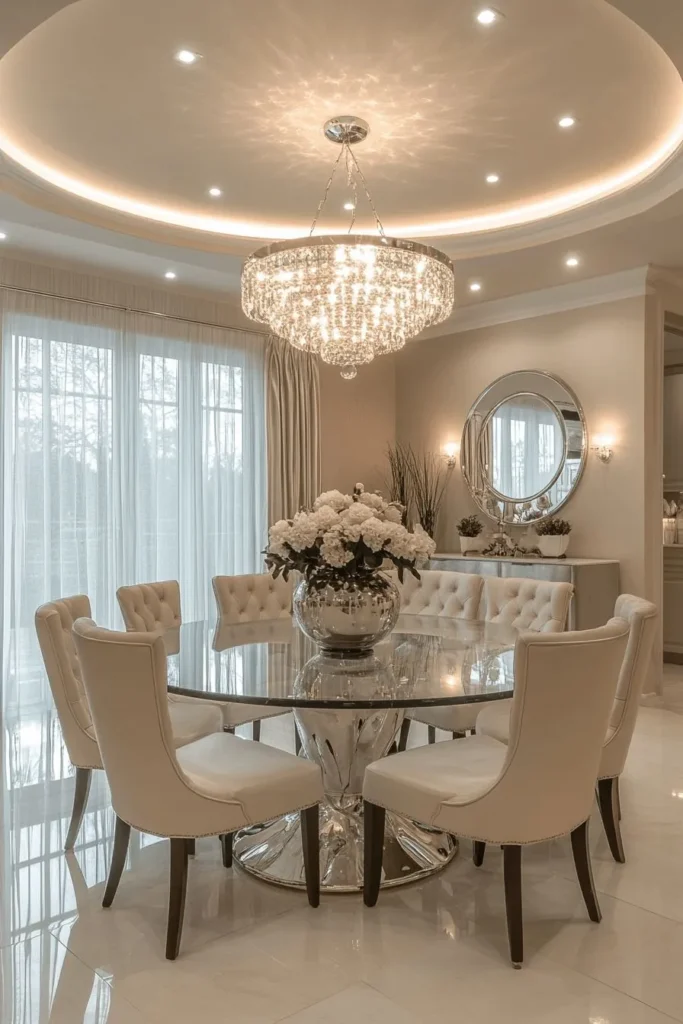
Chandeliers remain iconic, often acting as the focal point of formal dining spaces. They range from traditional crystal designs to modern geometric forms and minimalist metallic styles.
Advantages:
Dramatic visual impact and elegance
Perfect for large, spacious rooms
Complements formal interiors and classic décor
Disadvantages:
Can be expensive to purchase and install
Requires higher ceilings to avoid crowding the space
Best Suited For: Large dining areas or formal settings where a bold centerpiece is desired.
Pendant Lights
Pendant lights are suspended from the ceiling and can be installed as a single dramatic fixture or in clusters of smaller lights for balanced illumination.
Advantages:
Sleek and stylish, suitable for modern aesthetics
Adjustable hanging height
Versatile and adaptable for various room sizes
Disadvantages:
Single pendants may require multiple units to illuminate a space evenly
Best Suited For: Contemporary homes, Casual Dining Rooms, and multifunctional spaces.
Linear & Multi-Light Bars
Linear bars or multi-light fixtures are perfect for rectangular tables, ensuring even light distribution across the surface.
Advantages:
Uniform illumination across the table length
Modern, streamlined design
Disadvantages:
Can overpower smaller tables if the dimensions are not chosen carefully
Best Suited For: Rectangular dining tables and open-plan layouts.
Flush & Semi-Flush Mounts
These fixtures sit close to the ceiling, making them ideal for rooms with lower ceilings or compact spaces.
Space-efficient, simple, and understated
Easy to maintain and clean
Disadvantages:
Less decorative impact; cannot serve as a centerpiece
Best Suited For: Minimalist interiors and low-ceiling rooms.
Wall Sconces
Wall sconces provide accent lighting, often complementing overhead fixtures. They can highlight walls, artwork, or architectural details.
Advantages:
Create layered, multi-dimensional lighting
Accent illumination adds character
Disadvantages:
Insufficient as the sole light source for a dining room
Best Suited For: Secondary lighting, creating ambiance, and emphasizing décor elements.
How to Choose the Right Dining Room Light Fixture
Selecting the ideal lighting fixture is a blend of science and artistry. Consider the room’s dimensions, design style, functional needs, and illumination goals.
Room Size, Style & Function
Room Size:
A grand dining room calls for a substantial fixture, whereas a compact area will look cramped if the light is too large.
Style Harmony:
The fixture should complement the room’s design. Traditional interiors pair well with chandeliers, whereas modern settings benefit from sleek pendants or linear bars.
Room Function:
If your dining area doubles as a workspace for homework or other tasks, prioritize brighter task-oriented lighting alongside ambient illumination.
Lighting Goals
A well-lit dining space often includes three types of lighting:
Ambient Lighting: General illumination for overall visibility.
Task Lighting: Focused light for activities such as dining, reading, or board games.
Accent Lighting: Decorative illumination highlighting art, architectural features, or other focal points.
Combining these layers ensures both practicality and visual appeal.
Color Temperature & CRI
Color Temperature (K): Determines whether the light feels warm or cool.
- Warm Light (2700K–3000K): Creates a cozy, inviting atmosphere suitable for dining.
- Cool Light (3500K+): Produces crisp, bright illumination for tasks or modern aesthetics.
CRI (Color Rendering Index): Evaluates how accurately colors appear under light. A CRI of 80+ is recommended to make food and skin tones look natural.
Placement, Size & Hanging Height
Proper fixture placement and sizing are essential for visual balance and functional lighting.
Fixture Diameter Rule
The width of the light should generally be ½ to ⅔ of the table’s width.
| Table Width | Fixture Width |
| 36″ wide | 18″–24″ |
| 48″ wide | 24″–32″ |
| 60″ wide | 30″–40″ |
For rectangular tables, linear fixtures or rows of pendants provide even illumination.
Hanging Height
- Standard Ceiling Heights: 30–36 inches above the tabletop
- Higher Ceilings: Add approximately 3 inches per additional foot of ceiling height
This prevents visual obstruction while ensuring sufficient lighting.
Open-Plan Dining Areas
Layered lighting is critical in open spaces. Suggestions include:
- Overhead fixture for general illumination
- Wall lights for accent lighting
- Under-cabinet or ambient LED strips for mood
Layering defines zones, enhances aesthetics, and creates a cohesive look.
Dining Room Light Fixture Ideas by Style
Modern & Minimalist
- Clean lines, geometric forms
- Neutral metals like black, silver, or matte finishes
- Integrated or concealed LED systems
Focuses on simplicity while making a strong style statement.
Rustic & Farmhouse
- Wood and metal combinations
- Edison bulbs for vintage warmth
- Earthy, muted tones
Adds charm, texture, and a welcoming ambiance.
Industrial Chic
- Metal cage designs, exposed bulbs
- Matte steel, black finishes
- Edgy, loft-inspired look
Works well in open-plan or urban interiors.
Elegant Traditional
- Crystal chandeliers, brass finishes
- Ornamental detailing
- Classic shapes and timeless appeal
Perfect for stately dining rooms or classic décor themes.
Energy Efficiency & Smart Lighting
Lighting in 2026 blends aesthetics with environmental consciousness and intelligence.
LED Fixtures & Smart Bulbs
- LEDs provide long lifespan, energy savings, and dimming flexibility
- Smart bulbs offer control via phone apps or voice assistants, allowing color and brightness adjustments
Top Dining Room Lighting Trends for 2026
- Sculptural and artistic designs
- Layered lighting with diverse sources
- Mixed metals and organic materials
- Adjustable color temperature via smart devices
- Minimalist geometric forms
These trends highlight the balance between beauty, innovation, and functionality.
Common Mistakes to Avoid
- Incorrect hanging height
- Mismatched Fixture Size
- Neglecting layered lighting
- Ignoring color temperature
- Not using dimmers or smart controls
Maintenance, Care & Durability Tips
- Dust fixtures weekly
- Replace bulbs with matching specifications
- Inspect mounting hardware yearly
- Prefer LEDs for longer life and energy savings
Smart, Modern & Future-Ready Ideas
- App-controlled dimmers and scenes
- Voice activation through assistants like Alexa or Google Home
- Scheduled lighting adjustments
- Integration with energy-saving routines
Quick Tips / Pro Tips
- Use multiple lighting layers for depth
- Match fixture style with room décor
- Incorporate dimmers to create an atmosphere
- Use wall sconces for warmth and accent
- Select LED and ENERGY STAR® certified fixtures
FAQs
It depends. Chandeliers work well in formal areas; pendants are good for versatile spaces; flush mounts suit low ceilings.
Usually 30–36 inches above the tabletop, adjusted for ceiling height.
Yes, they allow easy control of brightness and ambiance.
Use the rule: fixture width ≈ ½ – ⅔ table width, and adjust height for the ceiling.
Dust regularly, replace bulbs with matching types, and inspect mounts.
Conclusion
Selecting the right dining room light fixture is about combining function, design, and atmosphere. From understanding fixture types and size to perform trends, layered lighting, and energy-smart solutions, you can design a dining space that is visually striking, highly functional, and ideally suited for both daily meals and Special Gatherings.
