
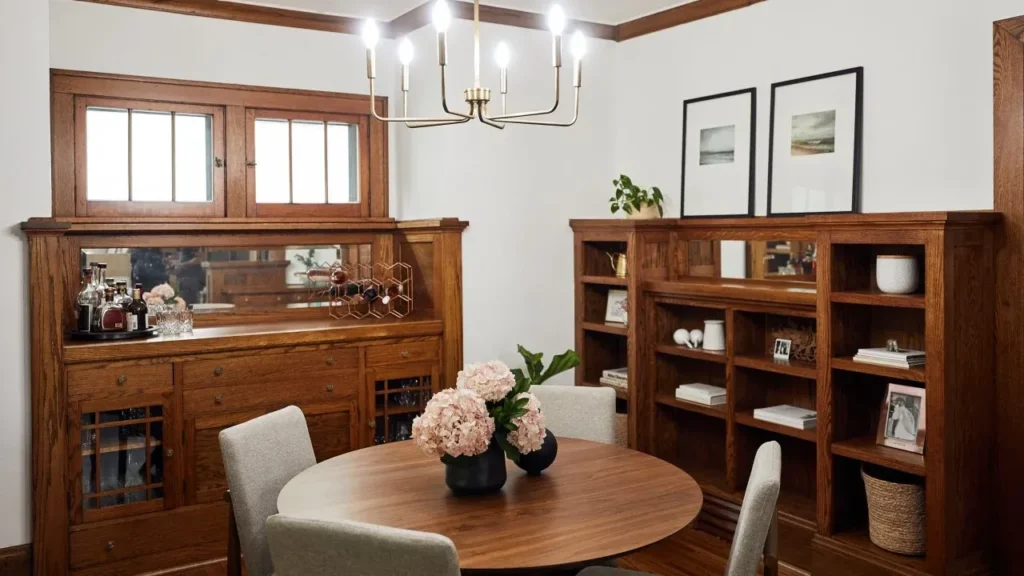
Introduction
A Dining Room Cabinet is far more than just a utility storage unit. It serves as an essential component of your dining environment, combining service, elegance, and a touch of personality. In 2026, the modern denizen is not only seeking practical storage but also pieces that elevate the aesthetic appeal, harmonize with interior design, and serve as a conversation starter for guests.
Whether you reside in a cozy shelter, a spacious suburban house, or a lavish estate, a well-selected dining cabinet transforms your dining space into a balanced, refined, and organized area. It ensures that dinnerware, glassware, linens, and bar essentials are neatly stored, easily accessible, and elegantly displayed.
This comprehensive guide will help you:
- Understand what a dining room cabinet truly is
- Learn expert techniques for selecting the perfect piece
- Explore contemporary and classic designs, trends, and styles
- Plan your storage bright based on space and needs
- Find budget-friendly to premium options
- Maintain your cabinet for years of bright and charming
By the conclusion of this guide, you will know how to make an informed, confident, and stylish choice for your dining room cabinet in 2026.
What Is a Dining Room Cabinet?
A dining room cabinet is a meticulously crafted furniture unit designed to store and organize items associated with dining. These include plates, bowls, glassware, cutlery, linens, and sometimes even decorative objects. Unlike general storage furniture, these cabinets are specifically designed for the dining area, combining accessibility with aesthetic appeal.
Dining cabinets vary in form, function, and style, each serving unique purposes:
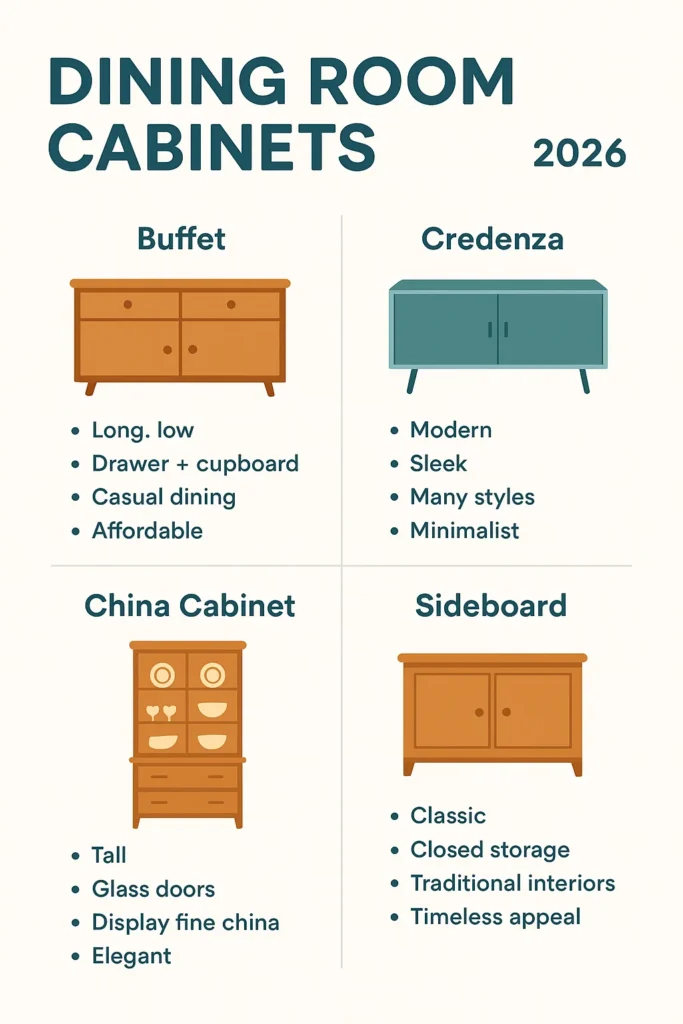
| Type | Description | Best For | Advantages | Limitations |
| Buffet Cabinet | Low, elongated with drawers and cupboards | Casual dining & entertaining | Versatile, functional, affordable | Limited display options |
| Credenza | Modern, sleek variation of a buffet | Contemporary and minimalist | Stylish, unobtrusive, elegant | Less traditional storage |
| China Cabinet | Tall cabinet with glass doors | Showcasing fine china | Elegant, visually appealing | Requires vertical space |
| Sideboard | Classic cabinet with closed storage | Traditional interiors | Timeless, substantial | Can appear bulky |
- Families hosting regular dinner parties might use a buffet cabinet for convenient serving.
- Minimalist interiors may favor a credenza to complement clean lines and uncluttered spaces.
- Collectors with valuable or heirloom china often select a china cabinet to display their prized pieces elegantly.
Examples of Use
The right cabinet seamlessly blends organization, practicality, and style, enhancing the overall harmony of your dining area.
Why You Need a Dining Room Cabinet (Benefits)
A dining room cabinet serves far more than a mere storage function. Here’s why investing in one is worthwhile:
Maximize Storage
Dining rooms often contain a variety of items, including plates, glassware, cutlery, linens, serving trays, and bar accessories. A cabinet provides dedicated storage, ensuring everything has its place and is easy to locate.
Reduce Clutter
Without proper storage, items tend to accumulate on tables, counters, and side surfaces. A well-designed cabinet hides clutter, keeping the room tidy and visually appealing.
Display Treasured Items
Many cabinets feature glass-front doors to showcase delicate china, glassware, or decorative items. This allows you to enjoy and display cherished possessions while protecting them from dust.
Enhance Room Aesthetics
The cabinet itself can act as a Focal Point, anchoring the room’s design. With the right shape, material, and finish, it elevates the interior, making your dining area appear cohesive, elegant, and thoughtfully curated.
Multi-Purpose Functionality
Modern dining cabinets often serve dual roles:
- Bar station for entertaining guests
- Serving station during parties or meals
- Seasonal storage for linens, tableware, or decorations
Real-Life Example:
Picture a dinner party: a buffet cabinet placed alongside the dining table allows for platters, drinks, and cutlery to be easily accessed by guests, adding both convenience and style to your entertaining.
Main Types of Dining Room Cabinets
To select the best cabinet, you need to understand the distinct types available:
Buffet Cabinet
- Style: Long, low, horizontal
- Use: Both storage and serving
- Best For: Casual dining rooms
Why Choose: Ensures items are within reach and suitable for frequent use.
Credenza
- Style: Sleek, minimal, contemporary
- Use: Stylish storage with clean lines
- Best For: Modern, minimalist homes
- Why Choose: Doesn’t overwhelm interiors; adds sophistication
China Cabinet
- Style: Tall with glass doors
- Use: Display fine china or collectibles
- Best For: Elegant or formal dining areas
- Why Choose: Showcases cherished items beautifully while protecting them
Sideboard
- Style: Classic, traditional
- Use: Storage for linens, dishes, or bar tools
Best For: Traditional interiors - Why Choose: Timeless appeal and versatile functionality
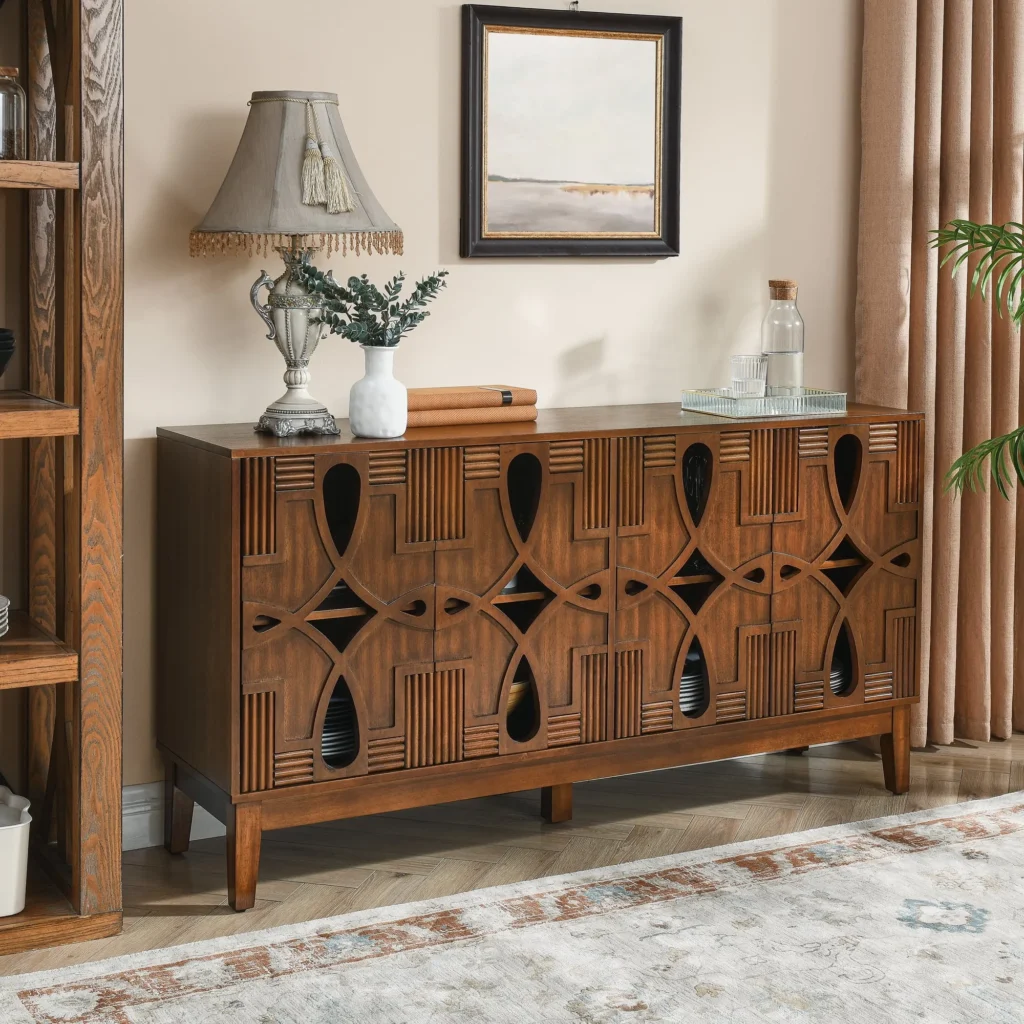
How to Choose the Right Dining Room Cabinet
Selecting the ideal cabinet involves careful consideration of space, storage, style, and materials.
Consider Your Space
- Width: Cabinet should be ~2/3 the length of your dining table
- Height: Low cabinets (<36″) maintain sightlines; tall cabinets (60–80″) add drama
- Depth: Standard 18–24″; small rooms may need 12–18″
Pro Tip: Leave at least 36 inches behind chairs for comfortable movement.
Define Your Storage Needs
Questions to ask:
- Do I have many plates or bowls? Opt for adjustable shelves
- Do I need storage for linens? Look for deep drawers
- Want a wine station? Consider wine racks or pull-out trays.
Match Your Style
Align the cabinet with your dining décor:
| Design Style | Cabinet Features |
| Traditional | Paneled wood, classic hardware |
| Modern | Handleless doors, matte finishes |
| Transitional | Blend of modern and classic elements |
| Rustic / Farmhouse | Shaker doors, exposed wood grain |
Material & Finish
- Solid Wood: Most durable and classic
- Veneer: Affordable alternative with wood-like appearance
- Glass Doors: Perfect for display
- Low-VOC Finishes: Safer for indoor air quality
Quick Tip: Prioritize high-quality veneer or solid wood for long-lasting durability.
Popular Dining Room Cabinet Styles in 2026
Here are the top trending cabinet designs this year:
Modern Minimalist
- Features: Clean lines, handleless fronts, matte finish
- Why Hot: Fits modern, open interiors
- Best For: Contemporary homes or apartments
Farmhouse & Rustic
- Features: Warm wood tones, open shelving, shaker doors
- Why Hot: Creates cozy, inviting ambiance
- Best For: Country-style or casual dining
Glass Display Cabinets
- Features: Tall, clear doors
- Why Hot: Showcases collectibles elegantly
- Best For: Sophisticated, elegant dining rooms
Vintage & Transitional
- Features: Mix of old and new elements
- Why Hot: Works in eclectic interiors
- Best For: Contrasting spaces that require a balance of styles
Size & Scale Practical Guide
Proper dimensions enhance both style and function:
- Width: ~2/3 of table length; avoid overcrowding
- Height: Low (<36″) for casual rooms; tall (60–80″) for display
- Depth: Small spaces 12–18″; standard dining 18–24″
Walking Space: Maintain 36 inches behind chairs for comfort.
Storage Features That Matter
A truly functional cabinet includes:
| Feature | Why It Matters |
| Adjustable Shelves | Store items of varying height |
| Soft-Close Drawers | Prevents slamming, quieter |
| Hidden Compartments | Secure valuables |
| Pull-Out Trays | Useful for serving or wine bottles |
| Integrated Wine Racks | Dedicated storage for drinks |
Budget Guide: From Affordable to Premium
| Budget Range | Features | Estimated Price |
| Affordable | Simple buffet, basic shelving | $200–$500 |
| Mid-Range | Credenza with glass display | $500–$1,200 |
| Premium | Custom design, mixed materials | $1,200+ |
Tips for Budget Buyers:
- Prioritize durable materials
- Consider long-term value over initial cost
Design Ideas for Every Dining Room
Small Spaces
Shallow sideboards and slim profiles save room while maintaining storage.
Large Dining Rooms
Use tall cabinets or double units for balance.
Luxury Dining
Combine wood, glass, and metal for a sophisticated, layered look.
Eco-Friendly Spaces
Select sustainable wood and low-VOC finishes.
Smart Storage
Incorporate modular interiors, LED Lighting, and multifunctional compartments.
Common Mistakes to Avoid
- Buying a cabinet too deep or tall
- Neglecting actual space measurement
- Overlooking material quality
- Ignoring existing décor
- Skipping regular cleaning and maintenance
Maintenance, Care & Durability Tips
- Dust regularly with a soft cloth
- Avoid direct sunlight
- Use coasters or trays for drinks
- Tighten screws and handles periodically
- Apply wood polish or oil as needed
Smart, Modern & Future-Ready Ideas
Cabinets in 2026 are evolving with technology and design:
- LED lighting: Showcases display items beautifully
- Modular interiors: Flexible storage solutions
- Smart-home integration: Lighting and bar functions controlled digitally
- Multi-purpose furniture: Combines storage, serving, and bar stations
Quick Pro Tips
- Measure twice before purchasing
- Combine open shelving and closed storage
- Match the cabinet finish with other furniture
Opt for adjustable shelves for flexibility.
Use sustainable materials for long-term durability.
FAQs
A: Small rooms: 12–18 inches; standard dining rooms: 18–24 inches.
A: Yes, features like wine racks and pull-out trays make this possible.
A: A functional, stylish cabinet improves room appeal and adds perceived value.
A: Solid wood is strongest; high-quality veneer is an affordable alternative.
A: Buffets suit traditional dining; credenzas fit modern minimalist spaces.
Conclusion
A dining room cabinet is much more than furniture; it’s a functional nucleus that combines style, storage, and functionality. From Buffets And Credenzas to china cabinets and sideboards, the right piece enhances the institute, showcases prized items, and replaces your dining area. With the tips, styles, and expert advice in this guide, you are now fully primed to select a cabinet that will serve both aesthetic and functional purposes for years to come.
