
Introduction
Abstract Wall Art for Living Room spaces does far more than occupy an empty surface. A shape catches the eye first, shaping how warmth or calm spreads through the space, adjusting whether things feel relaxed or intense, making everything around it seem settled. These days, homes lean on non-representational pieces not for trend but fit – flexible enough to speak quietly in bare spaces or stand bold amid opulence. With walls now mixing deeper colors, varied surfaces, and individual touches, blurred edges and bold strokes find their place more naturally than before.
A fresh look at picking abstract wall art for your living space begins with understanding size and placement. Because every home differs, matching style to room vibe matters more than trends. Before any purchase, take time to review colors, frame depth, and lighting effects nearby. This walkthrough keeps readers central, using smooth flow and everyday words that help search engines, too. Clarity leads here – each part built to skim fast yet stay meaningful.
Why Abstract Wall Art Works So Well in Living Rooms
It adapts to many interior styles
What stands out most about abstract wall art in living rooms is how easily it adjusts. Since it does not represent real-world scenes, it slides into modern setups just as well as rustic, minimalist, eclectic, or vintage ones. The mood shifts – calm, energetic, elegant, intense – are based on color choices, size, frame style, or surface depth. This ability to transform alongside shifting tastes means it holds value even when couches, rugs, or curtains get swapped years later.
Light sets how people feel inside a space
A splash of abstract painting does more than fill wall space. Feel shifts happen when you hang it. Gentle swirls paired with hushed shades bring calm like evening light. Sharp edges meet bold hues, sparking liveliness that pulls people together. Mood lives in shapes and tints, not just furniture choices. Pick colors aware of their effect, yet leave room to break rules now and then.
A touch of calm fills the space, quietly tying everything together
Empty walls behind sofas often leave a living room seeming incomplete. Yet a lone abstract painting might be all it takes to shift the mood entirely. Sometimes, just a thoughtfully arranged cluster of canvases brings balance where none existed before. Because abstract pieces draw attention without filling space, they fit naturally into open designs. Where simplicity rules, artwork stops being decoration – instead shaping how light and structure interact. The right piece doesn’t shout; it settles in quietly, like something that was always meant to be there.
How to Choose Abstract Wall Art for Living Room Spaces
Start with the feeling you want
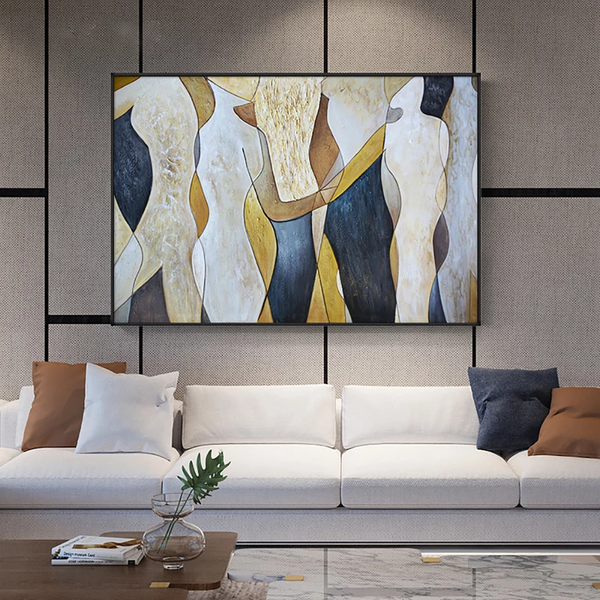
Start by asking what emotion the living room needs. Soft whites, gentle blues, earthy sages might settle well where peace matters most. When energy drives the space, deeper tones appear more at home alongside sharp lines and vivid strokes. Rich textures, grander sizes, and tighter color choices tend to rise when elegance leads. Choosing feeling before form cuts down mismatched pieces – ones that shine solo yet fail the whole.
Match the art to the interior style
Something bold on the wall doesn’t need to match everything around it. Yet it still feels part of the space. A quiet link forms without trying too hard. Often, difference adds presence instead of breaking harmony. The right piece stands apart while belonging to all the same.
Simple shapes on a wall work best when the sofa lines are smooth, paint stays quiet, colors feel soft, and space feels open. Yet bold strokes might shine where edges cut harder, layers stack tighter, pigments stand out stronger. Richness appears not just in size but in how light catches ridges, shadows pool in thick pigment, a nd surfaces invite second looks. Balance matters more than matching every detail exactly.
Use color psychology carefully
Balance comes first when choosing shades. Still, color holds weight in how things feel. A touch too much throws off the whole look. So thought counts more than bold choices ever do.
Calmness usually comes with blue and green, somehow anchoring the mood. Red, orange, yellow – those bring heat, stirring movement in quiet rooms. Neutral shades sit quietly through seasons, fitting nearly anywhere without complaint. One person’s comfort might be another’s boredom; meaning shifts too fast to pin down. Light changes how a shade shows up, along with nearby walls, what’s inside the space, and even how big it feels. Think of color more like a suggestion than something fixed.
Think about texture as well as imagery
Something shifts when you touch a wall piece and feel resistance under your fingertips. Flat paper stays quiet, while a bumpy weave pulls attention through sight and hand alike. Depth arrives not just visually but physically, like shadows that shift with light. Rooms lacking energy often gain it back once roughness enters the scene. High-end spaces lean into cloth-covered panels, stitched layers, or faint ridges because soft unevenness speaks louder than smooth perfection.
Choose the right size for the wall
A common error happens right here. Too tiny, it gets lost. Oversized, it takes over everything else nearby. Planning helps determine the most fitting artwork for the couch, the span of the wall, and how heavy the room feels visually. Price tags matter less compared to proportion. Size rules the eye.
Best Abstract Wall Art for Living Rooms by Style
Minimalist abstract wall art for the living room
This style is ideal when the room already has enough visual activity. Use soft lines, pale neutrals, black-and-white contrast, or restrained geometric forms. The purpose is to create a calm structure, not visual noise. Minimalist abstract art works especially well in small apartments, Scandinavian interiors, and modern homes with simple furniture.
Best for: small rooms, clean interiors, low-clutter homes
Best colors: beige, white, charcoal, muted gray, taupe
Modern abstract wall art for the living room
This is one of the most flexible options for contemporary homes. It may include brushwork, line art, color blocking, geometric forms, or bold composition. Modern abstract art pairs naturally with clean-lined sofas, glass tables, metal lighting, and simple rugs. It gives the room personality without making it feel chaotic.
Best for: apartments, urban homes, open-plan layouts
Best colors: black, white, terracotta, olive, navy, rust
Luxury abstract wall art for the living room
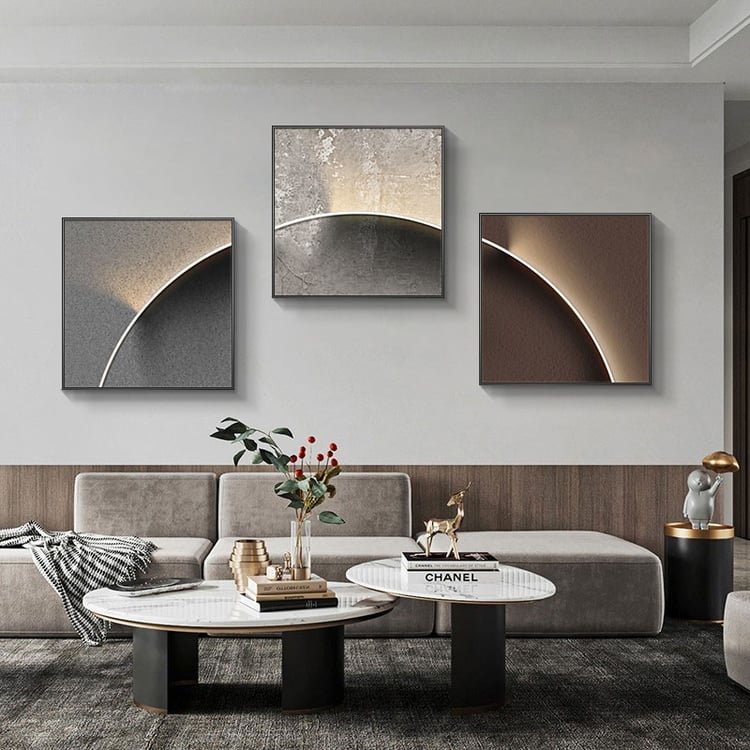
Luxury abstract art does not need to be ornate. In many cases, it looks stronger when it is large, calm, and well-balanced. A big canvas, a subtle metallic accent, or a textured mixed-media piece can feel more refined than a busy wall. In high-end interiors, restraint, proportion, and material quality often matter more than decorative excess.
Best for: formal lounges, statement walls, upscale homes
Best colors: emerald, navy, deep beige, gold, charcoal
Abstract canvas wall art for living room spaces
Canvas is one of the easiest and most practical formats. It feels modern, is usually lightweight to hang, and works in both relaxed and polished settings. If you want abstract wall art for living room styling that feels current and clean, canvas is a dependable choice. It also creates a strong visual presence without needing a heavy frame.
Gallery wall ideas abstract
A gallery wall can look beautiful when the pieces are connected by one common thread. That thread may be color, frame finish, style, or mood. Without a unifying idea, the wall can feel scattered. A good Gallery Wall should behave like a single composition, not like separate objects placed side by side.
Placement and Sizing Rules That Actually Work
The two-thirds rule
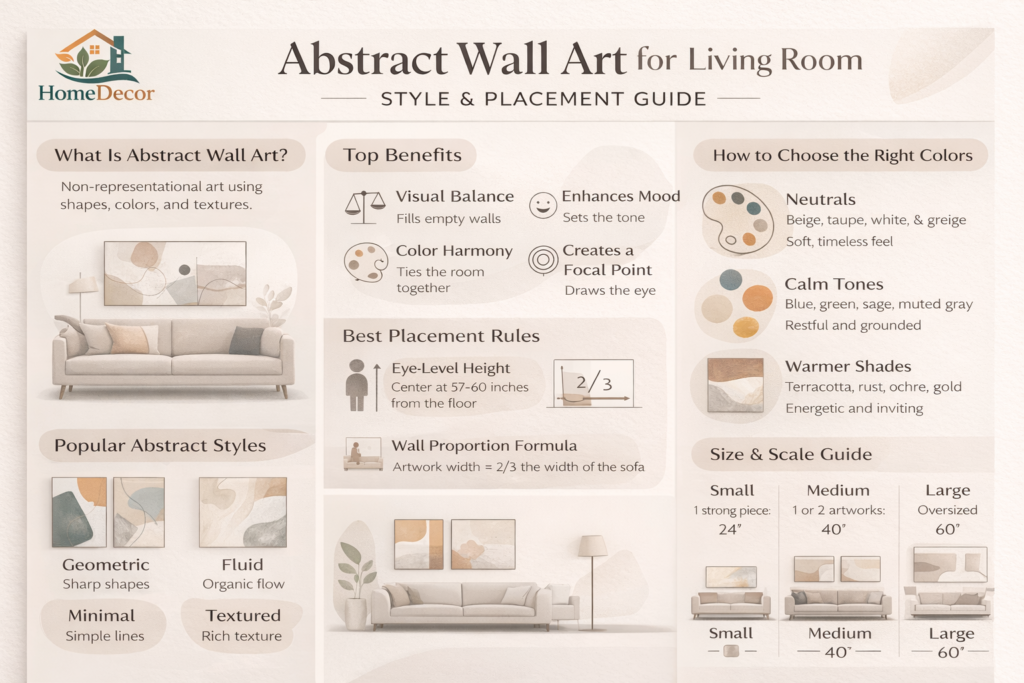
When hanging art above a sofa, console, or sideboard, a useful rule is to choose artwork that is about two-thirds the width of the furniture below it. This creates a strong visual relationship between the piece and the furniture. It keeps the wall from feeling empty and helps the art look intentional instead of floating.
Example:
If your sofa is 90 inches wide, artwork around 60 inches wide usually looks balanced.
If your console is 48 inches wide, art around 32 inches wide is a practical starting point.
Eye-level hanging
A widely used guideline is to place the center of the artwork around 57 to 60 inches from the floor. This museum-style height works well because it feels visually balanced for standing viewers. For a group of artworks, treat the full arrangement as one unit and center the entire composition at eye level.
Spacing above furniture
When hanging art above a sofa or console, keep the bottom edge about 6 to 8 inches above the furniture. This spacing keeps the wall connected and avoids the awkward floating effect. If the furniture is taller than average, a small adjustment is fine, but the piece should still feel visually linked to the item below it.
Small room vs large room
Small rooms usually benefit from one strong piece rather than many small pieces. Large rooms can support oversized canvases or a carefully coordinated gallery wall. In a compact room, too many frames can feel cluttered. In a large room, too little artwork can make the space look unfinished. Scale should always match the room’s visual size.
Comparison Table: Which Abstract Art Format Should You Choose?
| Format | Best For | Main Effect | Pros | Cons |
| Canvas art | Most living rooms, modern interiors | Clean, soft, contemporary | Easy to hang, versatile, lightweight look | Can feel plain if the composition is too simple |
| Framed print | Formal, classic, transitional rooms | Polished and structured | Sharp finish, easy to swap, budget-friendly | May feel less tactile |
| Textured mixed media | Luxury, statement walls | Rich and dimensional | Premium feel, strong focal point | Usually more expensive |
| Gallery wall | Large blank walls, creative homes | Layered and personal | Flexible, storytelling effect | Can look busy if not coordinated |
| Oversized single piece | Large sofas, big blank walls | Bold and intentional | Immediate impact, clear focal point | Needs correct sizing to avoid overpowering the room |
This comparison works because it makes the decision easier. The best option is not the most expensive one. It is the one that fits the room, the scale, and the mood.
Room-by-Room Design Ideas
For small living rooms
Use lighter tones, fewer competing patterns, and one clear focal point. A vertical composition can also help the wall feel taller. Small rooms usually need less clutter, not more decor. In this context, one strong abstract wall art piece for the living room often works better than a crowded arrangement of small frames.
For modern apartments
Choose Geometric abstraction, monochrome palettes, or a single bold accent color. Modern apartments often have cleaner furniture and simpler layouts, which gives the artwork room to stand out. This is a natural setting for modern abstract wall art for living room styling because the piece can act as the room’s personality statement.
For luxury homes
Choose a large canvas, deeper color, and visible texture. Keep the rest of the styling quieter so the artwork can lead the room. In upscale spaces, restraint and scale matter more than decorative overload. A single strong piece often says more than a wall packed with smaller objects.
For budget-friendly styling
You do not need original art to create a polished result. A well-chosen print, a balanced reproduction, or a framed poster can look impressive if the size and placement are right. The key is proportion, visual harmony, and a clean finish. Smart styling often matters more than cost.
For rented homes
Choose lightweight frames, easy hanging solutions, or canvases that do not require major wall changes. Abstract art is especially useful in rental homes because it adds identity without permanence. It is one of the fastest ways to make a temporary room feel personal and finished.
Color, Lighting, and Furniture: The Three-Part Styling Formula
Abstract art looks best when it is connected to the rest of the room. It should not feel random or separate. It should speak to the sofa, rug, lamps, cushions, and curtains. If the sofa is neutral, the art can become the color anchor. If the rug already has a strong pattern, the artwork may need to stay calmer to preserve balance. If the room feels flat, choose art with contrast and repeat one or two colors in nearby accessories.
Lighting matters too. Warm lamps can soften the palette. Dedicated picture lighting can bring out texture and brushwork. Natural daylight can shift the appearance of the piece throughout the day, so it is wise to view the artwork in the room before making a final decision. The best wall art is not only attractive on its own; it performs well in the real room under real lighting.
Budget-Friendly Abstract Wall Art Ideas
A stylish living room does not require an oversized budget. Some of the smartest low-cost options include:
high-quality abstract canvas wall art in standard sizes
framed poster art with a clean mat and neutral frame
downloadable artwork printed locally
a small gallery wall abstract arrangement using coordinated prints
simple black-and-white compositions that rely on shape, balance, and scale rather than expensive materials
The smartest budget move is to spend on visible impact first: size, color, and finish. A well-placed affordable artwork can outperform an expensive piece hung at the wrong height or in the wrong proportion.
Premium and Luxury Ideas
Premium abstract wall art for living room styling usually shares a few qualities: larger scale, better materials, stronger texture, and clearer intention. Mixed media, hand-painted pieces, linen canvas, and custom framing can all lift the sense of quality. Luxury also comes from restraint. A room with fewer but better-selected pieces often feels more elegant than a wall crowded with decorative objects.
To create a stronger high-end result, use one large piece rather than several small ones. Let the artwork breathe. Keep the furniture simple. Repeat one detail from the artwork in a cushion, vase, or throw so the room feels connected. That is how a room starts to feel designed rather than simply decorated.
Common Mistakes to Avoid
Hanging the art too high
This is one of the most frequent errors. Art placed too close to the ceiling feels disconnected from the furniture and the viewer. Use eye-level placement and the 6 to 8 inch spacing guideline instead.
Choosing a piece that is too small
A tiny piece on a large wall usually looks accidental. In living rooms, scale is critical. If the wall is large, the art should feel deliberate from across the room.
Ignoring the room palette
Abstract art does not need to match everything, but it should still belong to the room. If the piece clashes heavily with the sofa, rug, and curtains, it will feel separate instead of integrated. Color works best when it supports the overall design story.
Overloading the wall
Too many small pieces with no visual Connection can make the room feel disorganized. If you choose a gallery wall, keep one clear rule for the composition, such as one palette, one frame finish, or one shared mood.
Treating art as an afterthought
The strongest rooms often begin with one clear visual anchor. Art should be part of the plan, not the final leftover. This approach creates more coherent styling and a more polished result.
Maintenance, Care, and Durability Tips
Canvas and framed art last longer when they are kept away from strong direct sunlight and excess moisture. Light exposure, heat, and humidity can all affect artwork over time. For home use, this means keeping the piece out of harsh sun where possible and avoiding damp corners or walls that regularly collect moisture.
Dust the piece gently with a soft dry cloth or microfiber duster. If the surface is textured, avoid aggressive wiping. For framed prints, check the frame and hanging hardware occasionally. For mixed-media pieces, always follow the seller’s care instructions. Good maintenance matters because abstract wall art for living room spaces is often chosen as a long-term anchor piece, not a short-term trend item.
Smart, Modern, and Future-Ready Ideas
Modern interiors are leaning toward warmer palettes, more natural finishes, richer textures, and more meaningful decor choices. That makes abstract art a strong option because it can express those directions without becoming literal or overly thematic. Instead of chasing a short-lived trend, abstract work can stay relevant as your home evolves.
You can also make your wall art work harder by layering it with lighting, textiles, and repeated color accents. A canvas above the sofa, a cushion that repeats one color from the artwork, and a lamp that warms the overall palette can make the space feel thoughtful and complete. That is the kind of design that feels calm, polished, and current.
Pros and Cons of Abstract Wall Art for Living Rooms
Pros
It works with many interior styles.
It can feel calming or energetic depending on the palette.
It creates a strong focal point without literal imagery.
It is easy to update as furniture changes.
It can make a room feel more curated and complete.
Cons
Poor sizing can make the wall feel awkward.
Weak color choices can clash with the room.
Cheap framing or low-quality prints can reduce the effect.
Gallery walls can become messy if not planned carefully.
Trend-heavy pieces can date faster than timeless compositions.
This is why the best abstract wall art for the living room choice is not simply about appearance. It is about proportion, balance, and how the piece works with the entire environment.
Quick Tips for Better Results
Choose the mood before choosing the artwork.
Use the two-thirds rule above sofas and consoles.
Keep the center of the art near eye level.
Repeat one or two colors elsewhere in the room.
Use texture when the room feels flat.
Use one Large Piece in small spaces instead of many tiny ones.
Treat the frame or edge finish as part of the design.
These simple steps are often enough to make a wall look polished quickly.
FAQ
Start with the mood you want, then match the size, color, and style to your room. The best piece should support your furniture and lighting, not fight them. Think about the sofa, rug, curtains, and wall color as part of one design system, not as separate elements.
A safe guideline is artwork that is about two-thirds the width of the sofa. This creates balance and helps the wall feel intentional. Keep the piece centered over the sofa and place it about 6 to 8 inches above the back.
No. It should complement the room, not duplicate it. Matching one or two tones is usually enough. A controlled contrast often looks better than an exact match because it adds depth and interest.
Soft blues, greens, neutrals, and earthy tones are excellent for calm spaces. Warmer shades work well in energetic or social rooms. Color-emotion ideas can be useful, but the best choice depends on the lighting, furniture, and overall mood of the room.
Canvas feels softer and more contemporary. A framed print feels more polished and structured. The better option depends on your room style, your budget, and the effect you want. Both can work very well if the sizing and placement are correct.
Final Thought
Something about abstract wall art changes how a room looks, even when you just walk in. Not only does it fill empty walls, but it also gives eyes a place to rest. Its colors quietly match the couch, the rug, maybe even the light through the window. Size matters, sure – but so does height, angle, distance from Furniture. Hang it too high, too low, or too far left, and the balance breaks. A bold shape can anchor a corner without needing shelves or lamps nearby. Sometimes silence speaks louder than objects, especially on large blank sections. The frame – if there is one – adds texture but should never shout over the piece itself. Wrong tones clash like wrong words at dinner; right ones blend before anyone notices.
Maybe it’s clean lines you like, perhaps bold shapes catch your eye – either way, what matters most is how the piece lives in your room every day. Balance holds things together, color sets the mood, size decides impact – one thing leads to another until the space just makes sense. A quiet corner might need only a small print; a wide wall could ask for something bolder. What works sticks around without trying too hard.
