
Introduction
Dining Room Table Decor is one of the easiest ways to transform a plain dining area into a space that feels warm, intentional, and visually refined. A table dressed with care doesn’t just occupy floor space. Shaping the mood quietly, it echoes the room’s rhythm while adding quiet clarity that most guests absorb without realizing. This subtle pull – why a place feels settled – is often born right there, at its surface.
Starting next year, dinner tables will pull double duty across homes. Not just reserved for holiday feasts or guest dinners anymore. Think morning study corners, midday laptop zones, afternoon catch-ups, and even solo breakfast nooks. Flexibility matters most now – style must bend without breaking. Practical touches beat perfection every time. Surfaces shift roles fast, asking decor to keep pace quietly. A cluttered tabletop often does more harm than good. Instead of piling things on, try arranging just a few items where each has room to breathe. Space between pieces helps the eye move without getting stuck.
“Achieving Subtle Balance and Harmony in Dining Table Styling”
Think symmetry but not strict order – more like quiet harmony. Objects should relate without matching exactly. A lamp here, a book there, can work if they share some invisible thread. Too much randomness feels careless. The right mix looks intentional without trying too hard. Balance matters most when nothing shouts for attention. Simplicity sticks around longer than decoration ever could.
So much depends on more than just looks when picking what goes on a dining table. It matters how big each piece feels next to another, where your eyes land first, how things mix under light – rough with smooth, dark against pale. Comfort plays a role too – not only how it looks but whether it invites use without worry. Some setups whisper order quietly; others shout clutter despite good intentions. Even basic bowls or trays find grace when placed with thought rather than habit. The space breathes easier that way.
Why dining room table decor matters
A dining table arranged with care changes how a room feels. Look at the space, and your gaze lands there first, pulled without thinking. Empty or incomplete, it leaves the area seeming unsettled, like something’s missing. Too much on top makes everything else feel cramped and difficult to move around. Somewhere between those extremes sits balance – usable, calm, quietly saying something.
A well-dressed table sets a quiet tone. From there, space breathes easier when decoration stays small. Light flickers softly through candles, shaping closeness. Branches tied with ribbon arrive with spring or fall, stirring still air. A single curved vase might quietly shift the mood of a space. Though tiny on their own, moments like these build up – changing what the walls themselves appear to say.
What makes table decor matter? The dining table usually takes up major floor real estate. Its size grabs attention without trying. Think of it less as an object, more like a backdrop for meals, chats, books, and coffee cups. Good styling lets nearby things – chairs, lamps, rugs, paint colors – feel connected. In shared spaces where rooms flow into one another, it acts like glue between zones. Even small details on its surface echo choices made across the room.
What top articles often miss
Start high, then drop low – that is where most guides fail. Instead of just tossing out photos of vases and pinecones, think about sight lines across the wood. A cluster of jars might charm at first glance, yet block every diner’s view. Height matters more than color. One wide bowl could anchor better than three tiny pots scattered like crumbs. Shape talks back to walls; round tables soften square rooms. Silence speaks too – space lets each object breathe. Too many pieces shout. Balance listens.
A space stays open.
Start by showing why things work, not just what’s there. Because picking pieces matters less than understanding the feeling you want. When furniture helps people talk instead of stare, it earns its place. Clutter fades when every object has a reason to stay. A tabletop must handle meals, messes, maybe even maps – without looking lost. Shift colors or textures slowly so changes feel natural, never jarring. Space size shapes choices more than trends ever could. Tight rooms demand tricks big ones don’t need. Money limits options, true – but creativity stretches further than price tags suggest. Style isn’t about following rules. It lives in how mismatched chairs still belong at the same table.
A solid guide built for search cuts through the noise. What sets it apart? Clear answers on purpose, meaning, and method – all under one roof. Instead of just showing polished images, it hands readers energy along with direction. Real homes need that mix: spark meets plan.
The simple formula for beautiful dining room table styling
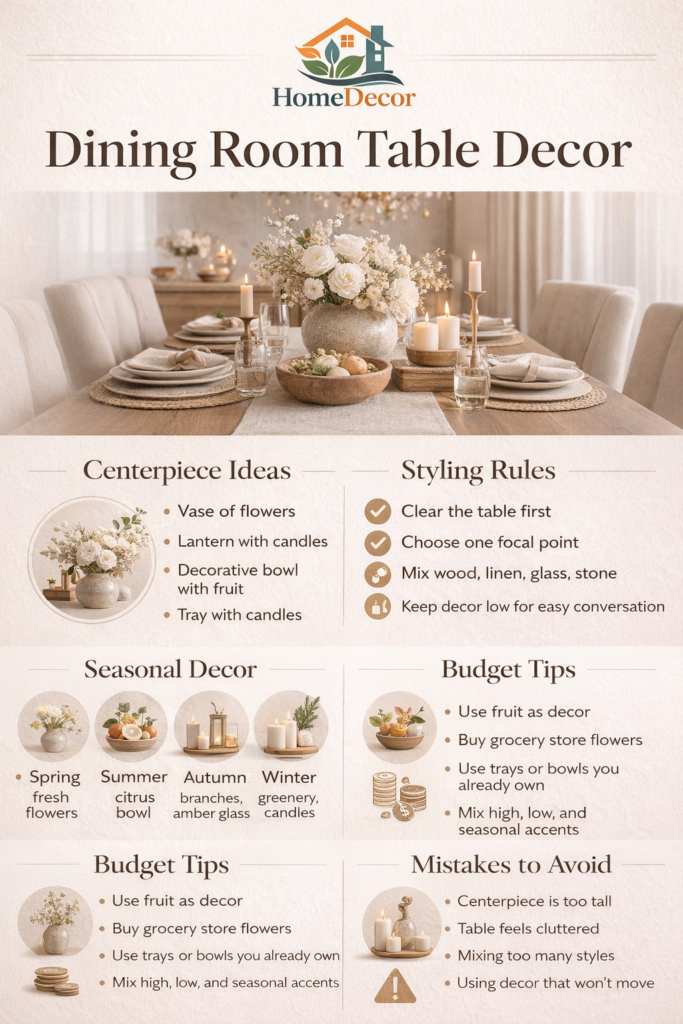
The easiest way to style a dining room table is to think in layers and edits. Start with a clean base. Add one focal point. Then review the arrangement and remove anything that feels unnecessary. That process may sound simple, but it is the same logic designers use in polished interiors: clarity first, then composition, then restraint.
A strong dining table setup usually follows this sequence:
- Clear the table completely.
- Decide how the table will be used.
- Choose one anchor piece.
- Add supporting layers.
- Check the sightlines.
- Remove one item if the table feels crowded.
- Review the look in daylight and evening light.
Each step matters because dining room table decor must feel attractive and functional at the same time. If the arrangement looks beautiful but prevents people from using the table comfortably, it is not working. If it is practical but visually flat, it does not add enough to the room. The best styling balances both.
Clear the table completely
Before you decorate, remove everything that does not belong. Mail, keys, chargers, shopping bags, random papers, and forgotten items all make the table feel accidental instead of intentional. A decorated table should never look like a storage surface that was quickly cleaned off. It should feel designed.
Starting with a blank surface gives you the best possible view of the table’s shape, size, and proportions. You can then judge whether the table needs a long centerpiece, a small cluster, a runner, or a wider arrangement. A clean table also gives your decor room to breathe. The eye can rest more easily when the surface is not visually interrupted by clutter.
Decide how the table will be used
This is one of the most important styling decisions. Ask yourself whether the table is mainly used for daily family meals, occasional entertaining, homework, work calls, or a mix of everything. The answer changes what kind of decor will work best.
A table used for real life should never feel too precious to touch. The goal is not to create a museum display. The goal is to create a livable design moment that can adapt as the day changes.
Choose one anchor piece
A centerpiece grabs attention right away, setting the tone for everything around it. Usually, it stands out because of size or position – something the gaze lands on without effort. This central element might not even involve blooms at all. Instead, picture a wooden tray holding scattered stones. Or maybe a cluster of short candles sitting low in a row. A tall glass jar filled with shells works just as well. Even a pile of hardcover books can take center stage naturally. Shape matters more than tradition here.
Feels intentional? That’s the point. What counts is in how it lands, not why it started.
A centerpiece sets how the table looks. Instead of something stiff, a ceramic bowl brings ease, like earth after rain. Though simpler, brass candlesticks add weight, echoing older rooms. Stone vases stand apart – sharp lines, quiet power, built like buildings meant to last. Woven trays bring a calm vibe into play. With the main piece leading, every added thing follows along quietly.
Add supporting layers
A solid centerpiece sets the stage – around it, layer in bits like a textured runner or soft cloth mats. Think of scattered candles, small plants, or extra bowls that echo the main piece. These extras slip in quietly, giving shape and contrast while staying calm. Each touch links subtly, never shouting for attention. Balance matters most when pieces gather close.
Flatness sneaks in when everything matches too closely. Objects might shine on their own, yet together lack depth. Variety wakes things up. Materials like wood, linen, ceramic, glass, brass, or stone each speak differently through touch and sight. Thoughtful pairings build layers without clutter. Dimension grows where differences meet.
What holds things up must stay quiet. A strong center needs room, so everything else steps back. Balance comes when extras don’t shout. The main piece stands firm only if the surroundings whisper.
Review the table in real light
Lighting changes everything. A setup that looks soft and elegant during the day may feel dark or heavy at night. A centerpiece that seems subtle in bright light may disappear after sunset. That is why it helps to check your table at different times of day.
Look at it in morning light, afternoon light, and evening light. If the room uses pendants, wall sconces, candles, or lamps, notice how those sources affect the mood. The best dining room table decor is not only attractive in photos. It also performs well in daily life.
Core rules of dining room table decor
The most successful dining table decor ideas share a few simple principles. These are the rules that keep a table from feeling random, busy, or impractical.
Balance is better than clutter
A dining table should feel composed, not overloaded. The most appealing tables usually have one focal point, one or two supporting elements, and enough open space to feel calm. This creates visual balance and keeps the room from appearing cramped.
Height must be used carefully
Different heights can make a table feel dynamic and layered. A tall vase, a medium candleholder, and a low bowl can create rhythm. But height should never interrupt conversation or block the room view. Good styling uses vertical contrast with restraint.
Mix materials for richness
A combination of finishes usually looks more interesting than a single material repeated too many times. Wood, linen, ceramic, glass, brass, matte stone, and natural fiber all create different sensations. Together, they make the table feel considered and complete.
Start with a color palette
Color matters as much as the objects themselves. A neutral base with one or two accent tones is often the safest choice for a refined dining table. This approach is easy to refresh seasonally and prevents the arrangement from looking overly busy.
Function must stay central.
Dining room table decor has to support real use. That means the setup should be easy to move, easy to clean, and easy to reset. The best arrangements are beautiful but not fragile. They help the room work better instead of making it harder to use.
Best dining table decor ideas by style
Different homes need Different Styling approaches. The right look depends on the room size, the table shape, the furniture finish, and the overall design style of the home.
| Styling approach | Best for | Main pieces | Strengths | Watch out for |
| Everyday minimal | Busy households, renters, compact rooms | Runner, bowl, low vase, candle pair | Calm, easy to clean, practical | Can feel too plain |
| Seasonal layered | People who like change | Runner, greenery, candles, seasonal accents | Fresh, flexible, expressive | Can become cluttered |
| Formal tablescape | Holidays, dinner parties, special meals | Linen, candlesticks, centerpiece, place settings | Elegant, memorable | Needs more setup and cleanup |
Modern minimal
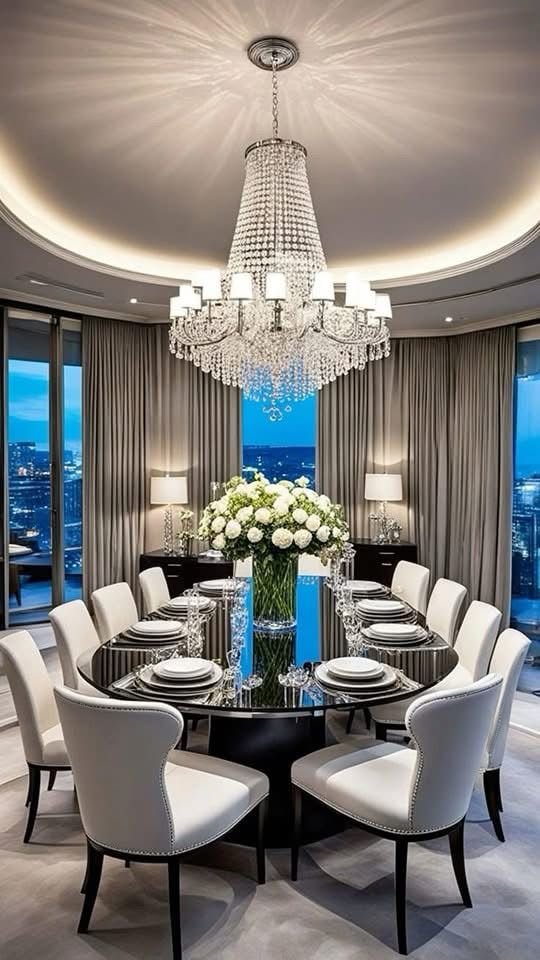
Start with just one thing on the table – maybe a thick cloth down the center. Then add a heavy ceramic dish, its weight balancing the space. After that, slip in a tall glass vase, empty but sharp against the light. Instead of clutter, choose pieces that stand apart yet belong together. Even a pair of unlit candles, placed far left and right, holds attention without noise. Sharp edges, quiet colors, stillness – that becomes the detail.
Bold choices work well in compact or midsize eating areas by avoiding a cluttered look. Since sightlines flow freely, the area seems brighter and more spacious.
Use:
- matte ceramics
- clear or smoked glass
- light wood
- black metal accents
- one accent color
Elegant formal
Elegant dining table styling is more polished and symmetrical. It often includes candlesticks, linen napkins, refined glassware, and a centerpiece that feels intentional rather than oversized. This style works beautifully for entertaining because it creates a sense of occasion.
The key is softness and control. Too many shiny elements can make the table feel stiff. Instead, use gentle shine, refined materials, and carefully spaced objects.
Use:
- brass or silver accents
- linen runners
- taper candles
- low floral arrangements
- white or ivory tableware
Rustic farmhouse
Rustic farmhouse styling feels warm, approachable, and comfortable. It often includes wood trays, natural greenery, woven baskets, ceramic vessels, and neutral or muted seasonal pieces. This style works especially well in family homes and rooms with warm wood finishes.
The look should feel relaxed, not overly themed. The best rustic tables are grounded, natural, and lived-in, but still edited.
Use:
- Reclaimed Wood
- stoneware
- linen runners
- herbs or branches
- simple candle clusters
Coastal and airy
Coastal dining room table decor uses light colors, open space, and breezy textures. Soft white, pale sand, light blue, and faded green create a fresh feel. The centerpiece should stay low and relaxed, with no heavy or dark visual weight.
The goal is to make the table feel effortless and open. Coastal styling works best when it is subtle, not literal.
Boho and collected
Boho dining table decor feels personal, textured, and layered. It can include handmade ceramics, woven elements, organic shapes, and slightly imperfect pieces. The key is discipline. A collected look only works when the palette stays controlled.
If the colors are too scattered, the table begins to feel messy. If the tones are curated and the textures are balanced, the result feels artistic and lived-in.
Seasonal dining room table decor ideas
One of the easiest ways to keep a dining table fresh is to update it seasonally. You do not need to change everything. Small shifts in color, texture, foliage, and candle style can completely reset the mood.
Spring
Spring is the season of lightness and renewal. Use fresh flowers, tulips, small vases, pale greens, and airy fabric textures. Keep the arrangement open and simple. The table should feel alive, not crowded.
Summer
Summer styling works well with citrus bowls, white ceramics, glass vessels, and natural textures. This is a good time to simplify even further and let the room breathe. A few fresh stems or fruit can add a bright and easy seasonal touch.
Autumn
Autumn is ideal for rich warmth. Think branches, dried florals, amber glass, textured runners, and deeper wood tones. Candles become especially effective in this season because they enhance the cozy atmosphere.
Winter
Winter styling should feel calm, soft, and warm. Evergreen stems, metallic accents, layered linens, and candlelight can create a refined seasonal table. The look should be cozy, not overloaded.
Holidays
For holidays, choose one clear theme instead of mixing many competing ideas. A strong seasonal direction tends to look more expensive and more thoughtful. Keep the center of the table elegant enough to allow conversation and serving space.
Small dining room table decor ideas
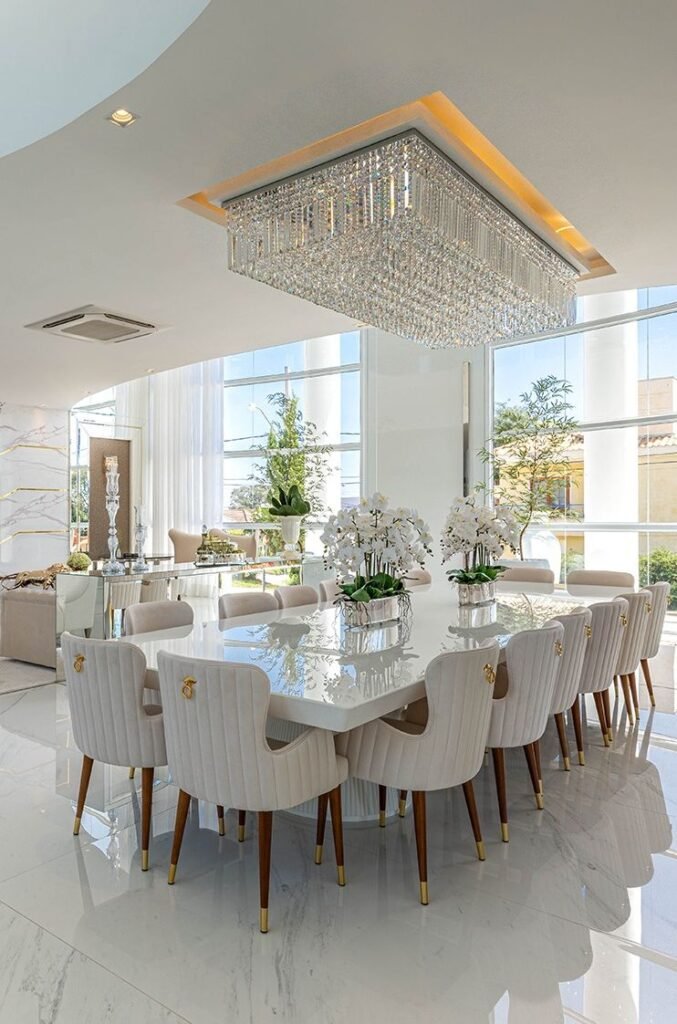
Small Dining Rooms need a careful and restrained approach. In compact spaces, every object matters more. The goal is not to fill the table. The goal is to make it feel intentional, functional, and visually open.
What works best in small spaces:
- one low centerpiece instead of multiple tall objects
- a narrow runner instead of a bulky arrangement
- clear edges so the table looks lighter
- reflective materials used sparingly
- fewer colors and more texture
- decor that can be moved away quickly before meals
Small dining rooms benefit from simplicity. Slim silhouettes, low-profile decor, and easy storage all help the space feel more breathable. A small table should not feel decorated to the point of pressure. It should feel effortless.
A compact dining table often looks best when the decor leaves generous negative space. That open surface is part of the design. It helps the room feel larger, calmer, and easier to use every day.
Dining table decor ideas for large spaces
Large dining tables present a different challenge. They can look empty very quickly if the decor is too small or too sparse. In a bigger space, the table needs more visual weight.
This does not mean adding clutter. It means choosing larger-scale decor or repeating elements with rhythm. A long runner, a pair of grouped vases, multiple candles, or a sculptural centerpiece can all work well. Symmetry often helps in large spaces because it gives the eye structure.
The general rule is simple: the bigger the table, the more the decor should stretch horizontally or create balanced repetition. That keeps the composition from feeling lost inside the room.
Budget-friendly dining room table decor ideas
Beautiful dining room table decor does not need to be expensive. In fact, some of the most appealing tables are built from simple, affordable pieces used with care. The secret is not the price tag. It is the editing.
Budget-friendly ideas:
- Use fruit as decor
- Place grocery-store flowers in a plain vase
- Reuse trays and bowls from other rooms
- Buy one strong runner instead of many small items
- Use candles at different heights
- Choose one seasonal accent and repeat it
A small number of well-chosen items often looks more refined than a table full of inexpensive accessories. That is because good styling depends on composition, not cost. When pieces are arranged with intention, the table feels elevated.
Premium and luxury dining room table decor ideas
Luxury table styling is usually defined by better materials, stronger restraint, and more thoughtful details. It does not mean filling the table with expensive objects. It means choosing quality pieces and letting them stand out.
Premium touches may include:
- linen napkins with soft drape
- brass or silver candlesticks
- porcelain or stoneware tableware
- a sculptural vase
- flowers arranged with breathing room
- a palette that connects with the room
Luxury often comes from calmness. A serene table with a few beautiful pieces can feel more sophisticated than a crowded arrangement. The best upscale dining tables show confidence through restraint.
Common mistakes to avoid in dining room table decor
There are a few styling mistakes that appear again and again. Once you recognize them, they become easy to avoid.
Oversized centerpieces
Large arrangements may look impressive in photos, but they can block conversation and dominate the table. The centerpiece should support the room, not overpower it.
Too many small objects
A cluster of tiny pieces can make the table feel busy and restless. It is often better to use fewer, stronger items that have visual presence.
Ignoring height balance
If every object is the same height, the table may feel flat. A successful arrangement usually combines one taller element with lower supporting pieces.
Using decor that is hard to move
A beautiful dining table still needs to work for real meals. If the objects are too heavy, too delicate, or too awkward to shift, the setup is not practical.
Mixing too many themes
Farmhouse, glam, coastal, boho, and rustic all on one table can create confusion. A strong styling direction is more effective than trying to combine everything at once.
Pros and cons
Minimal everyday styling
Pros
Easy to clean
Works for daily meals
Feels calm and uncluttered
Budget-friendly
Cons
Can look too plain
May need more thought in larger rooms
Seasonal layered styling
Pros
Fresh and flexible
Easy to update without a full redesign
Great for holidays and seasonal refreshes
Cons
Can become cluttered
Needs regular editing
Formal tablescape styling
Pros
Beautiful for guests and celebrations
Creates a memorable atmosphere
Makes the room feel elevated
Cons
Takes more setup
May not suit daily family use
Can be harder to maintain
Maintenance, care, and durability tips
A dining table setup should last longer than one meal. It should be easy to maintain, easy to reset, and easy to enjoy repeatedly. Good design includes durability.
Use these care principles:
- Choose washable runners and placemats where possible
- Avoid placing stain-prone items too close to food
- dust candles, vases, and bowls regularly
- refresh greenery before it looks tired
- Wipe the table surface often
- Store seasonal decor safely for reuse
Durability matters because the Best Dining Room table decor is not only beautiful on day one. It should remain attractive after repeated use, daily meals, and seasonal changes.
Smart, modern, and future-ready dining room table decor
Dining rooms are becoming more flexible, and table styling is following that shift. The strongest future-ready setups are adaptable, practical, and easy to change without stress. That means modular decor is especially valuable.
Future-ready ideas:
- Use cordless or rechargeable candles
- Choose decor that can be rearranged quickly
- keep a neutral base and swap accents by season
- Combine decor with function, such as trays or bowls
- rely on fewer but better pieces
The most modern tables are not overdesigned. They are composed, flexible, and quietly stylish. They support everyday life while still looking curated.
Quick pro tips for a better dining room table
Keep one strong focal point only.
Repeat one material at least twice for cohesion.
Use the rule of three when grouping decor.
Stay below the sightline when decorating for meals.
Match the table decor to the mood of the room, not just the season.
Remove one item before you decide the table is finished.
FAQs
A simple year-round setup usually includes one low centerpiece, a runner or placemats, and a clean surface. The best setup stays easy to move when it is time to eat.
A seasonal refresh works well for most homes. Small changes in greenery, candles, napkins, or color can keep the table feeling fresh without starting over every month.
The best height is low enough that guests can see and talk across the table comfortably. House Beautiful recommends varying heights for drama, but the arrangement should still preserve easy conversation.
Start with a durable base, then add one low centerpiece and one or two supporting pieces. Keep the setup simple enough to clear quickly for meals, homework, or work.
Choose low-profile pieces, narrow runners, and a limited color palette. Small rooms benefit from simple shapes, light reflection, and less visual clutter.
Conclusion
A table tells a story when arranged with care – personality slips in through texture, light, and quiet details. Instead of saving beauty for holidays, let everyday moments reflect rhythm and ease through small choices. One item at a time, build depth using scale, contrast, or silence between objects. Modern lines might mix with worn wood if the mood leans soft but structured. Color appears not by accident, but rather because one shade answers another across the surface. Seasonal shifts enter subtly – a branch here, a cloth there – not announced, simply felt. Layer without Crowding, allow space to speak as loudly as form. Over time, repetition shapes familiarity; each placement becomes part of a routine. Beauty hides in what stays unchanged yet is noticed only now and then. What matters settles beneath sight: comfort shaped by habit, held within arrangement.
