
Introduction
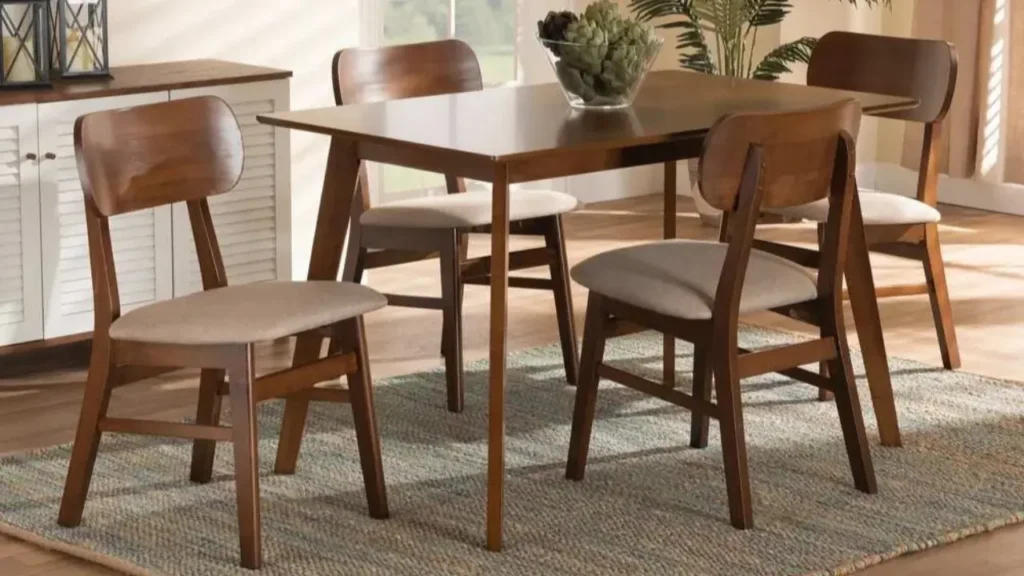
A dining table is much more than an operating piece of furniture; it is the hub of life. This is where families come together to enjoy healthy meals, where friends meet to engage in tonic conversations, and where special events are created as cherished memories. The selection of a dining table is critical; it sets the tone for your dining room, blending the factors of elegance, comfort, and socializing.
Among the countless choices that are available, a Solid Wood Dining Table is the best choice, which is timeless, adaptable, and eco-friendly. The natural warmth, durability, and beauty of a solid wood dining table make it an investment that increases in attractiveness with the passage of time. Unlike particle board or veneered furniture that can deteriorate rapidly, a solid wood dining table develops its own character with age, sporting diverse patterns, textures, and colors that are unmatched by any two tables.
In this comprehensive guide for the year 2026, we will delve into all the information you need to know about solid wood dining tables, from choosing the best type of wood to learning the best ways to take care of it, from contrasting the differences between solid wood and engineered wood to incorporating your dining table into your home décor. We will give you expert advice and examples to ensure that you make the right decisions.
By the end of this guide, you will be ready with the knowledge to choose, design, and maintain a solid wood dining table that adds to your lifestyle, home décor, and personal style. This dining table is not only a piece of furniture but also a long-term investment in style, comfort, and the form of lasting memories.
What Is a Solid Wood Dining Room Table?
A solid wood dining table is fabricated entirely from natural timber. Unlike furniture composed of veneer, particle board, or medium-density fiberboard (MDF), a solid wood table is built from full-thickness planks that extend through the tabletop. This method renders the table exceptionally durable, repairable, and aesthetically distinctive.
Key Advantages of Solid Wood Tables
- Durable: Crafted to withstand decades or even generations of use.
- Repairable: Can be sanded, refinished, and restored when wear appears.
- Unique Aesthetic: Each plank possesses its own grain pattern, knots, and tonal variations.
- Value Retention: Often appreciates over time, particularly antique or well-maintained pieces.
- Eco-Friendly: Responsibly sourced wood supports sustainable forestry practices.
Why Solid Wood Tables Are Special
- Longevity & Timelessness: Design trends fluctuate, but wood’s natural beauty never fades.
- Warmth & Character: Organic textures and natural tones create an inviting, cozy ambiance.
- Heirloom Potential: With proper care, your table may be passed down for generations.
Example: A handcrafted oak table from the 1950s can be restored to its original elegance today, exemplifying the enduring quality and history embedded in solid wood craftsmanship.
Solid Wood vs Engineered Wood
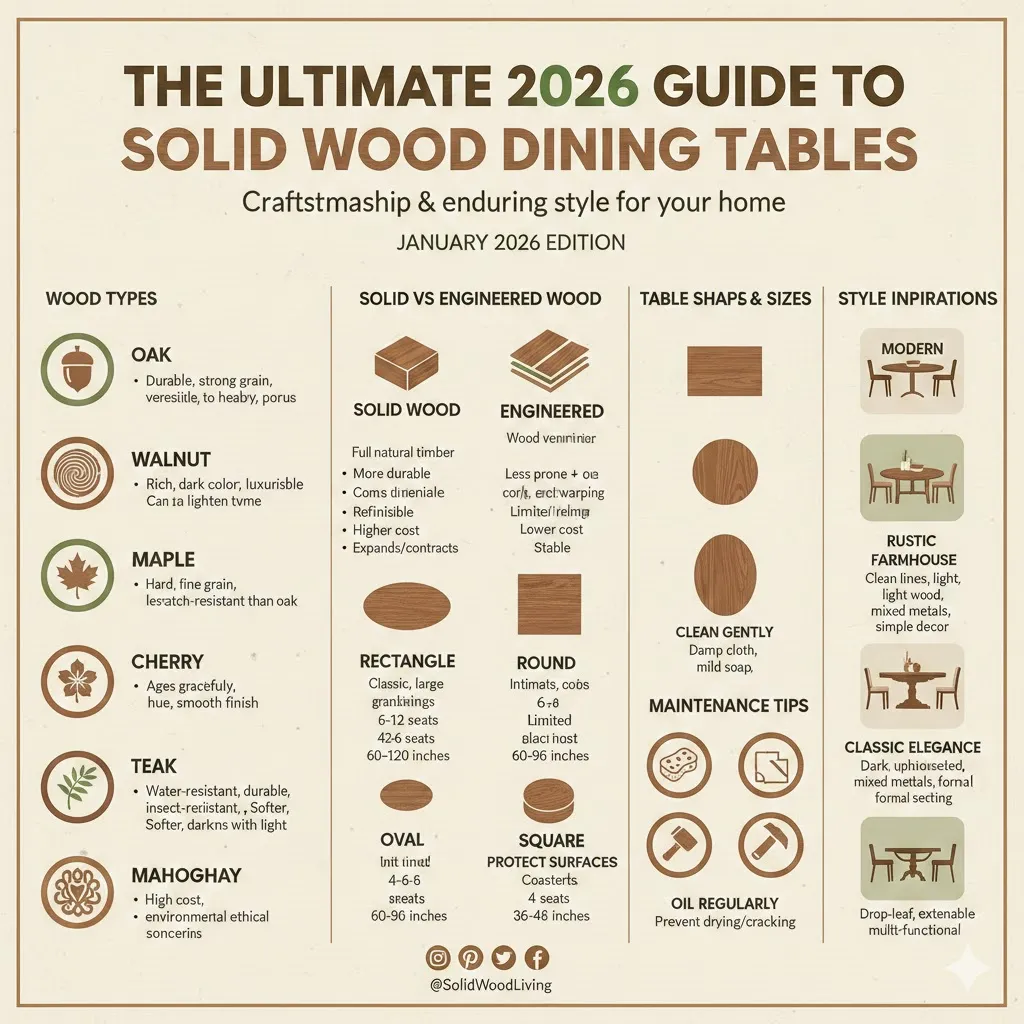
Selecting between solid and engineered wood is a foundational step in your table journey. Here’s a detailed comparison:
| Feature | Solid Wood | Engineered Wood |
| Durability | ⭐⭐⭐⭐⭐ Excellent | ⭐⭐ Moderate |
| Repairability | ⭐⭐⭐⭐⭐ Easy to restore | ⭐ Difficult |
| Natural Grain | ⭐⭐⭐⭐⭐ Unique | ⭐ Veneer only |
| Lifespan | ⭐⭐⭐⭐⭐ Generational | ⭐⭐ 5–10 years |
| Price | ⭐⭐⭐ Higher | ⭐⭐ Lower |
| Maintenance | ⭐⭐⭐ Moderate | ⭐⭐ Easier but less enduring |
Takeaway: If longevity and character are in order, solid wood remains the sole. Engineered wood is suitable for alternate use or tighter budgets, but cannot replicate the depth, texture, and durability of real timber.
Top Wood Types for Dining Tables
Every wood type brings distinct aesthetics, hardness, and price considerations. Selecting the appropriate wood ensures that your table fits both functionally and stylistically.
| Wood Type | Pros | Cons | Best For |
| Oak | Extremely strong, classic appeal, absorbs finishes well | Heavy, pricier | Traditional and rustic interiors |
| Walnut | Deep, elegant color; striking grain | Expensive | Modern and luxurious décor |
| Maple | Hard, scratch-resistant, durable | Light shades reveal stains | Busy households |
| Cherry | Develops a warm patina over time, timeless | Softer, prone to dents | Cozy or classic rooms |
| Teak | Moisture-resistant, highly durable | Costly | Humid areas, island tables |
| Mahogany | Rich, luxurious finish | Heavy, expensive | Luxury, antique-inspired décor |
Pro Tip: For families with children or frequent use, hardwoods like oak or maple are recommended due to superior resilience and ease of maintenance.
How to Choose the Right Solid Wood Dining Table
Selecting a table does not need to be daunting. Follow these practical steps:
Measure Your Space
- Allow 36–48 inches (3–4 feet) around the table for chairs and movement.
- Consider doorways, walkways, and adjacent furniture.
Example: For a room measuring 12′ × 14′, an ideal table would be roughly 6′ long × 3.5′ wide.
Assess Daily Use
- Family Meals: Opt for durable hardwoods like oak or maple.
- Hosting Guests: Consider extendable tables for versatility.
- Children: Choose hard finishes, rounded edges, and protective mats.
Inspect Build Quality
- Tight, Seamless Joints
- Kiln-dried wood to reduce warping
- Uniform tabletop thickness
- Sturdy legs; avoid hollow or weak structures
Match Your Style
- Modern Minimalist: Light woods, sleek metal or wooden legs, neutral chairs
- Rustic Farmhouse: Thick planks, distressed finishes, chunky legs, wooden or woven chairs
- Classic Elegance: Walnut or cherry, carved edges, upholstered seating
Maintenance & Care Tips for Longevity
To preserve the beauty and structural integrity of a solid wood table, proper care is essential.
Weekly
- Dust with a soft microfiber cloth
- Wipe spills immediately to prevent staining.
Monthly
- Inspect for scratches, dents, or water rings.s
- Use coasters and placemats regularly.
Times a Year
- Apply high-quality wood oil or wax
- Use wood conditioners suited to your table’s species
Additional Tips:
- Avoid prolonged exposure to direct sunlight
- Place felt pads under legs to protect the flooring
- Clean gently with mild soap and water
- Rotate the table periodically to ensure even wear
Design & Style Ideas for Your Dining Room
Modern Minimalist
- Light maple or ash wood
- Simple, straight, or tapered legs
- Neutral seating and minimal décor
Rustic Farmhouse
- Distressed oak or pine
- Chunky, turned legs
- Wooden or wicker chairs
Classic Elegance
- Deep walnut or cherry
- Upholstered chairs
- Statement chandelier
Space-Saving
- Round or oval solid wood tables
- Compact chairs for small areas
- Light finishes to open the space
Example: A round oak table can convert a small nook into a warm, functional dining space.
Budget-Friendly vs Luxury Solid Wood Tables
| Feature | Budget Table | Luxury Table |
| Wood Type | Oak, Maple | Walnut, Teak, Mahogany |
| Finish | Standard stain | Custom, high-gloss |
| Legs | Straight, simple | Carved, designer styles |
| Price Range | $300–$800 | $1500–$5000+ |
| Best For | Small families or apartments | Premium homes, luxury décor |
Tip: Even budget-friendly tables can look upscale with the right chair selection, rug, and tabletop décor.
Common Mistakes to Avoid
- Using soft wood for heavy-use areas → ✔ Choose hardwoods like oak or maple
- Ignoring finish quality → ✔ Inspect sealants and conditioning
- Failing to measure space → ✔ Always measure before buying
- Style Mismatch → ✔ Ensure table color, shape, and design suit your décor
Smart, Modern & Future-Ready Ideas
- Extendable Tables: Adaptable for daily use and entertaining
- Built-In Tech: USB charging ports, wireless charging pads, or integrated power outlets
- Eco-Friendly Finishes: Low-VOC oils and stains for safer interiors
- Convertible Designs: Multi-functional tables that double as desks or prep areas
Quick Pro Tips
- Rotate the table periodically to avoid sun damage
- Use felt pads under legs to protect the flooring
- Keep a mini repair kit for scratches
- Opt for multi-purpose tables in compact spaces
FAQs
Yes. Solid wood lasts longer, retains its value, and can be refinished multiple times.
Properly maintained, they can endure 30–50+ years, becoming cherished family heirlooms.
Maple and oak are exceptionally hard; walnut offers elegance but slightly less resilience.
Both. Oil protects against moisture, while sealants prevent spills and stains.
Yes. Teak and treated hardwoods resist moisture effectively.
Conclusion
A solid wood dining table is far more than autility piece; it is an enduring investment in elegance, utility, and memory-making. Its natural grain, structural durability, and timeless appeal enrich any dining environment, providing warmth and character that synthetic alternatives cannot replicate.
From choosing the correct wood species, exactly measuring your space, and assessing your daily usage needs, to styling the table according to your interior theme and applying appropriate maintenance, this guide covers every essential detail. Avoiding common pitfalls, integrating modern and smart traits, and following proper care routines ensure your table remains both stunning and functional for decades.
Sometimes, the right solid wood table harmonizes with your lifestyle, accentuates your décor, and becomes a central gathering point for family and friends. Beyond aesthetics, it is a tangible piece of legacy, an item that may be cherished by future generations. Selecting wisely today guarantees both immediate satisfaction and long-term enjoyment.
Key Takeaway: A solid wood dining table is not merely furniture; it is a Timeless Companion For Memories, discussion, and celebration. By understanding wood types, maintenance practices, and design integration, you ensure that your containment pays dividends in durability, beauty, and familial joy.
