
Introduction
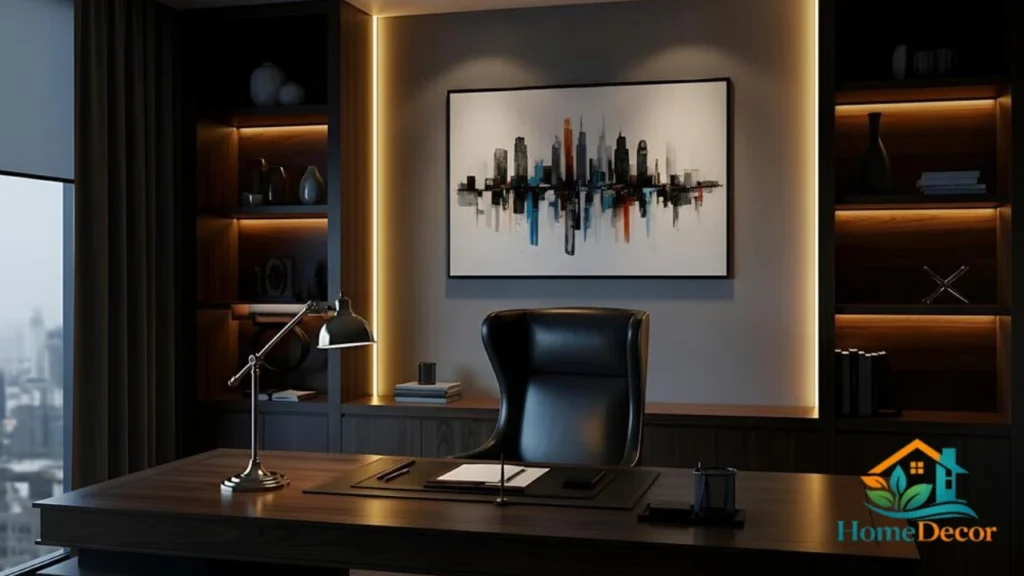
Office Wall Decor is no longer just about making blank walls look nice. In 2026, it is part of how a workspace feels, performs, and communicates. A well-designed wall can support focus, reduce noise, strengthen brand identity, and make a room feel more intentional. That matters because modern offices are expected to do more than hold desks. They need to attract people back, support hybrid work, and help teams feel comfortable and productive. Research from workplace design leaders shows that offices are now expected to support connection, flexibility, and wellbeing, while beauty and thoughtful design also influence performance and employee experience.
This guide goes deeper than a simple inspiration list. It gives you the strategy behind what to choose, where to place it, how much to spend, and why it works. Whether you are styling a home office, a client-facing corporate space, or a creative studio, you will find practical ideas that make the room look stronger and work better.
What Is Office Wall Decor?
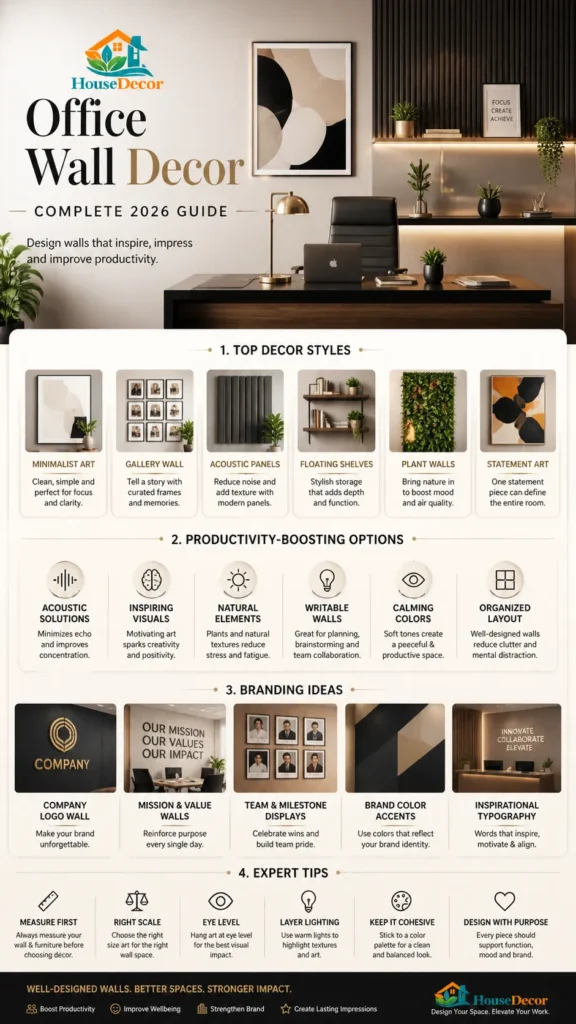
Office wall decor is any visual or functional element placed on an office wall to improve the room’s appearance, atmosphere, or usability. It includes art, mirrors, shelves, acoustic panels, pin boards, branding graphics, plants, gallery walls, writable surfaces, and accent wall finishes.
Snippet-ready answer
Office wall decor is a combination of art, materials, and functional wall features that improve a workspace’s look, feel, brand image, and day-to-day performance.
What makes it different from regular home decor?
Office wall decor has a job to do. It should not only look attractive; it should also support focus, clarity, acoustics, collaboration, or branding. In other words, the wall should help the room work harder.
Why Office Wall Decor Matters in 2026
Office walls are not background space anymore. They are part of the employee experience.
Workplaces are changing because hybrid work has changed how people use offices. Companies are now designing spaces that are more flexible, more community-driven, and more purposeful. Steelcase notes that offices now need to support connection, belonging, and well-being, while Gensler’s 2026 workplace research points to a growing gap between what workers need and what many offices currently provide.
Here is why wall decor matters:
- It can make a space feel more professional and finished.
- It can improve the way people feel in the room.
- It can reinforce brand identity for visitors and clients.
- It can help reduce noise when the right materials are used.
- It can make small rooms feel more organized and intentional.
Office design also affects emotional health and the psychosocial work environment, according to research on office design and employee wellbeing. Noise is another major issue: CDC/NIOSH notes that workplace noise can affect productivity, and workplace guidance emphasizes quieter, better-controlled environments.
Quick takeaway
If the wall is planned well, it can make the whole office feel better, work better, and sell better.
Best Types of Office Wall Decor
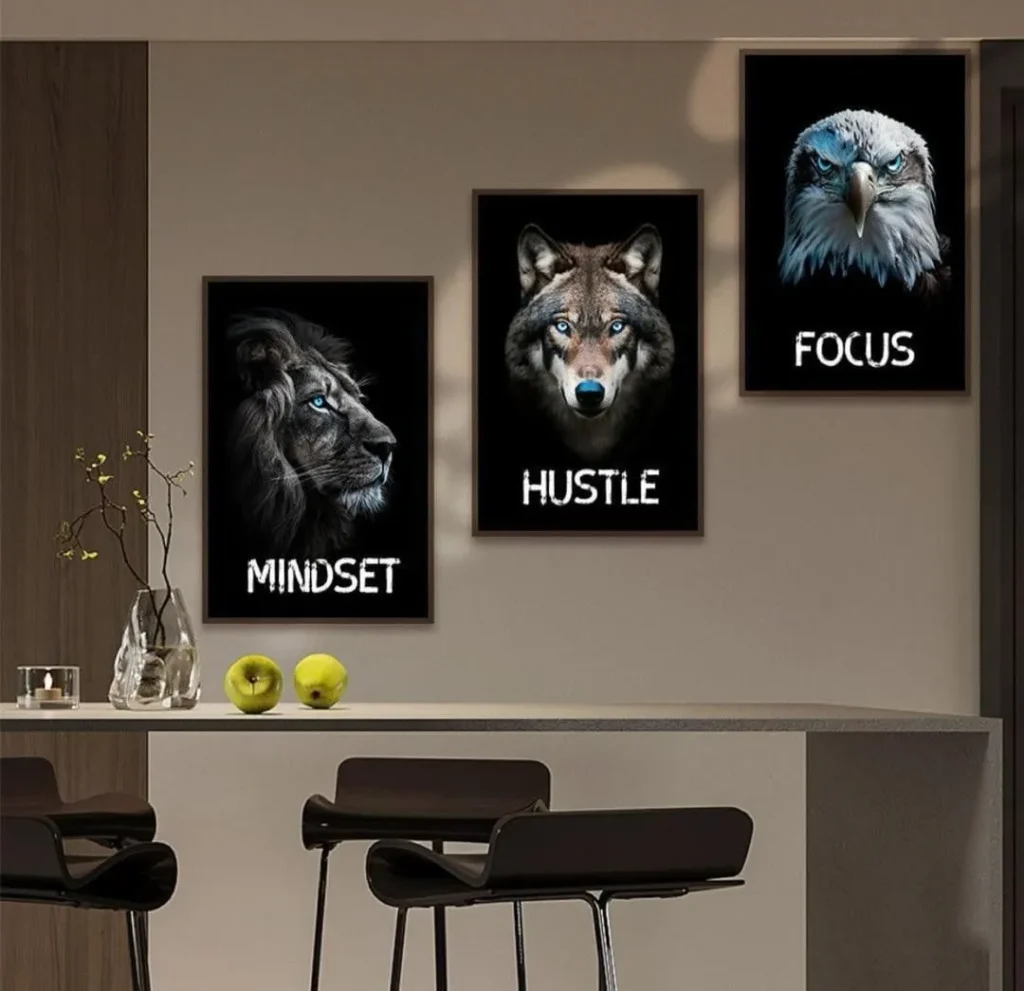
The best choice depends on the goal of the room. A home office, reception area, and meeting room should not use the same wall strategy.
Table 1: Best wall decor by office goal
| Goal | Best Decor Type | Why It Works | Best For |
| Focus | Minimal art, soft colors, acoustic panels | Reduces visual noise | Home offices, focus zones |
| Branding | Logo wall, mission statement, branded graphics | Strengthens identity | Reception, client-facing areas |
| Collaboration | Writable walls, pin boards, modular panels | Supports brainstorming | Meeting rooms, studios |
| Comfort | Plants, warm art, textured finishes | Makes the room feel calm | Private offices, hybrid spaces |
| Prestige | Oversized art, custom wall finishes, premium frames | Creates a strong first impression | Executive offices, boardrooms |
1. Statement art
A single oversized print or framed artwork gives the room a focal point. It works especially well when you want the space to feel clean and confident.
2. Gallery walls
Gallery walls are best when the theme is controlled. Use a clear color palette, matching frames, or a strong subject like architecture, travel, typography, or company milestones.
3. Acoustic wall panels
These are one of the smartest choices for modern offices. They improve sound control while still looking polished. In noisy office environments, acoustics matter because sound can affect comfort and productivity.
4. Writable surfaces
Whiteboard walls, chalkboard paint, and glass boards work well in planning spaces and creative teams. They are functional, clean, and easy to update.
5. Shelves and ledges
Wall shelves add depth and help you display books, samples, plants, or awards. They are practical in small offices because they save floor space.
6. Biophilic wall elements
Plants, moss panels, and natural textures make the room feel calmer. Biophilic design is widely used because natural elements can reduce stress and support productivity.
7. Branding walls
Logo treatments, custom typography, and mission graphics work well in reception areas and meeting rooms. Gensler’s workplace examples show that brand expression can be designed to feel both memorable and flexible.
8. Digital art displays
Rotating screens or digital frames are useful in modern offices that want a fresh look without constant reprinting.
Mini summary
The best office wall decor is not the most decorative option. It is the one that matches the job of the room.
What Style Should You Choose?
Style should follow purpose. Use this simple rule:
- Focus zones: calm, minimal, soft, low contrast
- Client zones: polished, branded, memorable
- Creative zones: expressive, colorful, flexible
- Leadership offices: premium, clean, balanced
- Shared spaces: durable, easy to maintain, low clutter
Pros and cons of popular options
Oversized art
Pros: strong focal point, easy to install, instantly upgrades the room
Cons: can feel expensive, wrong scale looks awkward
Gallery wall
Pros: flexible, personal, good for Storytelling
Cons: can look messy if spacing is poor
Acoustic panels
Pros: functional, modern, useful in noisy offices
Cons: higher cost than standard prints
Writable walls
Pros: practical, collaborative, flexible
Cons: can look too casual in formal offices
Plants and vertical gardens
Pros: warm, calming, natural
Cons: need maintenance and proper lighting
Top Office Wall Decor Ideas That Actually Work
1. Use one large focal piece
A big piece looks more intentional than many small pieces. It is one of the easiest ways to make a room feel high-end.
2. Build a gallery wall with one rule
Keep at least one element consistent: frame color, image style, or spacing. That creates cohesion.
3. Add acoustic texture where noise is a problem
If the office has hard floors, glass walls, or an open layout, use panels or textured wall treatments. Quiet spaces are easier to work in.
4. Use branding with restraint
Do not turn every wall into a billboard. A strong logo wall works best when it is paired with a simple, clean design. Gensler’s research shows that branding can feel energizing when it is designed as part of the experience, not just decoration.
5. Choose art that matches the work mode
Abstract art works well in calm areas. Bold graphics suit creative zones. Nature-inspired pieces are good for stress relief.
6. Use shelves for both function and display
A floating shelf with books, plants, and one or two decor objects adds personality without clutter.
7. Add a writable planning wall
This is a strong choice for managers, founders, designers, and teams that brainstorm often.
8. Create a color story
Use wall decor to repeat the room’s palette. That makes the office look designed, not random.
9. Try a vertical garden or plant wall
This is one of the easiest ways to soften a hard office interior.
10. Mix finishes carefully
A little metal, wood, fabric, and glass can make the wall feel richer. Too many finishes create visual noise.
Snippet-ready answer
The best office wall decor ideas are the ones that support the room’s purpose: focus, branding, collaboration, or comfort.
Office Wall Decor Plan & Installation Guide
This is the part most competitors skip, but it is the part readers actually need.
Define the room’s purpose
Ask one question first: What should this wall do?
- Help with focus?
- Impress clients?
- Support teamwork?
- Reduce noise?
- Strengthen brand image?
Measure the wall
Do not guess. Measure the full wall width and height, then measure the furniture below it. The wall decor should relate to the furniture, not float randomly above it.
Find the visual center
A focal point should usually sit near eye level. In offices, balance matters more than dramatic placement.
Match decor size to wall size
A common mistake is using too many tiny pieces. Larger walls usually need either a large artwork or a larger grouping.
Check lighting and glare.
If the wall gets direct sunlight or strong overhead light, choose materials that will not glare too much. Office lighting and glare are important design factors in workspaces.
Choose the right hardware.e
Use stronger anchors for heavy frames, shelves, and panels. Security and durability matter in busy offices.
Plan spacing before hanging anything
A simple layout on the floor or paper template can prevent costly mistakes.
Install with a clear hierarchy.
Start with the biggest item first, then build around it. This creates a cleaner result.
Test the view from different angles.
Walk into the room, sit at the desk, and check the wall from the doorway. Good office decor should look good from multiple views.
Leave room to grow
Do not fill every inch. Blank space helps a wall feel more premium.
Mini summary
Great Office Wall decor is not just chosen well. It is measured, planned, and installed with intention.
Comparison Section: What Works Best for Different Office Types
Table 2: Comparison of wall decor approaches
| Office Type | Best Wall Decor | Avoid | Reason |
| Home office | Minimal art, shelves, soft palette | Busy gallery walls | Focus matters more than decoration |
| Corporate office | Branding wall, acoustic panels, framed art | Random posters | Needs polish and consistency |
| Creative studio | Writable wall, bold art, mood board wall | Overly formal decor | Creativity needs flexibility |
| Client reception | Oversized art, logo wall, premium finishes | Cheap prints | First impressions matter |
| Executive office | Statement piece, calm palette, high-end texture | Cluttered layouts | Needs authority and clarity |
Which option is the safest all-round choice?
If you want one choice that works in many offices, use a large framed print or a restrained gallery wall with one accent material. It is easy to style and hard to overdo.
Which option is best for productivity?
Acoustic panels, writable walls, and simple art with low visual noise tend to work best in work-heavy spaces. Noise control and thoughtful office design both support better working conditions.
Budget-Friendly Office Wall Decor Ideas
You do not need a luxury budget to create a strong wall.
Smart low-cost options
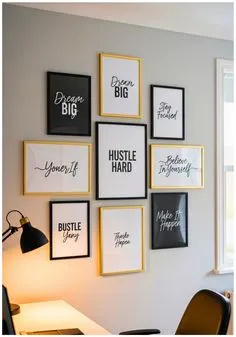
- Printable art in matching frames
- Peel-and-stick wallpaper for one accent wall
- A small gallery wall using the same frame color
- Floating shelves with a few well-chosen objects
- Typography prints with clean layouts
- Painted geometric wall shapes
- Cork boards with a neat fabric finish
Budget tips that make a big difference
- Spend more on frame quality than on trendy posters.
- Keep the palette simple.
- Use fewer pieces, but make each one stronger.
- Stick to one wall instead of trying to decorate every wall.
Best budget strategy
Buy one item that anchors the room, then build around it slowly. That looks more expensive than buying many cheap pieces at once.
Mini summary
Affordable office wall decor works best when it looks edited, not rushed.
Premium and Luxury Office Wall Decor Options
Premium office decor is about materials, scale, and finish.
Luxury wall decor ideas
- Oversized canvas or framed art
- Custom acoustic panels with fabric texture
- Natural wood slats
- Brass or matte black frame sets
- Backlit feature walls
- Custom branding installations
- Sculptural wall pieces
- Moss or living wall accents
What makes decor feel premium?
- Better proportions
- Fewer but larger pieces
- High-quality materials
- Clean installation
- Strong lighting
- Consistent color story
Best luxury spaces to upgrade first
- Reception
- Boardroom
- Executive office
- Main collaboration wall
- Client-facing conference room
Snippet-ready answer
Premium office wall decor feels expensive because it is simple, balanced, and made from better materials.
Smart, Modern Trends in Office Wall Decor for 2026
Office design is moving toward spaces that feel more human, more flexible, and more useful. Steelcase and Gensler both point to a more dynamic, adaptable office, while Gensler also highlights the importance of beauty, inclusion, and workplace performance in current design thinking.
1. Calm minimalism
Simple walls, warm neutrals, and clean framing are still strong in 2026.
2. Brand storytelling
Offices are using walls to explain who they are, not just to decorate space.
3. Acoustic design that looks good
Noise control is becoming part of the visual design, not hidden behind it.
4. Biophilic walls
Plants, natural textures, and organic materials continue to grow in popularity because they support comfort and reduce stress.
5. Hybrid-ready spaces
Walls are being used to support flexible work zones, meeting areas, and video-call backdrops. Steelcase notes that offices now need to work harder to earn the commute.
6. Interactive walls
Writable and modular walls are useful for teams that move fast.
7. Better lighting integration
Lighting is part of the wall experience now, especially in premium offices. Office lighting guidance increasingly focuses on glare, brightness, and the quality of the visual environment.
Mini summary
The future of office wall decor is not louder. It is smarter, calmer, and more functional.
Common Mistakes to Avoid
Even a beautiful wall can fail if the basics are wrong.
Too many small pieces
This creates clutter and makes the wall feel busy.
Ignoring scale
A tiny print on a large wall usually looks like an afterthought.
Choosing decor with no purpose
Every wall should support a goal: focus, branding, comfort, or collaboration.
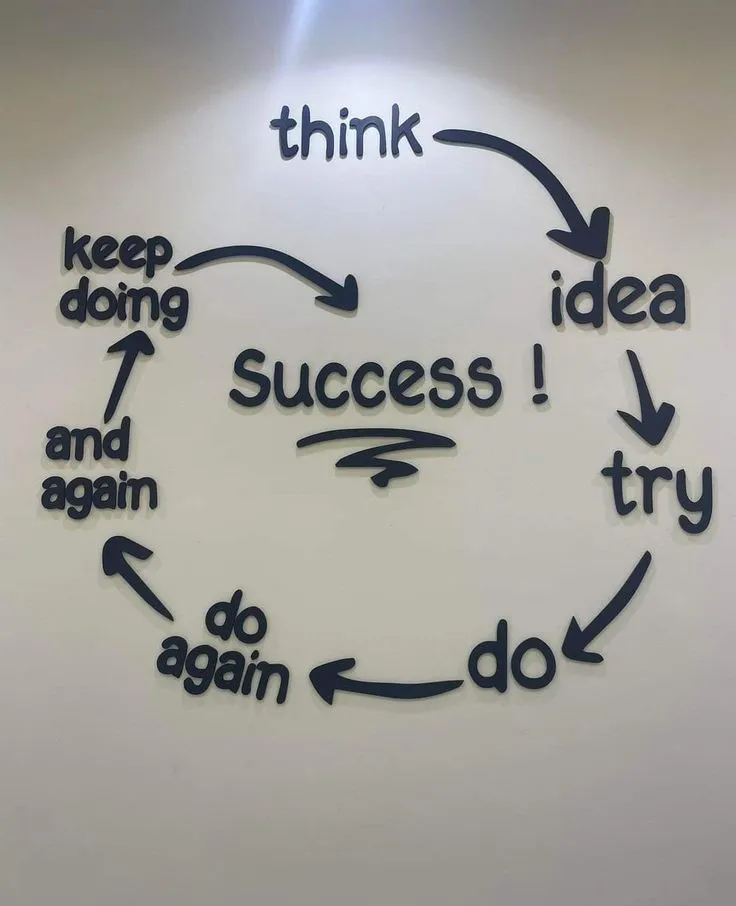
Using dated motivational posters
These often feel generic and cheap.
Forgetting acoustics
A room with a lot of hard surfaces can feel harsh. That can hurt comfort and focus.
Poor lighting
Bad lighting can wash out art, create glare, and weaken the whole design.
No visual hierarchy
The eye should know where to look first.
Decorating without the furniture plan
Wall decor must work with the desk, chair, and storage layout.
Expert Tips Most People Ignore
These details separate average decor from professional decor.
Start with the biggest visual need
If the wall feels empty, use scale. If it feels dull, add texture.
Repeat one element three times
A repeated frame color, material, or shape creates harmony.
Use art to control mood
Color temperature matters. Cooler tones feel more focused. Warmer tones feel more inviting.
Make the wall useful
A wall that holds notes, planning tools, or storage often adds more value than a purely decorative wall.
Treat the wall like part of the workflow
Good office design supports how people actually work, not just how the space looks. Gensler’s research and workplace studies keep pointing to the same thing: the office performs better when it supports people’s real needs.
Photograph the wall before finalizing
A wall can look balanced in person but off-center in a photo. That is a useful test.
Mini summary
The best office wall decor feels obvious only after it is installed. Before that, it was carefully planned.
Maintenance and Long-Term Value
Office wall decor should look good for more than a few months.
Keep it looking fresh
- Dust frames and shelves regularly
- Rotate art every season if the space allows it
- Replace faded prints
- Repaint scuffed accent walls
- Trim plants and refresh planters
- Check anchors and hardware over time
Long-term value tips
- Choose durable materials
- Avoid trendy decor that will age fast
- Build around timeless color palettes
- Keep branding flexible enough to update later
- Use modular systems where possible
Why this matters
Workplaces change. Hybrid schedules, team structures, and room use can all shift. Flexible wall systems age better than rigid, overly specific setups.
Trusted Authority Websites to Cite
These are strong external references for supporting related claims on office design, productivity, acoustics, and workplace wellbeing:
- Gensler workplace research, beauty and performance, future of work
- Steelcase hybrid office strategy, office trends, Workplace Performance
- Haworth office acoustics and distraction management
- CDC / NIOSH workplace noise guidance and productivity-related safety information
- U.S. Department of Energy / PNNL office lighting and glare guidance
- Peer-reviewed workplace design research, office design, emotional health, psychosocial environment, and productivity evidence
FAQs: Office Wall Decor
The best options are calm art, acoustic panels, writable walls, and clutter-free layouts. These support focus and reduce visual noise.
Use fewer, larger pieces. Keep one color palette, one frame style, and one clear focal point.
Yes. A home office wall can improve focus, make the room feel more professional, and help separate work from home life.
Branded feature walls, framed art, acoustic panels, and polished gallery walls work well because they feel professional and intentional.
Yes, especially in open offices or rooms with echo. They improve both sound quality and visual texture.
Conclusion
The best office wall decor does more than fill space. It creates mood, Supports Work, strengthens branding, and makes the office feel like a place people actually want to be. In 2026, the smartest approach is not to decorate harder. It is to decorate with purpose.
Start with the room’s job, choose one strong visual direction, and build around scale, lighting, and function. That is how you create a workspace that looks polished today and still feels right later.
To keep building topical authority on theroomsart.com, connect this guide with related articles on wall art size, gallery walls, statement walls, and modern home office styling.
