
Introduction
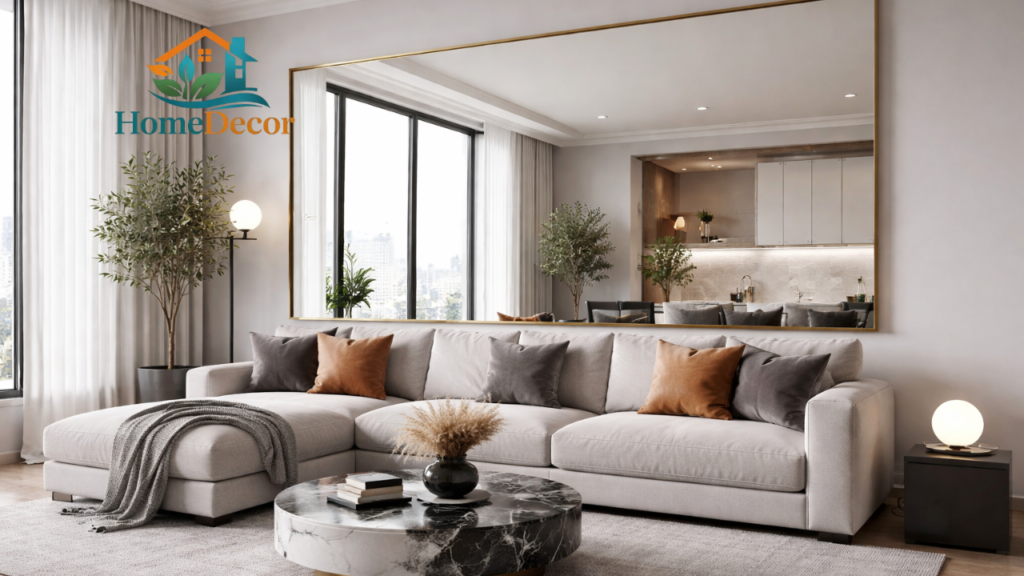
Extra-Large Wall Mirrors for Living Room spaces are one of the simplest ways to transform a room without tearing down a wall, repainting the space, or replacing all your furniture. A well-chosen oversized mirror can pull in daylight, visually widen a tight layout, soften a plain wall, and make the whole room feel more intentional. In other words, it is both a design tool and a visual shortcut. When the scale is right, a mirror does more than decorate. It changes the atmosphere of the room.
That is why modern large wall mirrors continue to be a strong interior choice in 2026. They are practical, flexible, and surprisingly powerful. Whether your room is compact, open-plan, dark, elegant, or minimal, the right mirror can improve it quickly. The key is not just buying a big mirror. The key is buying the right big mirror for the right wall, at the right height, with the right frame, and with a clear purpose.
This guide breaks everything down in a simple, useful way. You will learn what counts as extra large, how to size a mirror against a sofa or fireplace, where oversized wall mirrors work best, which shapes and finishes suit different room styles, what to avoid, and how to choose a mirror that feels designed rather than accidental. The goal is to make the buying process easier and the final result better.
What counts as extra-large wall mirrors for living room spaces?
There is no official industry rule that says one exact size becomes “extra large.” In everyday interior design, though, a mirror that reaches about 60 inches and up usually starts to feel like a major visual feature rather than a small accent. Once a mirror gets to that level, it does not behave like a minor accessory anymore. It becomes part of the room’s structure, almost like a built-in design element.
That is why scale matters so much with large decorative wall mirrors. A 24-inch mirror above a sofa can vanish. A 68-inch mirror above the same sofa can feel polished, grounded, and deliberate.
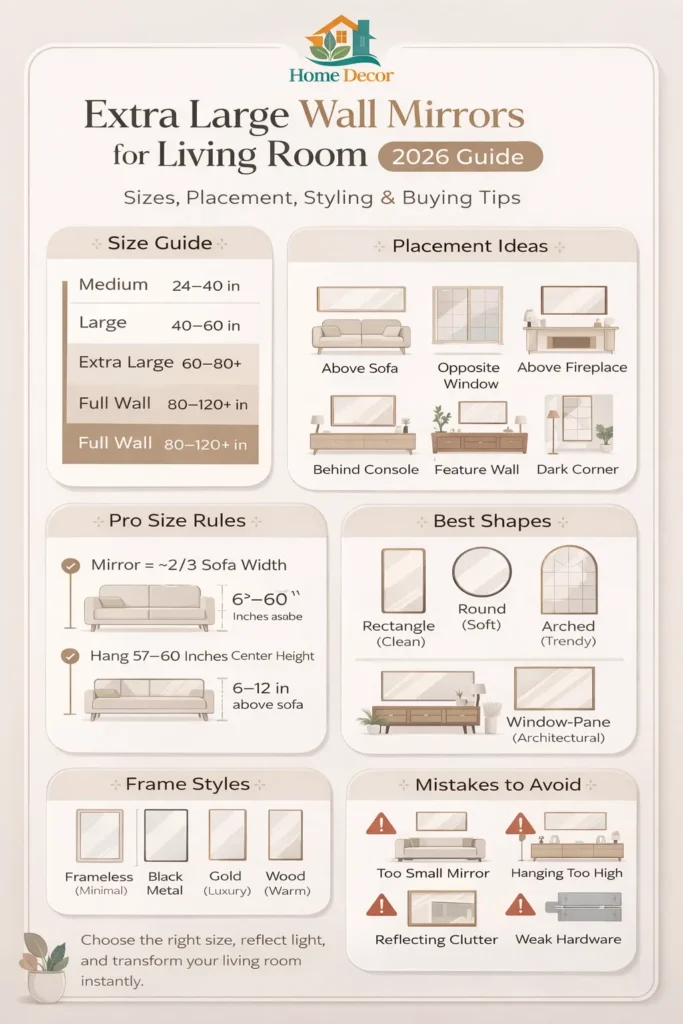
A simple size framework looks like this:
| Mirror category | Approximate size | Best use |
| Medium mirror | 24–40 in | Small accents, narrow walls |
| Large mirror | 40–60 in | Above consoles, smaller sofas |
| Extra-large mirror | 60–80+ in | Main living room walls |
| Full-wall mirror | 80–120+ in | Luxury spaces, long or narrow rooms |
The larger the mirror becomes, the more it affects the room visually. It can no longer be treated like a small finishing touch. It needs to work with the furniture, the wall size, and the ceiling height.
Best size rules for extra-large wall mirrors for the living room
This is where many people get stuck. They know they want a large mirror, but they are unsure how large is large enough, or how to avoid making the wall feel crowded. The safest approach is to start with the furniture, then size the mirror around it. That creates harmony and avoids awkward gaps or floating placement.
Mirror width above a sofa
When a mirror hangs above a sofa, the width should feel related to the sofa itself. If the mirror is too small, it looks like a mistake. If it is too wide, it can overpower the seating area. A balanced option usually sits somewhere around two-thirds of the sofa’s width, though a bolder look can push a little closer to the sofa’s full width.
A practical guide:
| Sofa width | Good mirror width |
| 80 in sofa | 48–60 in the mirror |
| 90 in sofa | 54–67 in the mirror |
| 100 in sofa | 60–75 in the mirror |
The main idea is simple: the mirror should feel connected to the sofa below it. It should not look like it belongs to another room.
Mirror height above the floor
In most living rooms, the center of the mirror should sit near eye level. A useful starting point is around 57 to 60 inches from the floor. That makes the placement feel natural and avoids the common mistake of hanging the mirror too high.
A good rule of thumb:
Center the mirror around 57–60 inches from the floor.
Lower it when it sits above a sofa, console, or mantel.
Raise it only when the wall is unusually tall, or the room has a dramatic ceiling height.
When a mirror is too high, it loses its link to the furniture below and starts to feel disconnected.
Mirror above a mantel or fireplace
Fireplace walls are one of the best places for oversized mirrors, but they also demand careful proportion. The mirror should relate to the mantel width and should fill the vertical wall space without crowding the ceiling or sitting too small above the firebox.
A practical fireplace guide:
| Fireplace placement | Best proportion |
| Above mantel | At least 2/3 of the mantel width |
| Mirror bottom from the mantel | About 4–6 inches above |
| Top of the mirror to the ceiling | Leave breathing room |
| Overall balance | Fill wall space without crowding |
When done well, the result feels finished and architectural. When done poorly, it can feel like the mirror is floating awkwardly or is pressed against the fireplace wall.
Where to place oversized wall mirrors in the living room pieces
A large mirror works best when its location improves the room, not just fills a blank area. Placement is one of the biggest reasons a mirror looks Expensive or cheap, intentional or random, elegant or forced. Think about what the mirror will reflect, what wall it will anchor, and what problem it should solve.
Over the sofa
This is the classic choice for a reason. A large mirror above the sofa creates structure and gives the wall a clear focal point. It also ties the seating area together, especially when the mirror width stays in proportion to the sofa.
This placement works especially well when the mirror is centered directly above the seating group and when the surrounding decor is kept simple.
Opposite a window
This is one of the smartest placements for rooms that feel dim, tight, or heavy. A mirror placed opposite a window can bounce natural light back into the room and brighten areas that would otherwise stay shadowed. It also gives the illusion of more depth.
If your living room gets limited daylight, this placement can make a dramatic difference.
Above the fireplace
A fireplace mirror can create a high-end, balanced look when the proportions are correct. The fireplace wall often benefits from something large and visually strong, and a mirror can do that while also making the room feel brighter and more open.
This works especially well in formal living rooms, elegant apartments, and rooms with tall ceilings.
Behind a console table
A mirror behind a console table helps create a layered, designed look. It is especially useful in entry-facing living rooms, open-plan layouts, or side walls that need visual weight. The console gives the mirror a base, and the mirror gives the console vertical impact.
This combination helps the wall feel finished without needing much else.
On a full-featured wall
If you want a bold, dramatic look, a full mirror wall or panel-style mirror can completely reshape the room. This is a strong choice for narrow rooms, luxury interiors, or spaces that need to feel larger without changing the actual footprint.
This approach works best when the rest of the room is controlled and uncluttered.
Near a dark corner
Dark corners often make a room feel smaller than it really is. A mirror nearby can catch light, soften that shadowy area, and help the corner blend into the overall design. Instead of letting the corner feel forgotten, the mirror turns it into part of the room’s visual flow.
Best mirror shapes for living rooms
Shape matters almost as much as size. The outline of the mirror changes the mood of the room immediately. A rectangle feels structured. A round mirror feels softer. An arched mirror feels elevated. The best shape depends on the wall, the furniture, and the mood you want to create.
| Shape | Best for | Style feel |
| Rectangle | Sofas, large walls, balanced rooms | Clean, versatile |
| Round | Softening sharp lines, smaller focal areas | Relaxed, friendly |
| Square | Symmetry and bold walls | Strong, architectural |
| Arched | Height, softness, luxury | Elegant, current |
| Window-pane | Feature walls, reflection, and architecture | Classic, structured |
Rectangular mirrors
Rectangular mirrors remain the most dependable choice for large living rooms. They are versatile, easy to style, and work above sofas, consoles, and fireplaces without feeling too ornate. In modern interiors, they often create the cleanest result.
Round mirrors
Round mirrors soften a room quickly. They are ideal when the furniture has many straight lines or when you want the wall to feel less formal. They are often best on side walls, above console tables, or in smaller focal zones rather than over a very long sofa.
Square mirrors
Square mirrors feel bold, stable, and balanced. They suit rooms that already have strong symmetry or architectural order. If you want the mirror to read as a solid shape rather than a soft accent, a square format can work beautifully.
Arched mirrors
Arched mirrors are especially strong in 2026 because they introduce height and softness at the same time. They feel current without looking too trendy. In a living room, they can make the wall look taller and more graceful, especially when the room needs a little visual lift.
Window-pane mirrors
Window-pane mirrors mimic the rhythm of a window and can add structure to a wall that feels plain. They are useful when the goal is to increase visual interest while still keeping the room airy. They can also help a space feel larger by suggesting depth and architectural detail.
Best frame styles for large decorative wall mirrors
The frame should support the room, not fight it. With a large mirror, the frame becomes a major design decision because it affects both the style and the visual weight. A huge mirror with the wrong frame can look heavy, dated, or too flashy. A well-chosen frame can make the entire wall feel coordinated.
Frameless mirrors
Frameless mirrors are ideal when you want the wall to feel light, minimal, and open. They reduce visual clutter and are especially effective in small rooms or modern spaces that already have strong Furniture Shapes. The effect is clean and simple.
Gold-framed mirrors
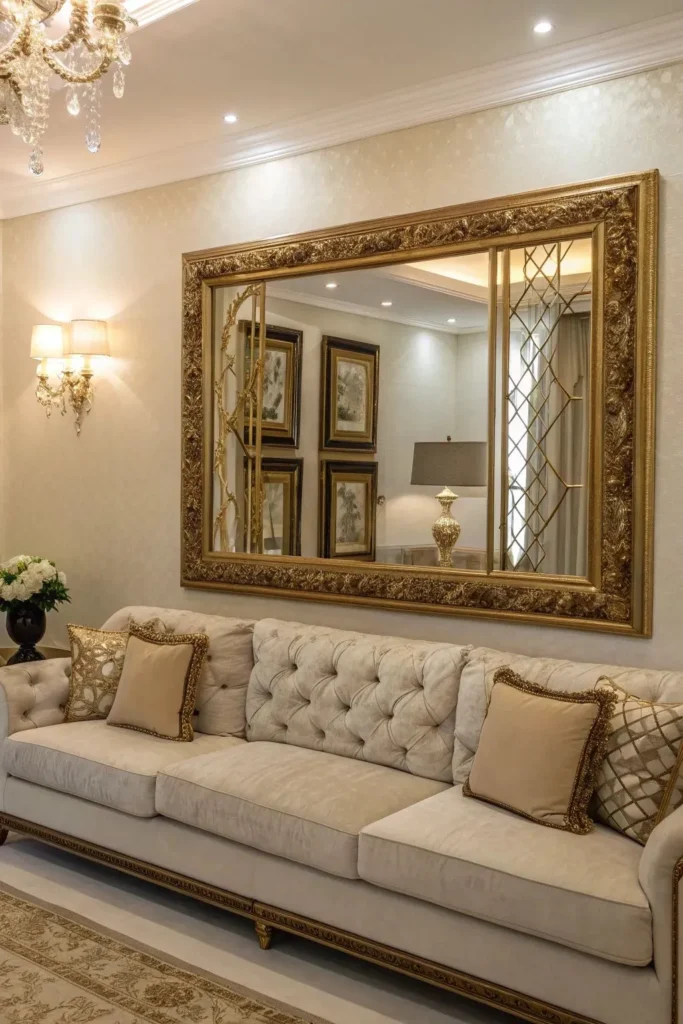
Gold frames introduce warmth and a touch of glamour. They work well in elegant living rooms, softer neutral spaces, and interiors that lean classic, refined, or luxurious. Gold can also help a large mirror feel more like a statement piece and less like a functional object.
Black metal frame mirrors
Black frames create crisp contrast and work especially well in modern interiors. They help define the mirror shape clearly and make the wall feel graphic. This is one of the best choices when the room has pale walls, neutral upholstery, or a streamlined layout.
Wood frame mirrors
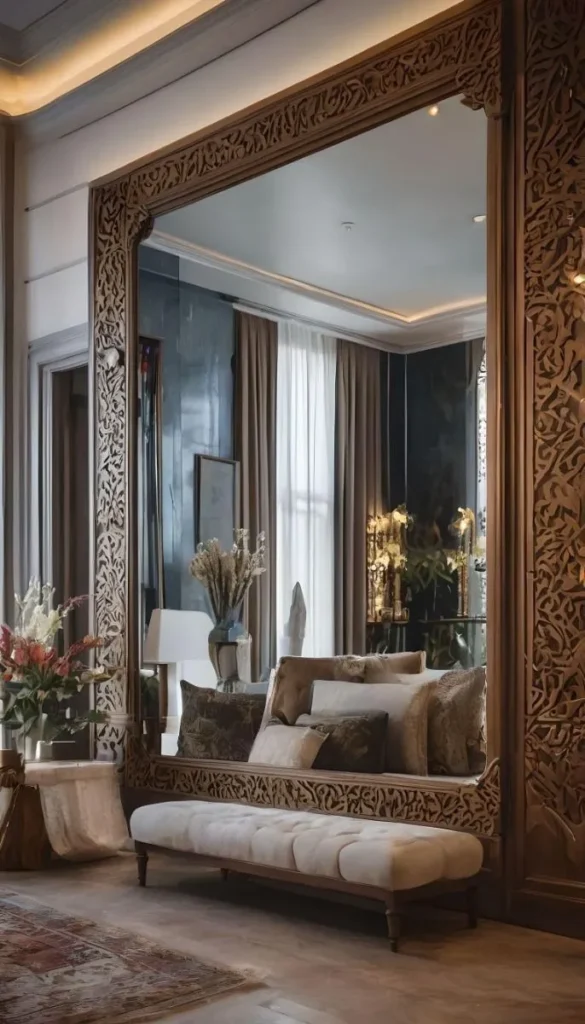
Wood frames add warmth and texture, which can make a large mirror feel more grounded. They work especially well in Scandinavian, rustic, farmhouse, or organic-modern homes. Because a large mirror carries significant weight, a solid and durable frame becomes even more important in this category.
Ornate frames
Ornate frames suit formal interiors, traditional homes, and glam rooms. They can look beautiful when the rest of the room has room to breathe. But if the space is already busy, an ornate frame can overwhelm the wall and compete with the furniture.
How to style extra-large wall mirrors for a living room like a designer
A mirror looks best when the surrounding wall feels intentional. The mirror itself matters, but so does what it reflects, what sits below it, and how much visual noise is around it. The room should feel composed, not crowded.
Reflect something attractive
This is one of the most important styling rules. A mirror doubles whatever it sees. That means it should reflect a window, a lamp, a plant, a nice corner of the room, or an open and pleasant view. Never ignore the reflection itself. A beautiful mirror can still make a room feel messy if it reflects clutter or visual chaos.
Match the mirror to the furniture scale.
A large mirror needs support from the furniture under it. A small console, tiny sofa, or narrow mantel can make a huge mirror feel too dominant. The mirror should feel like it belongs with the piece below it, not like it was added at random.
Add nearby lighting
Lighting improves the mirror’s effect both day and night. Wall sconces, floor lamps, and table lamps make the reflection feel warmer and more elevated. A mirror near good lighting often feels more luxurious because the light creates depth and softness.
Use layering where appropriate.e
A console, lamp, vase, books, or decorative bowl below the mirror can make the wall feel complete. This layering is especially useful in larger rooms where the mirror alone might not be enough to anchor the space. The aim is balance, not clutter.
Leave the wall calm
A big mirror already provides a strong statement. Too many competing objects on the same wall can weaken the effect. In most cases, the mirror should be the hero, with the rest of the wall supporting it quietly.
Room-by-room ideas for modern large wall mirrors
Different living rooms call for different mirror solutions. The best mirror is always the one that fits the room’s shape, light, and style.
| Living room type | Best mirror style | Best placement |
| Small apartment | Tall arched or window-style mirror | Opposite a bright window |
| Modern living room | Frameless or thin black rectangle | Above the sofa or console |
| Luxury living room | Gold arched or oversized rectangle | Above the fireplace or feature wall |
| Scandinavian living room | Light wood frame or soft arch | Above the sideboard or sofa |
| Farmhouse or rustic room | Warm wood frame | Above console or mantel |
| Dark living room | Large reflective mirror | Opposite main light source |
| Open-plan home | Wide mirror or full-wall panel | On the main sofa wall |
Small apartment living room
Choose a mirror that increases height and light. A tall arched mirror or a window-like format works well because it helps the room feel less Compressed. The visual effect is to stretch the wall upward and encourage more openness.
Modern living room
A frameless or thin black-framed rectangle is usually the cleanest choice. It keeps the room crisp and contemporary while still delivering the light and scale benefits you want.
Luxury living room
Gold, brass, or arched mirrors are strong options here. A luxury room can handle a more expressive mirror, especially above a fireplace or large console. The mirror can act as a centerpiece rather than a background element.
Scandinavian living room
A light wood frame, an arched silhouette, or a simple rectangular mirror fits best. Keep the palette soft and airy so the mirror supports the calm look instead of overpowering it.
Farmhouse or rustic living room
A wood frame with visible texture feels natural and appropriate. The mirror should look like it belongs with the room’s materials, not like a shiny foreign object.
Dark living room
A large mirror opposite the main light source can make a huge difference. It helps brighten the room and reduce the weight of the darker corners.
Large open-plan home
In a large open room, the mirror can help define the seating zone. It anchors the sofa wall and gives the living area a visual boundary without using actual partitions.
Budget-friendly vs premium mirror choices
Not every oversized mirror needs to be a luxury purchase, but the larger the mirror gets, the more important quality becomes. Glass clarity, frame strength, backing, and mounting hardware matter much more in large formats than they do in small ones.
| Category | Typical range | What you usually get |
| Budget | $120–300 | Ready-made sizes, simpler frames |
| Mid-range | $300–700 | Better glass, stronger frame, better finish |
| Premium | $800–3000+ | Custom sizing, luxury materials, professional feel |
Budget-friendly ideas
Simple framed mirrors, frameless designs, and standard retail sizes can all work well if the proportions are right. Leaning mirrors are another practical option for renters or for people who want a less permanent installation.
Premium ideas
Custom sizing, low-iron glass, panel-style mirror walls, and solid wood or metal frames give a more tailored result. Premium mirrors are especially valuable when the mirror is meant to become a central focal point in the room.
How to choose the right mirror before buying
Before you commit to a large mirror, check the details that affect both appearance and performance. The biggest mirrors demand the most planning, because once they are hung, flaws become more visible.
Glass quality
The reflection should look clean and undistorted. Better glass usually looks more refined, especially on large surfaces where cheap distortion is easier to spot.
Frame durability
A large mirror needs structural support. Solid wood and metal frames usually hold up better than flimsy materials, especially when the mirror is substantial.
Mounting method
Pay attention to the hardware. D-rings, French cleats, Z-brackets, clips, and wire all work differently. For heavy mirrors, the mounting method should match both the weight and the wall type.
Weight
Never ignore the weight. Large mirrors can be heavy enough to require proper anchors, studs, or special brackets. The mounting system is not an afterthought. It is part of the buying decision.
A good mirror has a job. It should solve a visual problem or support a specific design goal.
Installation and safety tips for large mirrors
Large mirrors are not the same as lightweight decor. They require more care because the consequences of poor installation are bigger. Safety matters just as much as style.
A safe installation checklist:
Check the wall type first.
Find a stud whenever possible.
Use anchors rated for the mirror’s weight.
Keep the mirror level.
Tighten hardware carefully and evenly.
Do not rely on weak or temporary hanging solutions.
For renters
If you rent, a leaning mirror is often the easiest and safest choice. It can provide the same visual benefit without requiring a permanent wall fix. A lighter mirror with approved mounting hardware is another practical option.
Mistakes to avoid with big mirrors for the living room wall
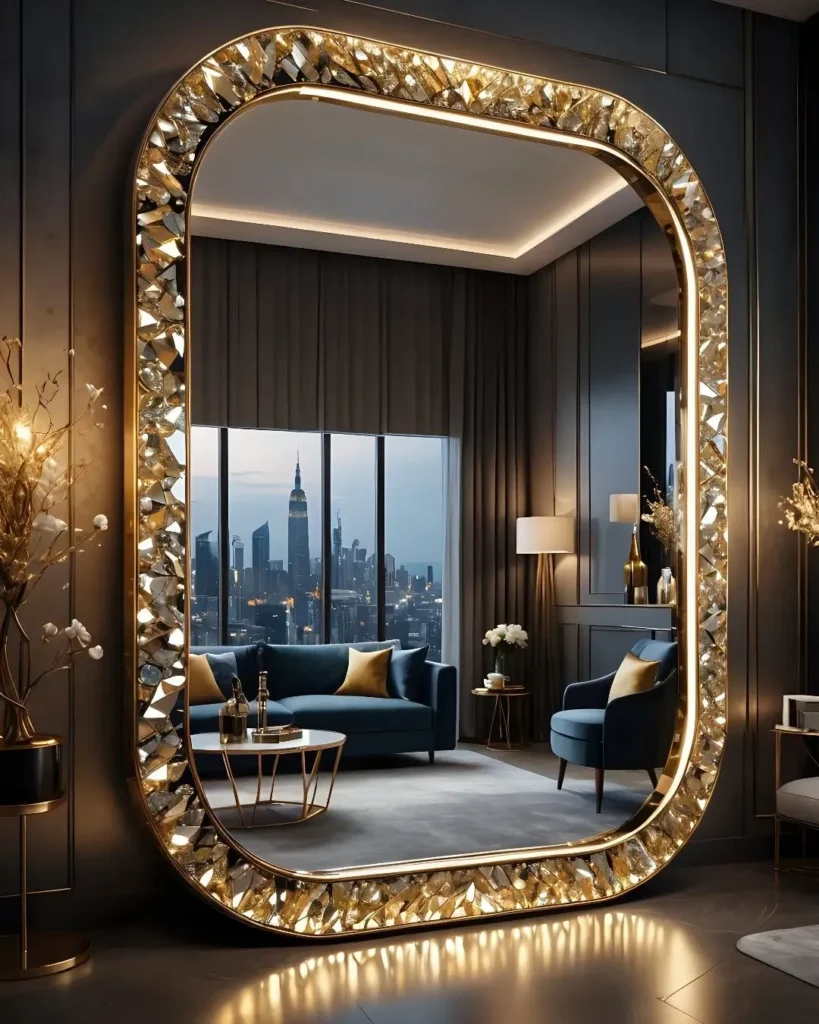
Most mirror mistakes come down to scale, height, or reflection. The mirror itself may be beautiful, but if one of those three things is wrong, the whole wall can feel off.
Choosing a mirror that is too small
This is the most common error. A small mirror on a large wall usually looks accidental instead of designed.
Hanging it too high
If the mirror sits too high above the sofa or console, the visual connection breaks. The wall no longer feels balanced.
Reflecting clutter
Mirrors reveal everything. Cables, storage mess, and random visual clutter become more noticeable when reflected.
Using weak hardware
A large mirror needs proper support. The wrong hanger, anchor, or Wall Fastener can create real risk.
Overdecorating the same wall
The mirror should usually be the main event. Adding too many competing items around it can dilute the effect and make the wall feel crowded.
Simple styling formulas that always work
Sometimes the easiest way to make the right decision is to use a simple formula. These are reliable starting points for most living rooms.
Sofa wall formula
Mirror width: about two-thirds of sofa width
Mirror center: about 57–60 inches from the floor
Mirror bottom: about 6–12 inches above the sofa back
Fireplace formula
Mirror width: at least two-thirds of mantel width
Mirror bottom: about 4–6 inches above the mantel
Mirror top: leave breathing room before the ceiling
Light-maximizing formula
Place the mirror opposite a window or near a bright source.
Make sure it reflects a clean and attractive view.
Keep the frame simple if the room already has a lot going on.
These formulas are especially useful for floor-to-ceiling mirrors in living room projects, where the scale is dramatic, and mistakes are easier to notice.
Pros and cons of extra-large wall mirrors in living rooms
| Pros | Cons |
| Makes the room feel bigger | Can overwhelm a small wall |
| Brings in more light | Heavy pieces need strong hardware |
| Creates a focal point | May reflect clutter |
| Fits many design styles | Better quality can cost more |
| Can make the room feel luxurious | Bad placement looks awkward |
The benefits are excellent, but only when the mirror is well-proportioned and carefully placed. A large mirror should improve the room, not dominate it without purpose.
FAQs
In living room design, mirrors around 60 inches and above are usually treated as extra-large. Full-wall or panel mirrors go even larger and are often used in dramatic or luxury spaces.
A good rule is to keep the mirror tied to the sofa size, often around two-thirds of the sofa width. That helps the mirror feel balanced instead of too small or too wide.
The best spots are above the sofa, opposite a window, above the fireplace, behind a console table, or on a main feature wall.
A strong starting point is to keep the center of the mirror around 57 to 60 inches from the floor. That is close to eye level and usually feels balanced.
Yes. They can make a room feel taller, brighter, and more open, especially in narrow or dark spaces. Large mirror surfaces are especially useful when you want the room to feel bigger.
Conclusion
Big Wall Mirrors in living rooms do way more than just hang there looking nice. Placed right, they bounce light into shadowy corners, giving dull spots new life. Instead of shrinking a compact area, they open it up – like pulling back curtains nobody knew were closed. A blank wall? That mirror turns it quiet elegance without saying a word.
A well-placed mirror changes how a room feels – its size matters less than fitting naturally with your existing pieces. Light bounces better when positioning considers both the source and surface. Instead of focusing on large frames, think about lines, edges, and corners. Height above the floor shifts perception, just as tilt alters what appears inside the glass. Details such as nearby objects or slight leans play quiet but strong roles. Style ties everything together – not through matching exactly, but rather by feeling like it belongs.
