
Introduction
A Feng Shui Living Room is more than a pretty room with coordinated cushions and a few decorative objects placed neatly on a shelf. The living room holds weight in feng shui – not just for how we use it, but how unseen forces move through it. Where bodies meet, stories unfold, screens glow, and stillness slips in after motion, energy takes shape too. Conversations happen here, visits begin here, rest finds its place here – so does flow. Because of this, the space pulls double duty: hub for connection, anchor for balance.
Feng shui might carry centuries of thought, yet its aim comes down to one thing – making rooms feel peaceful, open, and comfortable to move through. A seating arrangement that lets you walk freely makes a difference, quietly shaping how you experience the space. Stiff tones on walls, bulky sofas in pathways, messy corners, or mismatched shapes can pull energy downward like stones in water. So it stands out when someone picks function over glossy magazine images. Real ease matters more than perfect looks snapped under studio lighting.
Start here: picture your living room. A clear feng shui plan takes big ideas and makes them real on the floor. Not just theory – placement matters. The couch finds its spot based on flow, not habit. Entryways stay unblocked, so energy moves freely through. Colors shift the mood without shouting. Green life sits in corners that need softness. Mirrors stretch light but only when placed with care. Errors creep in silently – a shelf too close, a rug off-center – and suddenly something feels stuck. Yet some rooms welcome you right away. That ease has reasons behind it, hidden but present.
What Feng Shui Means and Why the Living Room Matters
Feng shui gets called an art – laying out rooms to help things flow smoothly, evenly, without strain. Inside every layout lives a feeling, noticed only once someone spends time there. Put simply, it stops being mystical if explained like everyday talk. Stability matters, along with openness, comfort, and quiet usefulness in any area. When a place drags, clutters eyes, stumbles movement, or seems oddly dull – that signals something off.
Here’s where things unfold slowly. This space stays busy without trying too hard. Unlike bedrooms, it does not hide behind closed doors. Kitchens serve meals fast yet stay focused on tasks. Instead, daily rhythms gather right here. Guests step inside and pause before going further. After long hours outside, someone might drop into a chair near the window. Conversations start easily when people meet by chance. Movement flows several times each day. Energy builds quietly across these repeated moments. The feel of everything else in the house leans on how this place breathes.
Open space matters, yet bare walls risk a hollow vibe that dulls warmth. Clutter brings its own trouble – overstuffed corners stir unease instead of ease. Harmony sits in between, where air moves freely but still holds comfort close. Stability comes through order without rigidity, flow without chaos.
A room just works better when things flow. Because of this, ancient feng shui patterns line up closely with today’s decorating styles. Open paths through the space matter – so does placing chairs where talk comes naturally. Light from windows plays a big role, too. Instead of clutter, there’s calm. A strong center draws attention without effort. Though one speaks in energy terms and the other in visual balance, both aim at comfort. The outcome? You step inside and relax, almost without noticing.
Feng Shui Living Room Principles You Should Know
Balance and harmony
Stillness matters a lot in feng shui. Not about matching left to right perfectly. More like how the space holds itself when you walk in. One corner stuffed with chairs, opposite side empty – eyes keep noticing that. When light stays low, air gets thick. Feeling stuck follows. A glare from too much light might leave you feeling on edge. When things clutter every corner, your thoughts could start to race.
A well-placed sofa anchors the space while leaving paths clear. Furniture fits its role naturally rather than being forced into corners. Flow matters more than symmetry when arranging key items. Open floor areas let people walk through without squeezing past tables. Comfort grows where pieces aren’t too close together. Sight lines drift from wall to window instead of catching on clutter. Spacing shapes how calm the atmosphere becomes.
Chi flow
Chi flows like breath through every room, according to feng shui. Not some vague idea – think of it as movement made visible. Where people walk without pause, where eyes glide from object to object, that’s smooth chi at work. Blocked paths tangle the rhythm; clutter slows everything down. Yet openness lets motion breathe, almost on its own. A clear route doesn’t just help feet – it shapes how calm a place feels.
Stuck doors, sharp turns, odd furniture spots – these trip up how people move. When someone walks in, they ought not weave through stuff right away. Smooth walking means a space sits well with folks. That explains why feng shui advice for living rooms kicks off by removing mess instead of picking paint colors.
Command position
A spot with clear sight of the doorway matters deeply in feng shui. Yet it works best when not lined up exactly opposite the entrance. Instead, imagine seating arranged at an angle to the door’s path. Stability shows up through solid backing – a wall behind helps. For lounging areas, this often leads to positioning sofas or key seats off-center but still open to movement inside the room.
Comfort grows when folks spot who enters a space. Seeing movement nearby makes some setups feel steady, almost like breathing slows down. Right away, placing seats so you face the door tends to help – no fuss, just works.
Yin and yang
A space where people meet often works better with brightness than silence. Lively beats calm when friends come around, yet a touch of warmth keeps it from feeling sharp. Openness matters, though too much edge wears thin fast. Gentle notes balance the buzz without dulling the spark. Energy moves well here, just not nonstop. Stillness slips in quietly, making sure no one feels pushed.
Lightness, open space, and movement need quiet materials, gentle hues, together with smooth finishes. Sleepy air can fill a lounge heavy on yin. Sharp brightness defines one flooded with yang. Balance lives where opposites meet without tipping. Stillness meets energy when neither shouts.
The five elements
Wood, fire, earth, metal – water completes the set. Colors shift when these shapes show how a space feels. One doesn’t have to spread each piece evenly across the floor. Feel comes first; balance follows behind. Mood builds quietly through hints, not rules. Materials lean one way or another depending on what whispers louder.
Freshness climbs through wood, tied to how things grow. Warmth moves in fire, shifting everything it touches. Stability lives underfoot, earth holding firm. Structure shapes metal, sharp and clear in its purpose. Calm pools where thoughts drift slowly – this quiet energy can shape a room. Colors that whisper instead of shout, surfaces like ripples on glass, small things placed just so – they pull the air together.
| Feng Shui Principle | What does it mean in a living room | Simple example |
| Balance | The room should not feel too crowded or too empty | Use one main focal point and leave breathing space |
| Chi flow | Energy should move easily through the room | Keep walkways open and uncluttered |
| Command position | Main seating should see the door without facing it directly | Place the sofa where the entry is visible |
| Five elements | Colors and materials shape mood and atmosphere | Mix wood, soft neutrals, and one accent tone |
How to Create the Best Feng Shui Layout for a Living Room
Start with the entrance
Starting at the front door makes a difference since it shapes how the rest of the room feels. Clutter like footwear, bins, large pieces of furniture, or extra decorations crowding that spot can shrink the sense of space right away. Walking into openness gives movement more flow, light more reach, comfort more presence.
A person stepping into the living room ought to get a clear sense of the space right away. Clutter shouldn’t catch their gaze at once. Ideally, the entry area stays clean to look at. Not bare or cold though. Instead, it lands as spacious, quiet, yet thought through.
Place the main sofa in the command position.
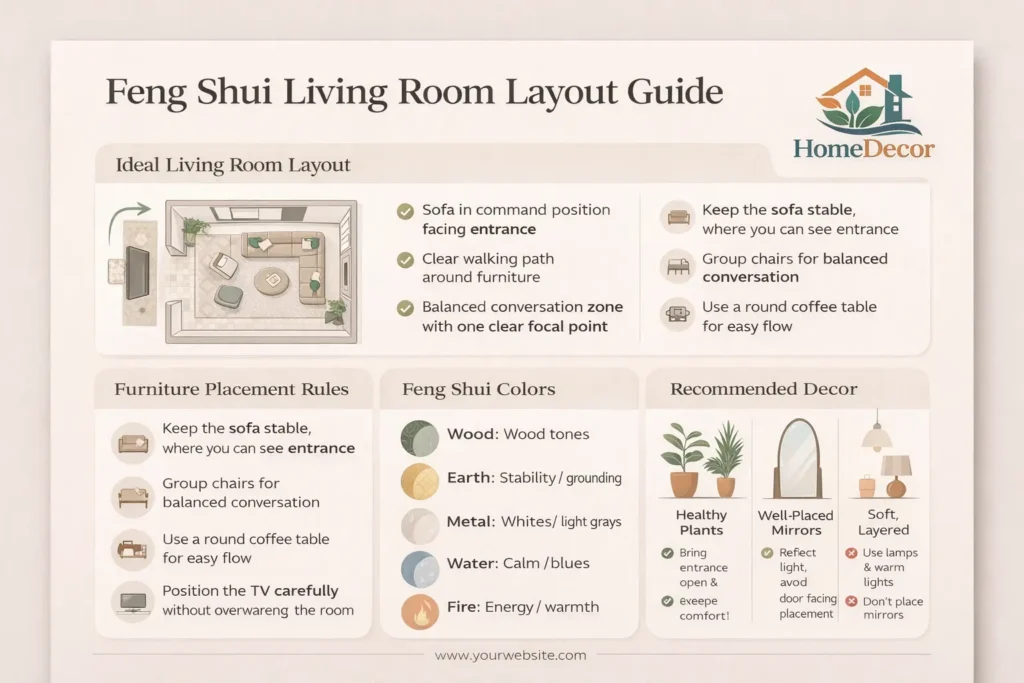
Most times, the sofa holds everything together in a space. Usually bigger than anything else around, its spot shapes how people move and sit. Try placing it so someone sitting can notice who walks in – without being squarely facing the door.
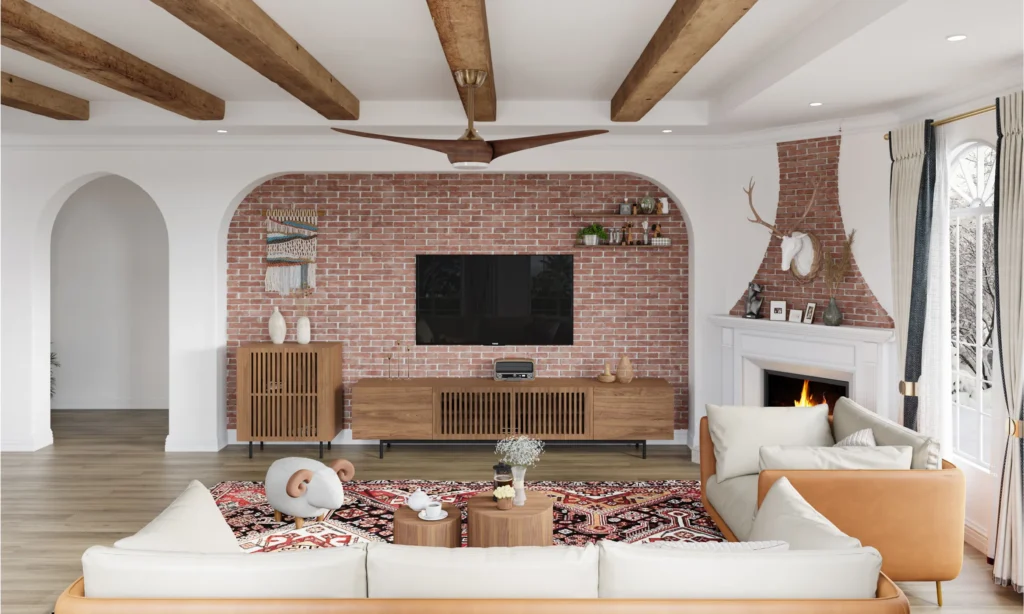
A sofa pushed up to a firm wall tends to feel steadier. When space prevents backing it against a wall, try using a thoughtfully positioned L-shaped couch instead – or leave it freestanding but add something weighty behind it, like a tall cabinet or artwork on the floor. What matters most? Helping people sense safety, stay alert, yet unwind fully. One reason this idea shows up so often in feng shui: it handles real needs without fuss.
Keep pathways open
Movement should feel natural inside any space. Squeezing by a Coffee Table, turning sharply beside a chair, or stepping carefully around a side table means something is off. Pathways free of blockage help more than just energy flow – they make living easier. Awkward routes suggest furniture might need shifting. Smooth travel from one spot to another matters most.
Picture someone walking in, taking a seat, then moving across the space. Each step ought to unfold without effort. Should the layout push folks into clumsy turns, motion stumbles? Not about clearing a hallway right through the middle of where people relax. It’s about shaping a way through that just makes sense when you’re inside it.
Create a conversation zone.
Furniture fits well when it helps folks talk. Most rooms center on the TV, sure – yet that rarely feels welcoming. Try arranging seats face-to-face instead; ease comes when necks stay relaxed, and voices don’t have to reach.
A corner works just fine, even if tight. Sometimes it is a couch plus a single seat near a little table. Big areas might hold two sets of chairs facing each other, or one main circle on a floor cloth. What matters? Pieces should face inward, not turn away. Size does not decide function – arrangement does.
Add one clear focal point.
A strong center draws attention in any sitting area. It could be an open hearth, a broad window view, artwork that stands out, a boldly painted section of wall, or a neatly arranged entertainment setup. Something to rest your gaze on brings calm. When missing, the space feels ungrounded since there is no natural stopping place for sight.
A single standout piece often works best in a space. When multiple bold elements compete, the eye struggles to settle. Instead of fighting for attention, other parts of the room might quietly back the main feature. Clutter pulls energy away. Simplicity lets one idea breathe.
Be cautious with the Bagua map
Here, a person might try placing life areas – family, health, money, love, work – into different corners using the Bagua map. When done lightly, it gives a sense of direction to the space. Yet let the actual use of the room shape things more than any grid. The map works best as a quiet suggestion, not a strict rule.
Start by seeing it as a lens for your thinking. This shifts how you consider the atmosphere a space might hold. Yet everyday usefulness matters just as much. Even if a lounge carries deep meaning, a poor layout breaks comfort every time. Comfort thrives where clarity, harmony, and ease come together naturally.
Make the room work for real life.
Feng shui isn’t just energy flow – daily life matters too. Morning routines shape space differently from daytime activity. Evening use shifts patterns once more. When visitors come, movement changes again. Light travels across walls, floors, and objects at different hours. People settle into spots without thinking. Items are collected where hands reach most often.
A space built around actual daily routines holds more strength than one stuck to rigid theories alone. This explains why top guides on arranging a living room using feng shui mix old principles with how people really live. Because of this blend, comfort settles deeper and lasts longer.
Best Feng Shui Living Room Furniture Placement
Furniture placement is one of the fastest ways to improve a living room. You do not need to buy new furniture to make a space feel better. Often, the biggest improvement comes from moving the pieces you already own into a more supportive arrangement.
| Item | Best placement | Avoid |
| Sofa | Against a solid wall or in a stable command position | Floating randomly or blocking the entrance view |
| Chairs | Grouped for balance and conversation | Pushed too far apart or trapped in corners |
| Coffee table | Centered with comfortable space around it | Oversized tables that block movement |
| TV | Visible without dominating the room | Becoming the only focal point |
| Mirror | On a side wall or where it reflects light | Directly opposite the front door |
| Plants | Bright corners or near natural light | Dark, crowded, or neglected spots |
Sofa placement
The sofa is the main anchor in many Living Rooms. Ideally, it should sit in a position where the person seated can see the door but is not directly aligned with it. This helps the room feel more secure and settled. If the room is small, choose a sofa that fits the scale of the room. An oversized sofa in a compact room can make the entire space feel compressed.
A common mistake is pushing every item into the perimeter of the room. That can make the center feel empty, but the edges feel tense. Sometimes,s a small amount of space around the sofa or between the furniture and the wall feels more natural than forcing everything tightly against the walls. That sense of breathing room is often a sign of better design.
Coffee table placement
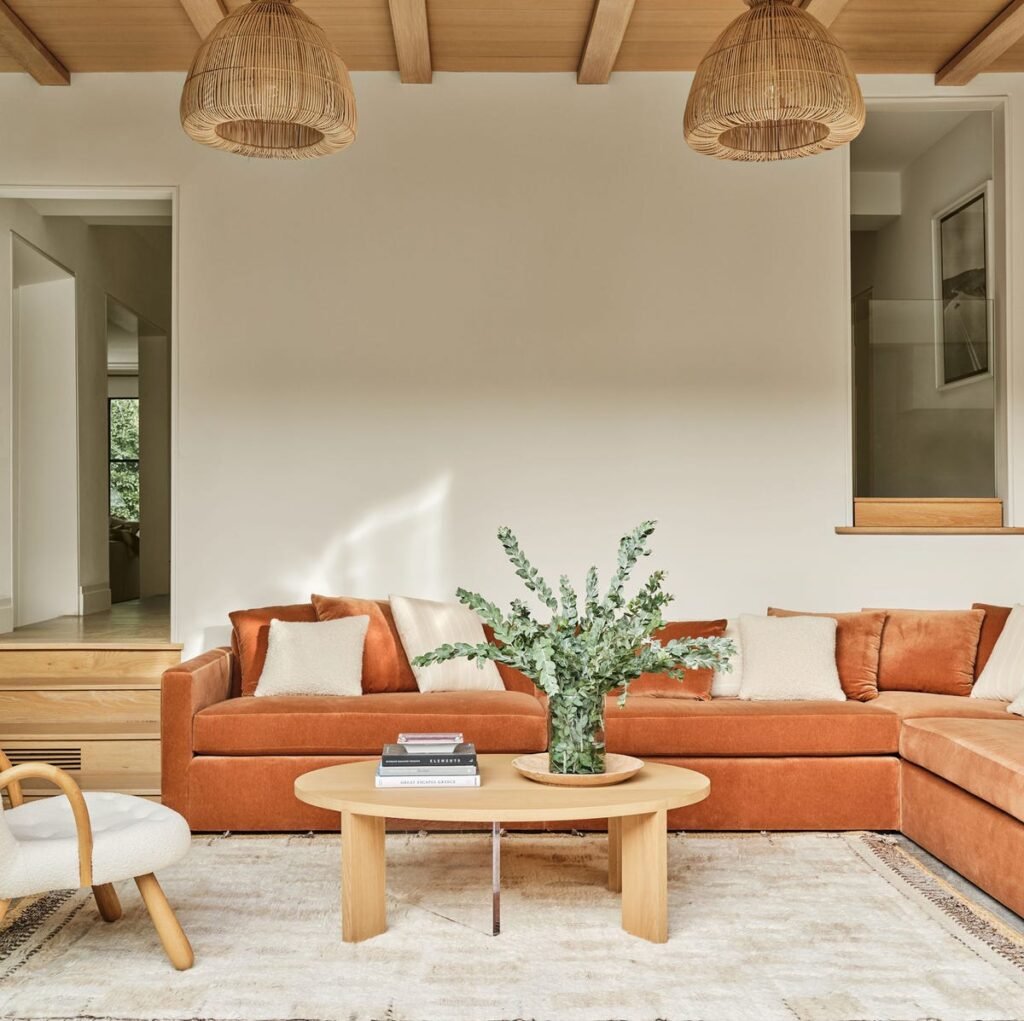
The coffee table should support the room, not interrupt it. A table that is too large can make the space feel difficult to move through. A table that is too small may feel disconnected. Round or oval tables are often favored because soft curves tend to feel easier in a social room, but the right size matters even more than the shape.
The best coffee table placement gives people enough room to walk, sit, and reach comfortably. It should feel like part of the seating zone, not like a barrier in the middle of it.
TV and fireplace positioning
A television can be part of a feng shui living room, but it should not become the only thing the eye notices. If there is also a fireplace, the room may need a decision about which feature is the primary focal point. When two major elements compete, the room can feel visually divided.
The best approach is to let one feature lead. The other can support it. For example, a fireplace may be the main anchor while the TV is placed more quietly beside it or in a media cabinet that blends into the room. The goal is to reduce conflict between strong visual elements.
Wall art and shelving
Wall art should add calm rather than noise. A single large piece, a balanced pair, or a small, edited arrangement can work better than a wall full of mismatched pieces. Shelving should feel curated, not overloaded. Too many objects can make the room feel mentally busy.
The most effective display strategy is usually restraint. A few meaningful items often create more peace than a crowded collection. This is especially true in a living room, where the eye needs places to rest.
Feng Shui Living Room Color Scheme, Lighting & Materials
Color shapes mood quickly. In feng shui, color is often connected to the five elements, which makes it a useful way to create atmosphere without changing the structure of the room.
| Element | Common colors | Best materials or textures | Mood it supports |
| Wood | Green, brown | Wood furniture, plants, natural fibers | Growth, freshness |
| Fire | Red, coral, orange | Lamps, candles, bold accents | Energy, activity |
| Earth | Beige, sand, terracotta | Clay, stone, woven textures | Stability, comfort |
| Metal | White, gray, gold, silver | Metal frames, clean lines | Clarity, precision |
| Water | Blue, black, deep teal | Glass, reflective surfaces, soft curves | Calm, flow |
Living room colors
For a feng shui living room color scheme, it is usually best to begin with soft, livable shades. Warm neutrals, muted blues, gentle greens, and earthy tones are easy to live with and easy to style. These colors create a sense of peace without making the room feel dull.
Brighter colors can also be used, but usually as accents rather than the main base. A strong color is most effective when it appears in a pillow, artwork, vase, rug detail, or other smaller element. That way, it adds energy without overwhelming the room.
Lighting
Lighting has a huge impact on how the room feels. Natural light is ideal because it makes the room feel open and alive. When daylight is limited, layered lighting is usually better than a single harsh overhead fixture. Use a mix of lamps, soft ceiling lights, and indirect light if possible.
A well-lit room feels more welcoming and more functional. Different light levels also help the room shift between daytime activity and evening relaxation. This flexibility matters because a living room is used for several kinds of activities, not just one.
Materials
Natural materials usually work well in feng shui because they bring warmth, texture, and a grounded feeling. Wood, linen, cotton, stone, ceramic, wool, rattan, and soft metal finishes can all support a Comfortable atmosphere. Too much plastic, glass glare, or highly reflective shine can make a room feel colder or less personal.
Mixing materials is often more effective than using one texture everywhere. A wooden table, a woven rug, a soft lamp, and a ceramic bowl can give the room dimension without making it busy.
Plants, Mirrors, Decor & Accessories That Boost Chi
Plants
Plants are one of the simplest ways to bring life into a living room. In feng shui, healthy plants are often associated with growth, vitality, and freshness. They add softness and movement, and they can make the room feel more alive.
The most important rule is that the plant must be healthy. A drooping, dusty, or neglected plant can have the opposite effect and make the room feel tired. Choose plants that fit the light in the room and that you can realistically care for. A well-kept, simple plant is better than a dramatic plant that struggles to survive.
Mirrors
Mirrors are powerful because they reflect light and make a room feel more spacious. They can help brighten a dark corner or visually open up a small space. At the same time, they should be placed carefully.
Many feng shui guides suggest avoiding a mirror directly opposite the front door. A side wall is usually safer and more visually comfortable. A mirror that reflects a beautiful view, a plant, or a bright area of the room can support a better atmosphere than one that reflects clutter or a busy doorway.
Decor
Decor should support the feeling of the room rather than compete with it. Meaningful decor tends to work better than random decor. Soft curves, natural textures, paired objects, and calm art usually feel more restful than highly fragmented or crowded styling.
A living room does not need to display everything you own. In fact, too much decor can create visual noise. The best rooms feel edited. Every object seems to have a reason for being there.
Accessories
Accessories are useful because they let you refine the room without changing major furniture. A rug can ground the main seating area. A tray can organize a coffee table. Cushions can bring a balancing color into the room. A throw blanket can make a space feel softer and more lived in.
The key is intentional placement. Accessories should feel integrated rather than scattered. A few thoughtful pieces usually create a stronger effect than many small objects spread everywhere.
Feng Shui Living Room Ideas for Small, Large & Open-Plan Rooms
Small living rooms
Small living rooms require careful editing. Too many pieces can quickly make the room feel cramped. Compact furniture, slim profiles, light colors, and simple arrangements usually work best. A small room should still feel open enough to move through comfortably.
Rounded edges can help soften the layout. Mirrors can help reflect light. Floating shelves may be better than bulky storage. The idea is not to fill every corner. The idea is to create a space that feels usable, calm, and visually uncluttered.
Large living rooms
Large living rooms can feel empty if they are not planned well. The biggest challenge is usually not clutter but distance. Furniture may be too far apart, and the room may feel disconnected. The solution is zoning.
Use rugs, seating clusters, lighting, and side tables to create functional areas. One part of the room might be a conversation zone. Another might be a reading area. Another might be a quiet corner with a chair and a lamp. This structure helps the energy stay grounded rather than spread too thin.
Open-plan living rooms
Open-plan layouts need gentle definition. Since the room is connected to other areas, it helps to create soft boundaries without blocking light or movement. A sofa back, a rug, a console table, or a low shelving unit can mark the living area while keeping the space open.
In an open-plan home, the living room should still feel like its own zone. The best layouts create identity without creating walls. That is why balance and flow matter even more in open layouts.
Modern and luxurious living rooms
Modern feng shui living room ideas can be minimalist, elegant, or luxurious. Feng shui does not require traditional decor or antique objects. It requires thoughtful arrangement, comfortable flow, and a stable atmosphere.
A modern room may use clean lines, neutral tones, polished materials, and minimal decor. A luxury room may use richer textures, layered lighting, and more substantial materials. The style can vary widely. What matters is that the room feels calm, coherent, and easy to live in.
Common Feng Shui Living Room Mistakes to Avoid
Many feng shui living room mistakes to avoid are surprisingly simple. Once you notice them, they are often easy to fix.
Do not block the entrance with furniture, shoes, storage baskets, or large decor.
Do not force the sofa straight into the doorway if another placement is possible.
Do not overcrowd the room with too many small objects.
Do not rely on only one harsh overhead light.
Do not place mirrors directly opposite the front door.
Do not let shelves, corners, and side tables become clutter zones.
Do not use oversized furniture in a room that cannot support it.
A useful test is this: if moving through the room requires bending, squeezing, turning sideways, or dodging around something, the layout probably needs improvement. That simple test is practical, fast, and closely aligned with feng shui thinking.
Quick Feng Shui Living Room Checklist
Before finishing your room, review these points:
The entry feels open and uncluttered.
The main sofa has a stable position.
The room has one clear focal point.
Walkways are easy to move through.
Lighting feels layered, not harsh.
At least one natural element is present.
Mirrors are placed thoughtfully.
Decor looks edited, not crowded.
The room feels welcoming from the door.
This checklist works because it focuses on the same core goals found in both feng shui and modern design: comfort, flow, balance, and purpose.
FAQ About Feng Shui Living Room Layout
The best layout is one where the main seating can see the entrance, the walking path stays open, and the room has one clear focal point. In feng shui tradition, this creates a stronger sense of safety, order, and flow.
Not directly. Feng shui guidance usually prefers the command position, where you can see the door without sitting in a straight line with it. That placement tends to feel more secure and relaxed.
A side wall is usually safer than placing a mirror directly across from the front door. Many feng shui sources suggest using mirrors to reflect light or a pleasing view rather than the doorway itself.
Healthy plants with a soft, lively shape are generally preferred. The most important thing is that they look fresh and well cared for, because unhealthy plants can make the space feel neglected.
Yes. Feng shui is about arrangement, balance, and flow, not one decorating style. Modern, minimalist, luxury, and budget rooms can all follow feng shui principles.
Conclusion
A well-designed feng shui living room isn’t tied to myths, flawless layouts, or pricey furniture. Instead, it centers on shaping an area that seems harmonious, spacious, comforting, and simple to move through. By paying attention to entryways, couch positioning, Illumination, hues, greenery, and mess reduction, changes often show up fast – clearly visible.
Simple things usually work best when arranging a living room with feng shui. Walkways should stay open. Because how you position your sofa matters, think about it before settling in. Light plays a big role, so let it flow where it helps the mood and movement. Instead of plastic or metal finishes, go for wood, stone, or wool. Every object on display carries energy, which means picking each one needs attention. With just these tweaks, the space breathes differently – no construction needed.
