

Introduction
Eight seats mean more than size alone. At its heart, a Dining Room Table For 8 holds dinners on ordinary nights, gatherings during holidays, schoolwork sprawled across wood, talks that stretch into hours, life moving around it. Openness comes when proportions work well, bringing grace without effort. Discomfort sneaks in if balance fails, pressing walls inward with daily irritation. Space breathes differently depending on what sits at its core.
Around every corner, big names in furniture suggest skipping flashy looks first. Instead, think about space – how much you have, how folks walk around, where seats land when pulled out. Size matters more than sleek lines ever could. Picture real meals, homework spills, lazy Sundays, not staged perfection under lights. Chairs need breathing room; legs must slide back without hitting walls. Shape plays a role too – ovals soften tight corners, rectangles stretch across long zones. Clear paths matter just as much as tabletop material. Measure twice, imagine living once. Function hides in the details that photos never show.
A lot of top-ten lists touch on size and form, yet they rarely go far enough. Shapes get named, measurements given – still missing is why walkways matter, how chairs need breathing room when pulled out, what difference a pedestal makes versus four legs, just how much knee space an apron eats up, and even how wall distances shape comfort. Here, everything ties together, one clear method at hand, built only to find your right eight-seater.
Research Takeaways From Current Ranking Pages
The strongest pages on this topic usually do three things well. They start by covering how tall a regular dining table usually is, along with usual sizes. Around 28 to 30 inches high, most fit well with everyday dining chairs, leaving space for legs without squeezing. Depending on shape – rectangle, circle, square, or oval – the available seating area shifts, deciding if eight can relax or get too close. Because each form uses floor space differently, comfort changes even when the room feels big.
Here’s another thing – proper advice covers more than just table size. It shows gaps between furniture and walls, not merely measurements. Space for pulling out chairs matters too, so that movement stays smooth. Think about traffic flow around dining sets. Consider how sideboards or storage units fit nearby without blocking paths. Even buffet placement shifts how people move through the area. Layout affects comfort more than numbers alone suggest.
Now imagine a home where furniture moves with life’s rhythm. Many today lean toward tables that stretch when needed, stand steady on single posts, pair with narrow seating, and use tough yet simple materials. Because of this, meals on Tuesday feel just right, and holiday crowds fit too. Space shifts without stress, simply by design.
Most reviews miss the point by focusing on items rather than the setup. Not knowing your space can make even top picks wrong. Chair size, leg placement, wall angles, movement paths – each shifts what works. These details often get skipped, leaving people guessing. What seems helpful ends up causing doubt.
A single clear system ties together sizing, form selection, substances used, design trends, plus how things are arranged. That is what this handbook fixes.
What Size Dining Room Table Do You Need for 8 People?
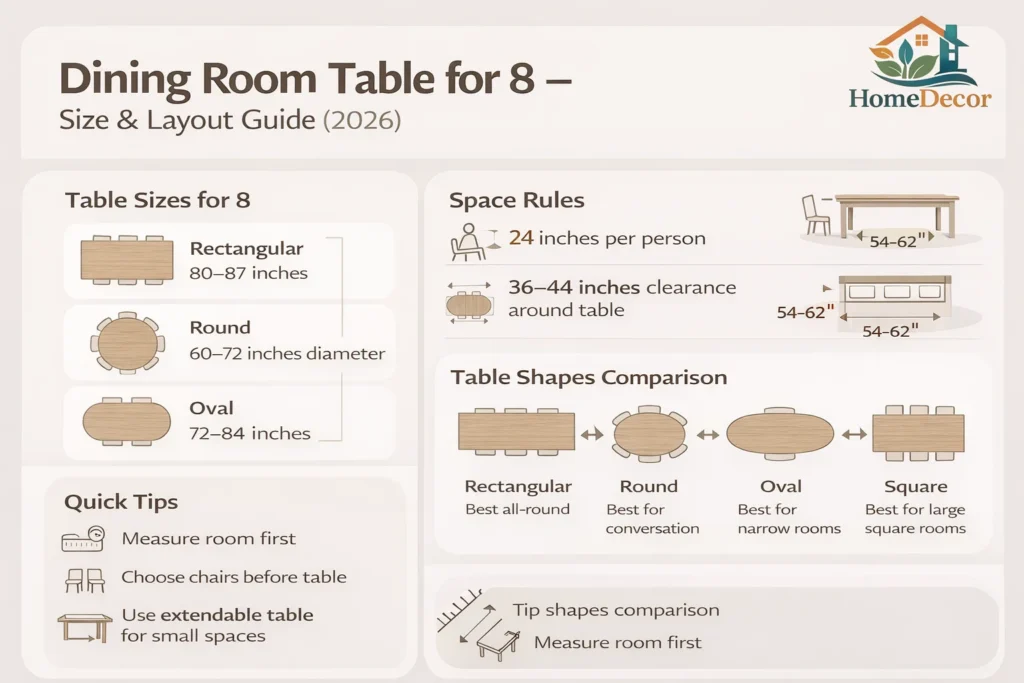
The easiest way to think about a dining room table for 8 is to start with personal space. A reliable rule of thumb is about 24 inches of table width per person. That gives each diner enough elbow room, plate space, and a more relaxed seating experience. It also helps the table feel usable instead of overly packed.
For a rectangular table, that usually means something in the 80 to 87 inch range works very well for 8 people. For round tables, the diameter often needs to be around 60 to 72 inches to seat 8 comfortably, depending on chair size and room flow. Oval tables can also work beautifully because they preserve length while softening the corners.
Height matters just as much as length and width. The standard dining table height is usually 28 to 30 inches from the floor to the tabletop. That height is the sweet spot for a traditional dining setup because it pairs well with standard dining chairs and keeps seating comfortable for most adults.
Here is a simple reference point:
| Shape | Comfortable size for 8 | Best for | Notes |
| Rectangular | 80–87 inches long | Most homes, family dining, and formal rooms | Safest all-round choice |
| Round | 60–72 inches in diameter | Square rooms, conversation-focused spaces | Needs more floor space than many people expect |
| Oval | 72–84 inches long | Narrow rooms, softer visual look | Easier movement than a rectangle |
| Square | Large or extendable square | Large square rooms | Less flexible in narrow layouts |
The practical takeaway is simple: a dining room table for 8 should not be chosen by seat count alone. It should be chosen based on how much room remains once chairs are pulled out and people are walking around it.
Best Shapes for a Dining Room Table for 8
Shape changes the feel of the room as much as size does. Two tables can hold the same number of seats and still create Completely Different experiences. One may feel structured and formal. Another may feel soft and conversational. The right shape depends on the room layout and the mood you want.
Rectangular tables
A rectangular dining room table for 8 is the most practical and versatile option for most homes. It fits long dining rooms naturally, works well in open-plan layouts, and makes chair placement easy to understand. It is also the most common dining room shape, which means there are usually more styles, finishes, and base options available.
This shape works especially well for family meals, formal gatherings, and homes that need a balanced look along a long wall or next to a sideboard. It also tends to pair well with benches at one side or with matching chairs all the way around.
Why people choose it:
- It uses space efficiently.
- It works with many room proportions.
- It is easy to style and furnish around.
- It can feel both casual and formal.
The main drawback is proportion. A rectangle can feel too long in a square room or too dominant in a narrow room if the scale is not right. That is why the room should always be measured before the style is chosen.
Round tables
A round dining room table for 8 feels warm, social, and inviting. Because everyone faces toward the center, conversation tends to feel more natural. The shape also eliminates corners, which can make the room feel softer and easier to move around in from a visual standpoint.
Round tables work especially well in square rooms because the proportions feel balanced. They also suit homes that want a relaxed, communal feel instead of a rigid formal layout.
Why people choose it:
- It supports conversation.
- It feels less formal than a long rectangle.
- It softens the visual geometry of the room.
The challenge is floor space. A large round table often needs more circulation room than buyers expect. It can also become difficult to pair with bulky chairs because the curve creates tighter spacing around the perimeter.
Oval tables
An oval dining room table for 8 is a smart middle ground between round and rectangular. It gives you the useful length of a rectangle but softens the look with rounded ends. That makes it especially effective in rooms where movement around the table matters.
Oval tables are often excellent for narrower dining rooms because there are no sharp corners to bump into. They also create a more graceful, flowing appearance than a strict rectangle.
Why people choose it:
- It feels elegant and light.
- It improves movement around the ends.
- It keeps the spaciousness of a rectangle without harsh corners.
The main limitation is selection. There may be fewer oval styles available than rectangular ones, especially in certain materials or price categories.
Square tables
A square table can be beautiful in the right setting, but it is usually not the easiest shape for 8 unless the room is large and square or the design is extendable. Square tables often feel symmetrical, modern, and bold. They can work well in a room that is intentionally designed for balance.
Why people choose it:
- It creates a strong, centered look.
- It suits square rooms well.
- It can feel modern and architectural.
The main drawback is fit. In narrow rooms, square tables usually feel bulky. For 8 people, they often need to be large enough to feel substantial, which increases the space they demand.
Shape Comparison at a Glance
| Shape | Strengths | Weaknesses | Best style fit |
| Rectangular | Efficient, versatile, easy to furnish around | Can feel long or formal | Modern, farmhouse, classic |
| Round | Great for conversation, soft look | Needs more floor space | Cozy, family-friendly, contemporary |
| Oval | Easier movement, elegant | Fewer options | Transitional, soft modern, luxury |
| Square | Symmetrical, bold | Not ideal for narrow rooms | Modern, minimalist |
Best Materials for a Dining Room Table for 8
Material influences durability, style, maintenance, and how heavy the room feels. A table’s material choice can completely change how the dining space behaves over time. It affects how often you clean, how the surface ages, and whether the room feels warm, bright, formal, or contemporary.
Solid wood
Solid wood is one of the safest long-term choices for a Family Dining Room. It feels grounded, dependable, and timeless. It also works with a wide range of interiors, from farmhouse and traditional to Scandinavian and modern transitional.
Wood is especially useful when the table is expected to stay in place for years. It develops character over time and tends to age gracefully when cared for properly.
Strengths:
- Durable and long-lasting
- Warm and welcoming
- Easy to style across many design themes
Weaknesses:
- Heavier than many alternatives
- Often more expensive than simpler constructions
Glass
Glass is ideal when the goal is to make the room feel visually lighter. Because the tabletop does not block the eye the way a heavy wood slab does, the dining space may feel more open and less crowded. Glass is especially helpful in smaller rooms or homes that want a sleek, modern feel.
Strengths:
- Light and airy visually
- Works well in contemporary interiors
- Helps a room feel less heavy
Weaknesses:
- Shows fingerprints and smudges easily
- Requires frequent cleaning
- Can feel less warm than wood
Marble or stone-look tops
A marble dining room table for 8 creates an immediate luxury impression. It feels refined, dramatic, and upscale. Marble or stone-look finishes are ideal when the dining area is meant to feel special or high-end.
Strengths:
- Luxurious and visually strong
- Creates a statement in the room
- Works beautifully in premium interiors
Weaknesses:
- Heavy
- Usually higher maintenance
- Can be less forgiving in daily family use
Metal and mixed materials
Metal and mixed-material tables are a strong fit for modern and industrial rooms. They often combine durability with visual contrast, such as wood paired with black metal or stone paired with a sculptural base. That mix can make the room feel contemporary and balanced.
Strengths:
- Durable and practical
- Suits modern, industrial, and urban interiors
- Often easier to maintain than delicate finishes
Weaknesses:
- Can feel cold if the room lacks soft textures
- Some designs may look visually harsh if not balanced with chairs, rugs, and lighting
Material Comparison Table
| Material | Best for | Maintenance level | Style feel |
| Solid wood | Family homes, long-term use | Medium | Warm, classic |
| Glass | Small spaces, modern rooms | High | Light, sleek |
| Marble | Luxury rooms | High | Elegant, premium |
| Metal mixed | Modern and industrial homes | Low to medium | Strong, contemporary |
Types of Dining Tables for 8
The best table for 8 is not always a large fixed rectangle. Different table types solve different space challenges. Some give flexibility. Some maximize seating efficiency. The smartest choice depends on how often you host, how much everyday floor space you need, and how much visual weight you want the table to carry.
Extendable tables
An extendable dining room table for 8 is one of the smartest choices for modern homes. It stays compact for daily use and expands when guests arrive. This makes it especially useful in apartments, smaller homes, and multipurpose living spaces.
Why it works:
- Saves space on ordinary days
- Expands when needed
- Adds flexibility without forcing a giant daily footprint
This is often the best answer for families who want comfort without committing to a permanently oversized table.
Fixed tables
A fixed table offers stability and visual simplicity. It is a good choice when the room size is already known, and the seating pattern will stay consistent. Fixed tables often feel more substantial and grounded, which works well in formal dining spaces.
Why it works:
- Simple and reliable
- Strong visual presence
- Good for dedicated dining rooms
Its limitation is obvious: it does not adapt. If the room is tight or hosting needs change often, a fixed table may not be as forgiving.
Drop-leaf tables
Drop-leaf tables are useful in Compact Rooms where flexibility matters. The leaves can be lowered when the full surface is not needed, which makes them practical for smaller homes or flexible layouts.
Why it works:
- Saves space when not in full use
- Useful in multi-purpose areas
- Helps smaller rooms remain open
Pedestal tables
Pedestal tables are excellent when seating space is tight because no corner legs are getting in the way. That means chairs can often tuck in more easily, and guests may find the ends more comfortable.
Why it works:
- Better legroom in many setups
- Easier to fit extra chairs
- Visually lighter than many four-legged designs
Bench seating tables
A bench setup can be a smart way to increase seating efficiency without crowding the room. Benches often slide under the table when not in use, which helps preserve circulation space. They are especially useful in family-friendly or casual dining rooms.
Why it works:
- Flexible and space-smart
- Great for casual dining
- Can create a relaxed, welcoming feel
How to Choose the Right Dining Room Table for 8
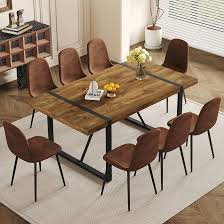
A good decision starts with the room, not the table listing. The most attractive design in the world will still fail if the room cannot support it comfortably. The goal is to balance beauty, function, and movement.
Measure the room
Measure the length and width of the dining area first. Then imagine or tape the table footprint on the floor. This helps you see how much room remains for chairs and traffic.
Do not stop at the table size itself. A table may technically fit, but still make the room feel too tight once people sit down.
Check the clearance around the table
The space around the table is just as important as the table dimensions. Chairs need room to pull out, guests need walking space, and the room should not feel blocked when people move past.
A comfortable dining room usually needs generous circulation space on all sides. If the room also holds a buffet or sideboard, the furniture layout needs even more planning.
Pay attention to chars
Chairs are not secondary. Their width, arm height, and overall bulk can make or break the setup. A beautiful table with oversized chairs can feel cramped very quickly.
Armchairs may look elegant, but they often require more clearance than slim side chairs. Upholstered chairs may be comfortable, but they also take up more visual and physical space.
Match the table to how you live
A family with children needs a surface that can handle daily use and cleaning. A home that hosts often may prioritize style and visual impact. A multipurpose room may need an extendable design that works for both meals and other activities.
Dining Table Planning Checklist
| What to measure | Why it matters |
| Room length and width | Confirms the table footprint fits |
| Table size | Shows how much floor space it uses |
| Chair pull-out distance | Prevents cramped seating |
| Walking path | Keeps movement easy |
| Buffet or sideboard space | Avoids blocked circulation |
Dining Room Table for 8 in Small Spaces
An eight-seater can absolutely work in a small home, but the design has to be smart. The table should feel useful without overwhelming the room. In compact interiors, the best solutions are usually extendable tables, oval shapes, pedestal bases, slim chairs, or lighter finishes.
The key is to reduce visual heaviness. A thick, dark, oversized table can make the room feel closed in. A lighter design with slimmer legs or a more open base often feels far more comfortable.
Best small-space choices
- Extendable rectangular table
- Oval table
- Pedestal base
- Bench seating
- Glass top
- Slim-profile chairs
Why do extendable tables work so well
They give you a smaller footprint during everyday use and a larger one when guests arrive. That means the room stays breathable on normal days while still being ready for big occasions.
Small-space styling tips
Choose a table with a lighter visual profile. Avoid overly bulky chairs. Keep décor minimal so the tabletop does not feel crowded. If the room already feels tight, a glass, pale wood, or mixed-material finish can help the whole area breathe better.
Best Dining Table Styles in 2026
The most appealing Dining Table Styles in 2026 are the ones that feel calm, practical, and adaptable. The emphasis is less on showiness and more on livability. Homeowners are looking for pieces that feel elegant without becoming difficult to use.
Modern minimalist
This style relies on clean lines, subtle details, and a restrained palette. It suits open spaces and homes that want the dining room to feel organized and visually quiet.
Scandinavian
Scandinavian design often feels light, warm, and functional. It usually pairs beautifully with wood tones, simple shapes, and an uncluttered layout.
Farmhouse
Farmhouse dining tables are warm and family-friendly. A solid wood rectangle fits this look especially well because it feels grounded, familiar, and welcoming.
Industrial
Industrial tables often use wood and metal together. The combination creates a practical, sturdy presence that works especially well in modern lofts or urban homes.
Luxury contemporary
Luxury dining spaces often use stone, sculptural bases, rich wood tones, and carefully planned lighting. The goal is not excess; the goal is polished balance.
Dining Table Layout & Space Planning Guide
This is one of the most important parts of the buying decision, and it is often the most underexplained. A table can be the correct size on paper and still fail if the room does not support it. Layout planning is what separates a comfortable dining room from an awkward one.
The room clearance rule
There needs to be enough distance around the table for chairs to move and for people to pass by comfortably. The more active the room, the more breathing room it needs. If a sideboard, buffet, or console is included, the layout should allow enough space so that those pieces do not block the dining experience.
The person-space rule
Each person needs enough room to eat without feeling crowded. That means plate space, elbow space, and enough distance to avoid accidental contact during meals. A table for 8 should feel generous enough to accommodate real sitting behavior, not just fit on a floor plan.
Chair and base planning
The table base affects comfort more than many people realize. Tables with corner legs can limit where chairs sit. Pedestal tables often make seating easier because they remove those leg conflicts. This becomes especially important when 8 people need to sit comfortably for longer periods.
Rug and lighting planning
The rug should be large enough to ground the dining area without making it feel squeezed. Lighting should sit above the table at a height that feels balanced, not too low or too high. These finishing details affect how polished and cohesive the room feels.
Practical planning checklist
- Measure the room.
- Mark the table footprint.
- Test chair pull-out space.
- Check walking paths.
- Leave room for side furniture if needed.
- Confirm the light fixture sits correctly above the table.
Pros and Cons of a Dining Room Table for 8
Pros
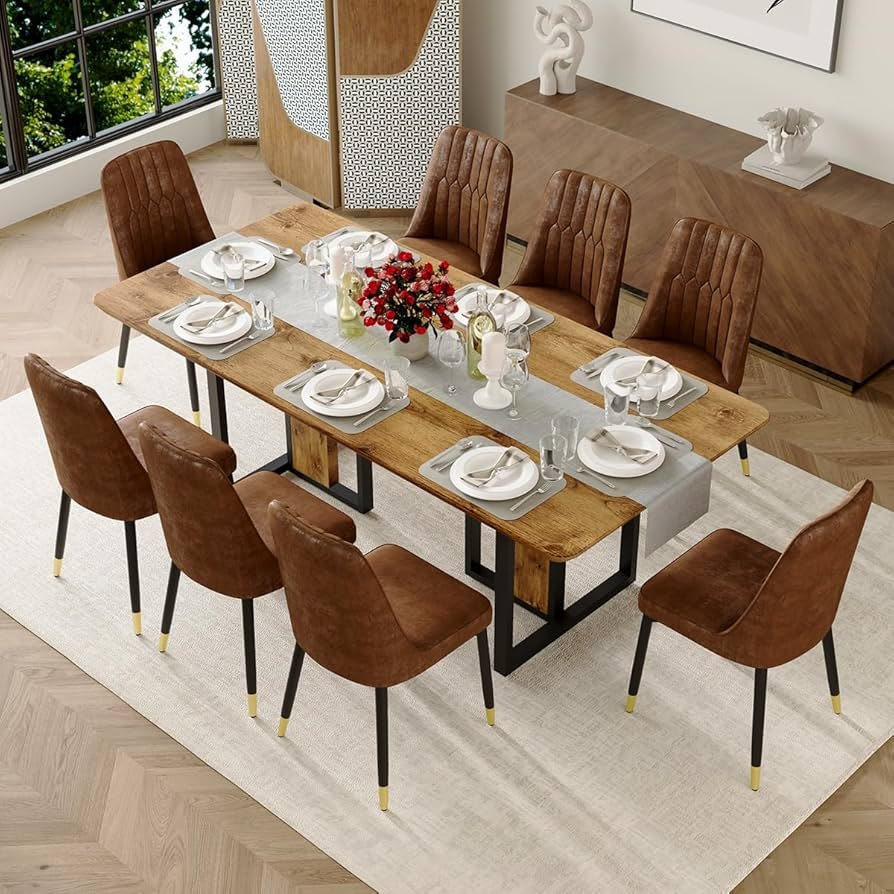
A dining room table for 8 creates enough seating for families, guests, holidays, and shared meals. It can make a dining room feel complete and important. It also works well for homes where entertaining matters or where the table serves more than one function.
Cons
It takes up more floor space than many people expect. It also demands more thought around chair size, layout, and traffic flow.
The trade-off is worth it when the table matches the room. It becomes a central, useful feature rather than a bulky obstacle.
Budget-Friendly Ideas
A good dining room does not need a luxury price tag. The smartest budget strategy is to focus on shape, proportion, and durability rather than chasing ornament alone. A simple table that fits well usually looks better than an expensive table that overwhelms the room.
Good budget moves include:
- Choosing a practical shape
- Picking a durable, easy-care surface
- Considering engineered or mixed-material construction
- Using slimmer chairs
- Selecting an extendable model rather than paying more for a large fixed table
When the budget is limited, the goal is to spend on the things that matter most: size, comfort, and everyday usability.
Premium and Luxury Ideas
A premium dining room table for 8 should feel refined, balanced, and intentional. Luxury is not only about price. It is also about proportion, finish quality, material richness, and the way the table connects to the rest of the room.
Marble or stone-look tops create instant elegance. Rich wood grains can feel just as elevated when paired with the right base and lighting. Upholstered chairs, a centered pendant, and enough open space around the table all help the room feel more sophisticated.
A luxury table feels powerful because it looks calm. It does not need clutter or visual noise. Its impact comes from scale, finish, and balance.
Common Mistakes to Avoid
One of the biggest mistakes is buying based only on appearance. A beautiful photo does not reveal whether the chairs fit, whether the legs interfere, or whether the room still feels comfortable once people sit down.
Other common mistakes include:
- Choosing the wrong shape for the room
- Ignoring chair width
- Forgetting pull-out clearance
- Using a rug that is too small
- Placing the table too close to the walls
- Picking a fragile material for a busy household
The fix is simple: measure first, shop second.
Maintenance, Care & Durability Tips
The best care routine depends on the material.
For wood tables, dust regularly, use coasters, and wipe spills quickly. For glass tables, a soft cloth keeps the surface clear and polished.
A dining room table for 8 is often used, so maintenance should be part of the buying decision. A finish that looks beautiful but is impossible to maintain usually becomes frustrating over time.
Smart, Future-Ready Dining Ideas
Modern dining rooms need to support changing routines. They are not only spaces for formal dinners anymore. They may be used for work, study, crafts, casual meals, and hosting. That is why adaptable tables are becoming more valuable.
An extendable table, a practical finish, a flexible seating plan, and a shape that suits the room all help future-proof the purchase. A table that works now and still makes sense years later is usually the best investment.
Quick Tips Before You Buy
- Measure the room first.
- Aim for about 24 inches per person.
- Leave enough space around the table for chairs and circulation.
- Use 80 to 87 inches as a strong rectangular target for 8.
- Choose an extendable model if the room is tight.
- Pick chairs before finalizing the table if space is limited.
- Match the shape to the room shape.
- Think about daily use, not only special occasions.
FAQs
A rectangular table around 80 to 87 inches long is a strong choice for 8 people. Round tables that seat eight usually need to be about 60 to 72 inches across, depending on chair size and room flow.
A good target is 36 to 44 inches between the table and the wall so chairs can pull out comfortably. If you want space for a buffet, more room is better. It is also wise to keep at least 24 inches from the back of each chair to the wall or nearby furniture.
Most standard dining tables are about 28 to 30 inches high from the floor to the tabletop. That height works well with normal dining chairs and gives enough knee clearance for comfortable seating.
Yes, a round table can work for eight people, especially in a square room or a conversation-focused layout. Round tables for six to eight people usually fall around 54 to 72 inches in diameter, but the room has to be large enough because big round tables need more floor space than many buyers expect.
Yes. Extendable tables are one of the best choices for smaller homes because they stay compact for daily use and open up when guests arrive. That flexible design makes them especially useful in tight layouts.
Conclusion
A solid eight-seat dining table matches your space, seating, and routine. Usually, rectangles between 80 and 87 inches make sense for regular households. When floorspace is tight, think about models that stretch out, curves, or bases standing alone. Elegance comes from balanced shapes and honest materials, because comfort matters just as much as appearance.
Start by measuring. Only after comes buying. Fitting well beats chasing looks every time. The right size means smoother days, easier moments, a calmer space. Style without fit feels off, even if it’s trendy.
